
Valle de Bravo is a town and municipality in the State of Mexico, known for its lake, wooded hills, and weekend homes for residents of Mexico City. It sits on the shore of Lake Avándaro, about 156 km southwest of the capital, and its historic center combines a compact colonial grid with a landscape shaped by water, pine forest, and steep terrain.
Stories from Valle de Bravo
5 stories


About Valle de Bravo
- Location: State of Mexico, west of Toluca and southwest of Mexico City.
- Setting: Built around Lake Avándaro and surrounding forested slopes.
- Use: A retreat town, with tourism, second homes, and outdoor recreation.
- History: Known earlier as San Francisco del Valle de Temascaltepec, Temascaltepec de indios, and Villa del Valle.
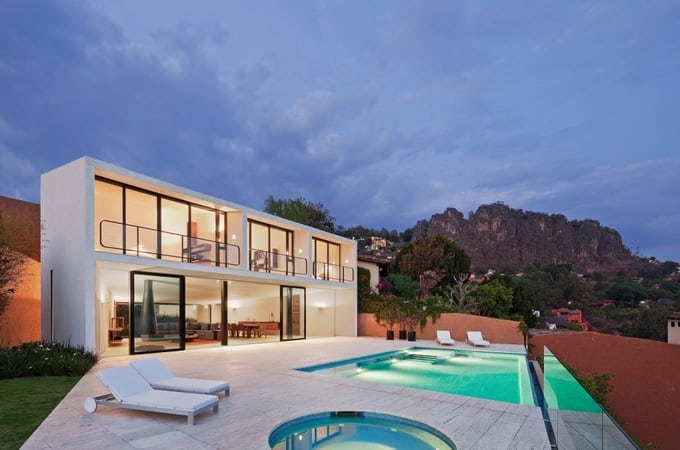
- Design relevance: Its landscape has made it a frequent site for contemporary houses and weekend architecture.
Read the full overviewWhy Valle de Bravo matters, What does it look like on the ground?, Why do architects keep building there?, How is Valle de Bravo used in contemporary design writing?
Why Valle de Bravo matters
Valle de Bravo matters because it sits at the meeting point of leisure, landscape, and architecture. The town’s proximity to Mexico City has made it a favored escape for affluent urban households, but its real significance in visual culture comes from the way the place frames built work: houses here often respond to slopes, trees, views of water, and a climate suited to open-air living. For architects and designers, it is not just a scenic address. It is a setting that shapes form, materials, and plan.
The town also carries a layered history through its changing names, which mark earlier colonial and Indigenous settlements before the current municipality took shape. That long local past sits beside a newer identity as a recreational destination. The result is a place where older urban fabric and contemporary domestic architecture coexist in close proximity.
What does it look like on the ground?
Valle de Bravo’s built environment tends to be low-rise and compact, with streets that gather around the historic center and open out toward the lake. The surrounding land is more influential than any single street pattern. Forest, hills, and water create strong site constraints, so buildings often step with the terrain, use terraces, and frame views rather than dominate them.
Materials in the area often reflect the climate and the setting: stone, timber, plaster, and dark roofs appear frequently, especially in houses that try to settle into the wooded landscape. In newer projects, designers often work to balance enclosure and openness, since the town’s appeal comes partly from privacy and partly from access to long views, outdoor space, and natural light.
Why do architects keep building there?
Architects return to Valle de Bravo because the place rewards site-specific design. A house there can be shaped by a slope, hidden in trees, or opened toward water and sky in ways that feel difficult in denser cities. That makes it attractive for experimental domestic architecture, including prefabricated systems, large glazed openings, and roof forms that manage shade, rain, and views.
At the same time, the town’s popularity has created pressure. Weekend demand can encourage larger houses and private compounds, which makes questions of scale, landscape impact, and local character more visible. Good projects in Valle de Bravo usually work because they accept those tensions instead of pretending the site is generic.
How is Valle de Bravo used in contemporary design writing?
In design coverage, Valle de Bravo often appears as a site that explains a house’s logic. A project set there is usually read through its response to forest, elevation, and retreat culture rather than through urban context. That framing matters because the town is not an abstract backdrop. It actively determines what a house can be, from its footprint to its relationship with the outdoors.
The place also carries social meaning. As a weekend destination for Mexico City’s upper class, it signals leisure, access, and exclusivity. For that reason, Valle de Bravo is often discussed not only as a picturesque municipality but as a landscape of aspiration, where architecture performs comfort, privacy, and a close contact with nature.
Frequently Asked Questions
Is Valle de Bravo a town or a municipality?
It is both. The name refers to the town itself and to the wider municipality that includes it. In Mexican administrative terms, that distinction matters because the municipality can cover more territory than the urban center.
Why is Valle de Bravo popular for weekend houses?
Its appeal comes from its distance from Mexico City, its lake, and its forested setting. The drive is short enough for regular weekend use, yet the landscape feels removed from the capital. That combination has made it a strong market for second homes and retreat architecture.
What kind of architecture is associated with Valle de Bravo?
Architecture there often emphasizes privacy, views, and contact with nature. Houses may use local-looking materials, large terraces, or prefabricated elements adapted to steep sites and wooded lots. The best-known projects tend to treat the landscape as the main design constraint rather than a decorative setting.