
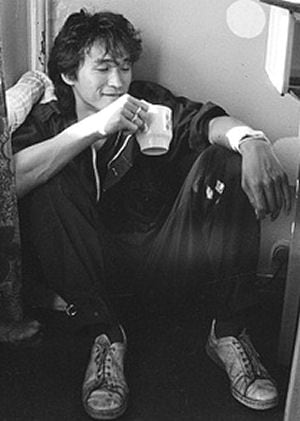
Viktor Tsoi was a Soviet rock musician, singer-songwriter, and the frontman of Kino, one of the defining bands of late Soviet culture. He became a symbol of Russian rock in the 1980s, combining terse lyrics, a distinctive baritone voice, and a stripped-down performance style that fit the limits and tensions of the time. His name still carries cultural weight across the former Soviet Union, where his songs remain widely known and quoted.
- He helped shape Russian rock at a moment when the genre was still taking form under Soviet censorship and state control.
- Kino’s songs used simple arrangements and direct language, which made them easy to remember and hard to ignore.
- Tsoi’s image mixed understatement with intensity: a plain black wardrobe, short hair, and a reserved stage presence.
- He died in a car crash in 1990, before the Soviet Union collapsed, which fixed him in public memory as a young, unfinished figure.
- His work still circulates through concerts, covers, street art, and memorials, especially in Russia, Kazakhstan, and other post-Soviet countries.
Why Viktor Tsoi mattered
Tsoi mattered because he gave Soviet youth culture a voice that sounded plain, urgent, and recognisably local. Soviet rock developed under constraints that shaped both sound and meaning: limited access to equipment, semi-legal venues, and constant scrutiny from official institutions. Kino’s music worked within those limits. It used electric guitar, bass, and drums in a direct, uncluttered way, while Tsoi’s lyrics spoke in short lines about change, fatigue, defiance, and waiting.
That combination made him more than a popular singer. He became a reference point for a generation that sensed the end of the Soviet order but could not yet name what would replace it. His songs were not slogan-heavy protest music; they were compact statements that people could adapt to private frustrations and public moods alike. That flexibility helped them survive beyond the period that produced them.
How did Kino sound and look?
Kino’s music was lean rather than ornate. The band often relied on guitar riffs, steady drum patterns, and clear melodic hooks instead of technical display. In recordings from the 1980s, the production can sound dry or rough by modern standards, but that texture suited the material. It left space for Tsoi’s voice, which carried a flat, controlled intensity that made even simple lines feel charged.
Visually, Tsoi projected restraint. He usually appeared in dark clothing, with a severe, almost minimalist silhouette that matched the music’s plainspoken tone. Photographs often show him unsmiling or only faintly expressive, which contributed to the sense that he was withdrawn, observant, and slightly removed from the machinery around him. That image became part of his afterlife: posters, murals, and fan art tend to repeat the same stark profile rather than reimagine it.
What was the Soviet rock scene he came from?
Tsoi emerged from the Leningrad rock scene, a semi-underground network of musicians, venues, and listeners that developed outside mainstream Soviet pop. The Leningrad Rock Club, opened in 1981, gave a limited institutional frame to a music that had previously circulated more informally. Bands still faced supervision and restrictions, but the scene created a space for original Russian-language rock to grow instead of merely copying Western models.
This setting shaped Tsoi’s career in practical ways. Artists worked with whatever instruments, tape recorders, and studios they could access, and many early recordings spread by homemade copies rather than official releases. That material history matters: the rough edges of the music are not accidental; they reflect the conditions of production. Tsoi’s rise is inseparable from that infrastructure of rehearsal rooms, cassette culture, and live clubs.
Why does he still matter now?
Tsoi’s continuing relevance comes from both music and myth. His songs remain easy to sing and easy to adapt, which keeps them present in everyday life. At the same time, his early death froze him in public memory as a figure of unresolved possibility. He did not age into nostalgia or compromise, so later generations often encounter him as an emblem of youth, refusal, and unfinished change.
That legacy also shows up in public space. Walls, memorial sites, and impromptu shrines dedicated to Tsoi have appeared in many cities, the most famous being the “Tsoi Wall” in Moscow, where fans leave inscriptions and lyrics. Those markings turn his image into a shared surface: part monument, part social noticeboard. The endurance of that practice says as much about collective memory in the post-Soviet world as it does about one musician’s fame.
Frequently Asked Questions
Was Viktor Tsoi only famous in Russia?
No. He was most influential in the Russian-speaking world, but that world extends beyond Russia itself. His music has remained especially visible in Ukraine, Belarus, Kazakhstan, and other former Soviet republics, where Russian-language rock was part of a shared cultural space.
His reputation also reached listeners outside the region through recordings, film, and diaspora communities. Even where the language is less familiar, the stark visual identity and direct emotional tone of the songs have helped them travel.
What is Viktor Tsoi best known for?
He is best known as the leader of Kino and as one of the central figures in Russian rock. Songs such as “Gruppa krovi” (“Blood Type”) and “Peremen!” (“Changes!”) became widely recognised anthems. Their appeal came from clear melodies, concise lyrics, and a mood that felt tied to a changing historical moment.
He is also remembered for his image: the black-clad, unsmiling young musician who looked serious without performing grandeur. That visual clarity helped make him instantly recognisable in photographs, posters, and graffiti.
Why do people paint or write about him on walls?
Wall inscriptions turn Tsoi into a public, informal memorial. Fans write lyrics, his name, or the phrase “Tsoi is alive” as a way of keeping his presence in everyday circulation. The practice is part tribute and part claim on shared cultural memory.
These walls also suit his legacy because they are open, unsanctioned, and cumulative. They mirror the way his music originally spread: not through polished official channels, but through repetition, copying, and direct public attachment.
Articles mentioning Viktor Tsoi
