
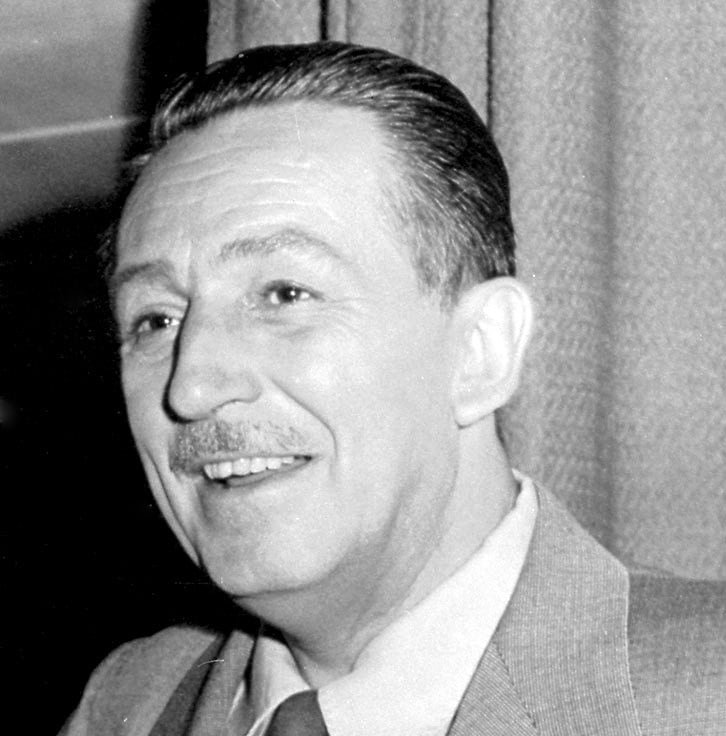
Walt Disney was an American animator, producer, studio executive, and entrepreneur who helped turn animated film into a major commercial art form. He co-founded Walt Disney Productions, later the Walt Disney Company, and built a media empire around character animation, feature-length cartoons, theme parks, and tightly controlled family entertainment. His name became shorthand for a particular style of polished, emotionally direct, mass-market visual storytelling.
| Born | December 5, 1901, Chicago, Illinois, United States |
|---|---|
| Died | December 15, 1966, Burbank, California, United States |
| Known for | Animation, film production, studio leadership, theme-park design |
| Key companies | Walt Disney Productions; later associated with Disneyland and the broader Disney brand |
| Notable roles | Animator, producer, director, screenwriter, voice actor, entrepreneur |
How did Walt Disney change animation?
Disney changed animation by treating it as a feature-length cinematic medium rather than a novelty act. In the 1920s and 1930s, he helped standardize synchronized sound cartoons through Mickey Mouse shorts, then pushed into full-length animation with Snow White and the Seven Dwarfs in 1937. That film proved that drawn characters, painted backgrounds, and carefully timed motion could carry a long narrative and still draw large audiences.
His studio’s process was industrial as much as artistic. Teams of story artists, layout designers, animators, inkers, painters, and camera technicians worked under a centralized production system that separated each stage of the workflow. Disney backed technical refinements such as the multiplane camera, which layered artwork at different distances to create depth, and the use of the “full animation” style, with detailed movement and expressive faces.
Why does Disney matter beyond cartoons?
Disney mattered because he made animation into a brand, then used that brand across film, merchandising, television, publishing, and architecture. The Disney method linked character design to consumer products in a way that changed how entertainment companies think about intellectual property. Mickey Mouse, Donald Duck, and later characters were not just screen figures; they became repeatable, licensed images that could live on lunchboxes, toys, comics, and park attractions.
He also helped define the modern family blockbuster. Disney films usually combined simple emotional arcs, musical structure, and meticulous visual polish, aiming for broad appeal rather than modernist ambiguity. That formula influenced studios far beyond animation, including the way Hollywood markets franchise characters and builds long-running properties around them.
What did the Disney studio look like in practice?
Disney studio production relied on tight story development and visual consistency. Artists built sequences from storyboards, a method Disney helped popularize for feature filmmaking. The studio then separated animation into specialized tasks: character animators handled performance, assistant animators cleaned up drawings, and background painters completed the scenic world in watercolor or gouache-like finishes that often suggested softness and depth.
The result was an identifiable house style: rounded characters, clear silhouette design, clean movement, and highly legible emotions. In the color films of the 1940s and 1950s, that style extended to stylized forest interiors, jewel-toned castles, and exaggerated facial expressions that read instantly on screen. Even when the studio experimented with live action, television, or theme-park environments, it kept the same emphasis on control, spectacle, and audience accessibility.
What is controversial about his legacy?
Disney’s legacy is widely admired and equally debated. Critics point to the studio’s labor practices, its role in consolidating American entertainment, and the way its films often flattened cultural difference into sanitized fantasy. His company also participated in the racial and gender conventions of its era, which shaped the representation of many characters and stories.
At the same time, Disney’s influence on the visual culture of the 20th century is hard to overstate. He helped set expectations for what animation could look like, how it could sound, and how a media company could build an entire world around a recognizable visual language. Modern studio animation, character merchandising, and theme-park design still operate within systems he helped establish.
Frequently Asked Questions
Was Walt Disney an animator himself?
Yes, but his most important role soon became that of producer and studio leader. Early in his career he worked directly with animation and founded a studio around that work. As his company grew, he focused more on development, production decisions, and the broader creative direction of the studio.
Why is Mickey Mouse so closely tied to Disney?
Mickey Mouse became the signature character that helped launch Disney’s sound-cartoon success. The character’s design, timing, and personality were built to be instantly recognizable and easy to reproduce across films and merchandise. Mickey became the face of a new kind of entertainment business built around character ownership.
Did Disney only make animated films?
No. Disney oversaw live-action films, television projects, educational shorts, and theme-park planning, especially in the later part of his career. Disneyland, which opened in 1955, extended his approach to visual storytelling into physical space. That expansion made the Disney name bigger than animation alone.
Articles mentioning Walt Disney


