
William Shakespeare was an English poet and playwright whose plays, sonnets, and poems shaped the English-language canon and still anchor stage production, literary study, and visual culture. Born in Stratford-upon-Avon in 1564 and active in London in the late sixteenth and early seventeenth centuries, he wrote for the commercial theatre and for print, with a body of work that includes roughly 38 plays, 154 sonnets, and several narrative poems and shorter pieces.
Stories from William Shakespeare
5 stories


About William Shakespeare
- Shakespeare worked in the professional theatre, writing for acting companies that needed scripts to be staged quickly and repeatedly.
- His language supplied phrases, characters, and plots that later artists, designers, and makers continually reuse.
- His fame rests on both the quality of the writing and the huge afterlife of adaptation, illustration, costume, typography, and memorial design around it.
- His work survives in printed quartos and the 1623 First Folio, which helped define the modern idea of a literary classic.
Read the full overviewWho was Shakespeare?, What does Shakespeare matter for?, How were his works made and circulated?, Why does Shakespeare keep showing up in design and popular culture?
Who was Shakespeare?
Shakespeare was not a solitary literary figure working apart from his time. He was a working dramatist in Elizabethan and Jacobean England, tied to theatres, patrons, actors, printers, and the practical demands of performance. That setting shaped the writing: scenes move fast, roles are sharply drawn, and language carries both dramatic force and theatrical economy.
He is often treated as a national author, but that status came later, as editors, schools, and institutions elevated him into a central figure of English culture. The surviving record also shows a man whose career included business arrangements, property ownership, and collaboration, not just authorship. That mix of art and trade matters to anyone studying how cultural prestige is made.
What does Shakespeare matter for?
Shakespeare matters because his work became a sourcebook for modern English expression. His plays gave later writers and artists a reservoir of character types, scenes of power and jealousy, and lines that travel easily between page, stage, screen, poster, and headline. He also helped set expectations for what a literary classic looks like: a work that survives repeated reinterpretation rather than one fixed meaning.
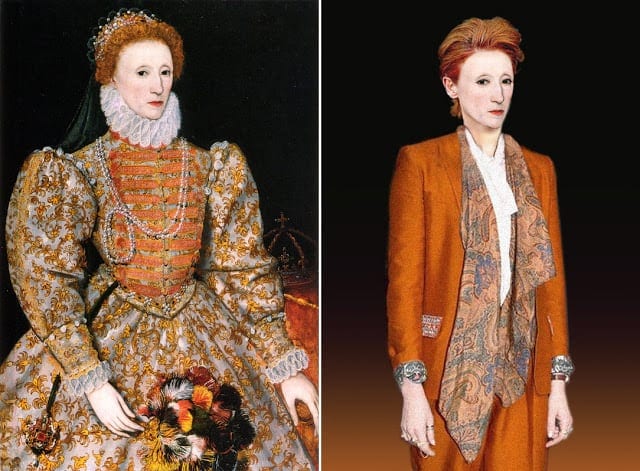
For visual culture, Shakespeare is as important as he is for literature. His plays generate portraits, stage designs, costume systems, book illustration, commemorative objects, exhibition graphics, and public monuments. A Shakespeare anniversary can produce anything from elaborate theatre programming to installation art, as his name carries both prestige and immediate recognition.
How were his works made and circulated?
Shakespeare’s plays were made for performance first. Scripts passed through acting companies, prompt books, and printers, and many survive in different textual states because publication did not always follow a clean authorial draft. The First Folio, published in 1623, gathered many of the plays in a form that gave them a lasting printed identity and protected titles that might otherwise have vanished.
That history affects how the works look in practice. A Shakespeare text may exist as stage script, school edition, annotated study text, illustrated volume, or designed object, each one emphasizing a different aspect of the original. The plays themselves also move between forms easily, which is why they remain useful to set designers, costume departments, typographers, and makers of commemorative display.
Why does Shakespeare keep showing up in design and popular culture?
Shakespeare endures because his work is both specific and adaptable. The stories are tied to court politics, family conflict, war, and desire, but they also tolerate translation into new visual languages. Designers use him to signal seriousness, heritage, or drama, often through Elizabethan references, quotation, theatrical masks, silhouettes, and dense page layout.
His image and name also function as symbols. Busts, medallic portraits, editorial title pages, and anniversary installations all rely on a shared cultural shorthand: Shakespeare stands for literary authority, theatrical invention, and English inheritance. That makes him unusually useful in public art and exhibition design, where a familiar figure needs to carry a lot of meaning quickly.
Frequently Asked Questions
Was Shakespeare a single author or part of a collaborative theatre world?
He was both. Shakespeare wrote within a commercial theatre system that depended on acting companies, printers, revisers, and sometimes co-authors. Some plays were collaborative, and even the solo works reflect the practical teamwork of performance and publication.
Why is the First Folio important?
The First Folio is the 1623 collected edition of many of Shakespeare’s plays. It preserved texts that might have been lost and gave the plays a durable printed form. For editors and historians, it is one of the main foundations of Shakespeare’s modern reputation.
Why do designers still use Shakespeare as a reference?
Shakespeare carries instant cultural recognition and a strong set of associations: drama, authority, tradition, and verbal brilliance. Designers use those associations in posters, exhibitions, costumes, stage sets, and commemorative works. His name and quotations can turn quickly into visual shorthand for “classic” or “canonical.”