
Yamaha Motor Company is a Japanese manufacturer of motorcycles, scooters, outboard motors, marine products, ATVs, and other motorized vehicles and equipment. It began in 1955 as a spin-off from Yamaha Corporation, after Genichi Kawakami led the company into vehicle production. It is separate from the musical-instrument business, though the two firms share the Yamaha name and origins.
Stories from Yamaha Motor Company
3 stories

About Yamaha Motor Company
- Founded in 1955 in Japan as a separate company from Yamaha Corporation
- Known first for motorcycles, then for a broad range of light vehicles and marine engines
- Associated with compact engineering, reliable performance, and distinctive product design
- Often appears in custom builds, concept projects, and design collaborations
Read the full overviewHow Yamaha Motor began, What does Yamaha Motor make?, Why does Yamaha matter in design culture?, How is Yamaha Motor seen in practice?
How Yamaha Motor began
Yamaha Motor was created when the Yamaha name moved beyond instruments and into machines with engines. The company emerged from the postwar expansion of the Yamaha group, when Genichi Kawakami, then head of Yamaha Corporation, pushed into motorized transport. The new firm launched in 1955 with a focus on motorcycles, using mechanical know-how already developed in metalworking, precision assembly, and small-engine design.
That origin matters because Yamaha Motor did not grow out of a general car industry. It grew out of a maker’s culture: careful machining, attention to sound and vibration, and an interest in compact, efficient engineering. Those values still shape how the company presents itself, from racing machines to leisure products and marine engines.
What does Yamaha Motor make?
Motorcycles remain the best-known part of the business, but Yamaha Motor’s range is much wider. It makes scooters, electric bicycles in some markets, all-terrain vehicles, side-by-sides, snowmobiles, outboard motors, jet boats, and industrial engines. The company also produces parts and systems for mobility, including controls and electronic components.
That breadth gives Yamaha a visible role in both transport and recreational design. In practice, its products are often shaped for compactness and ease of use, with slim frames, clean bodywork, and engineering that aims to feel light rather than heavy. The same logic appears in an outboard motor, a commuter scooter, or a performance motorcycle.
Why does Yamaha matter in design culture?
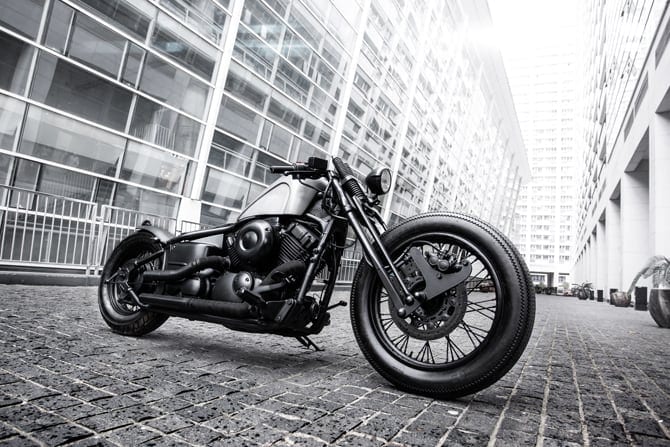
Yamaha Motor matters because it sits at the intersection of engineering, brand identity, and industrial design. Its vehicles are frequently used as platforms for custom builders and concept designers because the underlying machines are dependable, well-proportioned, and easy to rework. A custom Yamaha motorcycle can therefore become a canvas for new body panels, lighting, seats, and paint without losing the character of the base machine.
The company also has a long relationship with performance culture. Racing, tuning, and aftermarket modification have helped define how Yamaha products are seen in public: not just as transport, but as objects that carry technical personality. That makes the brand especially useful to designers looking for a machine with recognizable mechanical lines and a strong visual identity.
How is Yamaha Motor seen in practice?
In practice, Yamaha Motor often appears in projects where function and style need to stay close together. A custom Yamaha XVS400, for example, may keep the stock frame and engine layout while replacing the bodywork with hand-built parts and altered ergonomics. In a concept bicycle or a mobility experiment, Yamaha’s name signals both technical seriousness and a willingness to stretch beyond a single product category.
The company’s products also show a consistent visual language: compact proportions, rational layouts, and surfaces that tend to read as engineered rather than decorative. Even when a project is highly stylized, the Yamaha base often remains legible beneath the modifications. That balance between utility and form is a major reason the brand continues to attract designers, builders, and engineers.
Frequently Asked Questions
Is Yamaha Motor the same company as Yamaha Corporation?
No. Yamaha Motor and Yamaha Corporation share a common history but operate as separate companies. Yamaha Corporation focuses on musical instruments, audio equipment, and related products, while Yamaha Motor makes vehicles and engines.
Why do custom builders use Yamaha motorcycles so often?
Yamaha motorcycles are mechanically sound, widely available, and easy to modify. Their frames and engines provide a strong base for custom work, which lets builders change the visual character without rebuilding the entire machine. That combination makes them practical for both garage projects and professional commissions.
What kinds of objects are most associated with Yamaha Motor?
Motorcycles are the most famous, but outboard motors, scooters, and recreational vehicles are also central to the company’s identity. These products share a focus on compact engineering and reliable motion. In design terms, Yamaha is often linked to objects that are both technical and approachable.