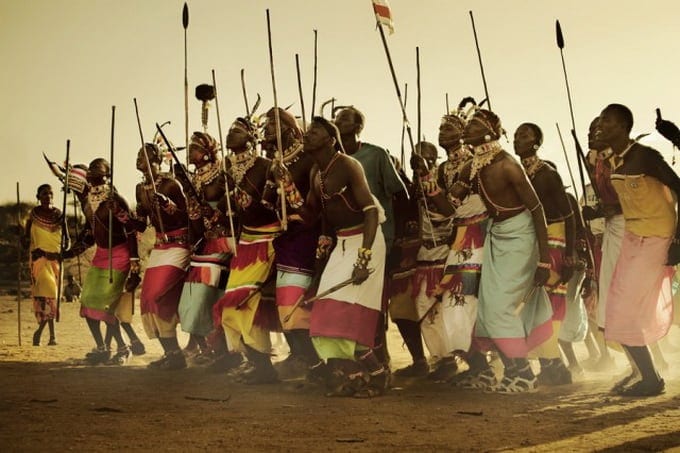
| Field | Spanish art director and photographer |
|---|---|
| Known for | Portrait-like travel photography that looks for small gestures, shared glances, and moments of quiet complicity |
| Working style | Observational, searching for candid detail rather than posed performance |
| Notable use | Travel and editorial image-making, including work published on FreeYork |
| Base of activity | Spain, with assignments and travel work in multiple locations |
Diego Arroyo is a Spanish art director and photographer known for images that look for brief human signals: a smile, a sideways glance, a moment of complicity, or another expression that suggests something unguarded. His work treats photography as an exercise in attention. Rather than staging a fixed narrative, he looks for the story that appears in a face, a posture, or a passing exchange.
What kind of photographer is Diego Arroyo?
Arroyo works in the space between art direction and documentary-style observation. The current public description of his practice emphasizes travel and a search for “the subtle,” which places him closer to an image-maker interested in atmosphere and human detail than to a rigidly formal portrait specialist. That matters because the images are likely to depend on timing, proximity, and a sensitivity to small changes rather than on elaborate setups.
He describes his challenge as catching “the story behind the eyes of strangers.” That phrase points to a practice built around reading expression and building meaning from what is not immediately announced. In visual culture terms, this is a method that values implication over spectacle.
How does his work look in practice?
Arroyo’s photography tends toward candid-looking encounters, especially in travel contexts. The subject is often less important than the evidence of a human moment: eye contact, a half-smile, a gesture of recognition, or a scene that feels briefly shared. This kind of work usually depends on natural light, quick framing, and the willingness to let ordinary moments carry the image.
Because he also works as an art director, his images may carry a stronger sense of composition than purely casual snapshots. Art direction often sharpens an eye for balance, pacing, and visual hierarchy, so even spontaneous images can feel considered. The result is often a picture that seems immediate but still arranged with intention.
Why does Diego Arroyo matter?
Arroyo matters as an example of a contemporary photographer whose subject is human presence itself. His stated interest is not in exoticizing travel or collecting landmarks, but in noticing what people reveal when they are not performing for the camera. That approach fits a broader editorial and cultural appetite for images that feel intimate without becoming sentimental.
He also appears in the context of a FreeYork article about Kenya, which suggests his work has been used to frame place through people as much as through landscape. In publication settings like that, the photographer shapes how a reader understands a location: not only as scenery, but as lived experience.
Where did he come from?
Diego Arroyo is identified as Spanish. Beyond that, the publicly supplied description focuses more on his working intentions than on biography or training. That is common for photographers whose public identity is built around commissioned and travel-based image work rather than around a single art-world career narrative.
He also presents himself as open to new and challenging assignments, which reinforces the sense of a working professional rather than a closed studio practice. His visibility comes through portfolio use, social presence, and publication context, where the images themselves carry most of the argument.
Frequently Asked Questions
Is Diego Arroyo mainly a documentary photographer?
Not exactly. His description leans toward observational and candid photography, but his role as an art director suggests a more composed visual sensibility than pure reportage. The work seems to borrow from documentary practice while keeping a strong interest in mood and design.
What does he look for in a subject?
He looks for small human signals: a smile, a wink of complicity, or an expression that suggests an inner life. Those details matter because they turn a scene into a relationship between photographer and subject. The emphasis is on what reveals character without needing a posed statement.
Why is he relevant on a design and visual culture site?
Arroyo’s work shows how photography can shape the feeling of a place through people, not just through buildings or landscapes. That is central to editorial image-making, where the photographer helps define the tone of an article. His practice also sits at the intersection of composition, travel, and human observation, which makes it relevant to visual culture readers.
Articles mentioning Diego Arroyo