
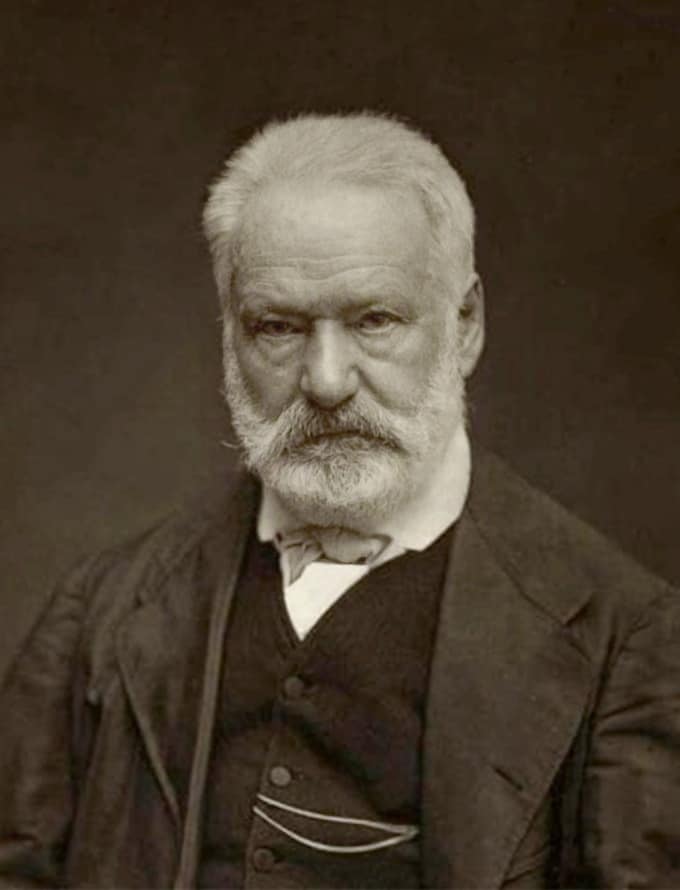
Victor Hugo was a French poet, novelist, and playwright whose work helped define French Romanticism in the 19th century. He wrote with extraordinary range, moving from verse collections to social novels and stage drama, and he became one of the most widely read writers in French literature. His name also carries political weight: Hugo lived through revolution, exile, and the upheavals of modern France, and those experiences shaped both his writing and his public voice.
| Field | Details |
|---|---|
| Full name | Victor Marie Hugo |
| Born | 26 February 1802, Besançon, France |
| Died | 22 May 1885, Paris, France |
| Known for | Poetry, novels, drama, and political writing |
| Major works | Les Contemplations, La Légende des siècles, Les Misérables, Notre-Dame de Paris |
| Movement | Romanticism |
Why Victor Hugo matters
Hugo matters because he helped make literature feel public, expansive, and morally urgent. His poetry can be intimate and lyrical, but it also reaches for history, politics, religion, and the lives of ordinary people. That scale made him a central figure in Romantic writing, which prized emotion, imagination, and freedom of form over strict classical rules.
His novels widened his influence even further. Les Misérables turned poverty, justice, and redemption into a major literary subject, while Notre-Dame de Paris helped revive interest in Gothic architecture and medieval Paris. For later writers, artists, designers, and filmmakers, Hugo became a model for how a single author could shape public memory as well as style.
What did he write?
Hugo began as a poet and never stopped working in verse. His poetry often combines formal discipline with emotional force, and his best-known collections include Les Contemplations and La Légende des siècles. These books range across love, grief, faith, politics, and historical reflection, and they show his gift for making large themes feel immediate.
His prose fiction reached an even broader audience. Les Misérables is structured around social injustice, criminal law, and personal transformation, while Notre-Dame de Paris uses the cathedral as both setting and symbol. Hugo also wrote plays that helped push French theatre toward Romantic drama, with looser structure, heightened feeling, and scenes designed for dramatic contrast rather than classical restraint.
How did his politics shape his image?
Hugo was not only a literary figure but also a public intellectual. He supported liberal causes, opposed capital punishment, and spoke against tyranny. After political conflicts in France, he spent years in exile on the Channel Islands, where he continued to write and publish at scale. That exile sharpened his reputation as a conscience of the nation.
His politics mattered to his literary standing because they made him seem larger than an author. Hugo appeared as a citizen-writer, someone who treated books, speeches, and public intervention as part of the same project. That combination of art and advocacy helped explain why he remained visible long after the Romantic movement itself had passed.
What does Hugo look like in practice today?
Hugo’s legacy appears in school curricula, public monuments, museum collections, and artistic adaptations. His texts continue to be staged, filmed, illustrated, and reissued because they offer strong narrative structure and vivid imagery. Designers and artists often return to his work for its scale: crowded interiors, storm-tossed landscapes, monumental architecture, and figures rendered in stark moral tension.
At a place like the Panthéon in Paris, Hugo is remembered not just as a writer but as a national presence. His name carries the authority of canon, yet his work remains usable in contemporary culture because it addresses power, poverty, faith, and spectacle in direct terms. That is one reason his writing still appears in projects that work across literature, public art, and historical memory.
Frequently Asked Questions
Was Victor Hugo only a novelist?
No. Hugo was a major poet and playwright as well as a novelist, and in France his reputation rested first on poetry. His verse collections are central to his standing, especially Les Contemplations and La Légende des siècles. The novels made him globally famous, but they were only part of a much larger body of work.
Why is Hugo associated with Romanticism?
He is associated with Romanticism because his writing privileges emotion, imagination, historical atmosphere, and dramatic contrast. He also pushed against rigid classical conventions in theatre and poetry. That made him one of the movement’s most important French figures.
Why does Hugo still matter to visual culture?
His books generate strong images: cathedrals, barricades, prisons, storms, ruins, and crowded city spaces. Those settings have been endlessly adapted in illustration, film, theatre, and public art. Hugo also helps define how literature can shape the visual memory of a city or nation.
Articles mentioning Victor Hugo
