
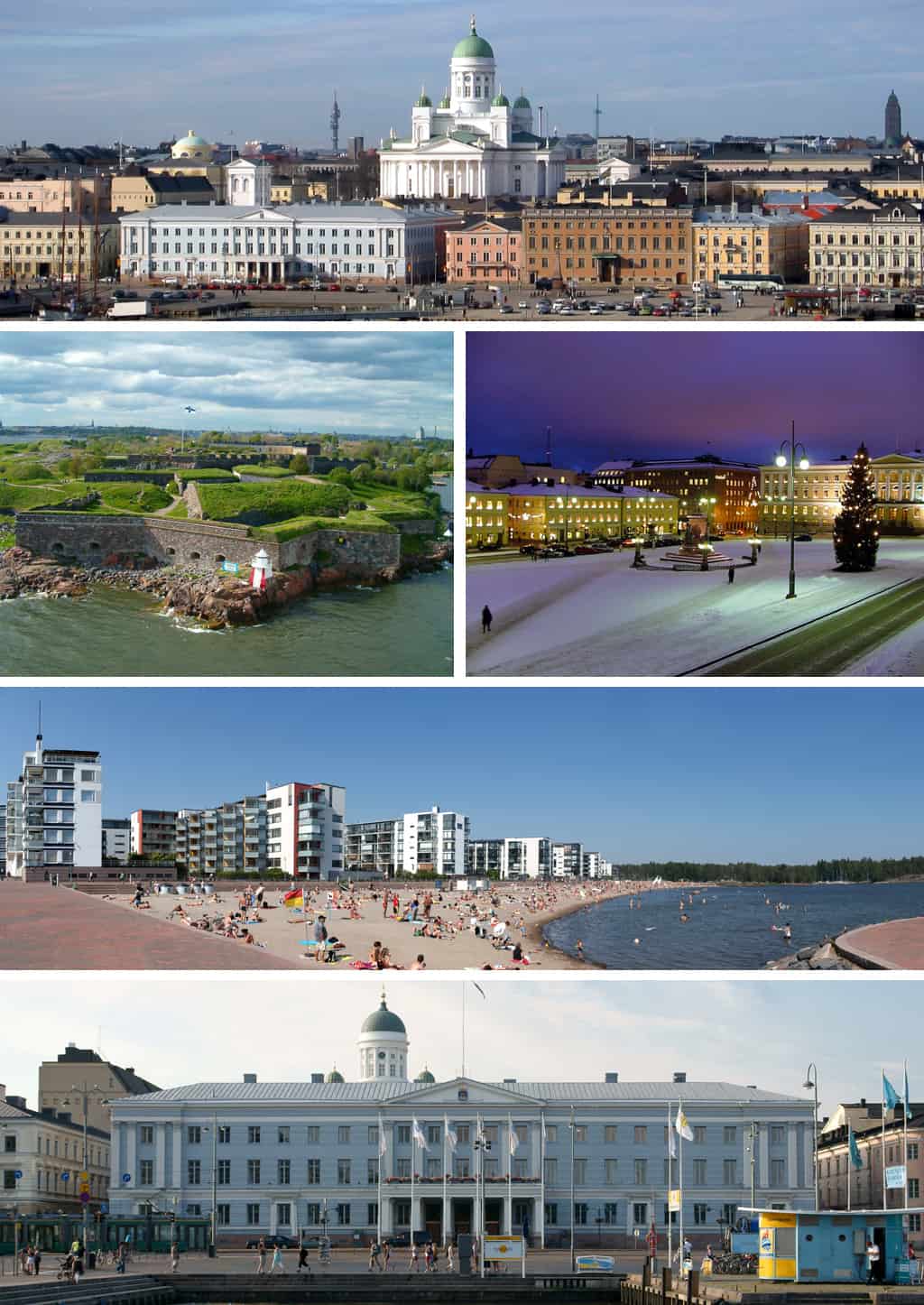
Helsinki is the capital and largest city of Finland, built on a chain of peninsulas, bays, and islands on the north shore of the Gulf of Finland. Founded in 1550 and made the Finnish capital in 1812, it grew from a small trading town into the country’s political, administrative, and cultural centre. Today it is known for Nordic modernism, careful urban planning, maritime infrastructure, and a strong design culture that runs from architecture to furniture, graphics, and public space.
| Type | Capital city; municipality |
|---|---|
| Country | Finland |
| Region | Uusimaa, southern Finland |
| Location | Shore of the Gulf of Finland, Baltic Sea |
| Population | About 670,000 in the city proper; over 1.3 million in the metropolitan area |
| Known for | Modern architecture, seafront urbanism, design institutions, public transport, and the Aalto legacy |
Why does Helsinki matter in design and architecture?
Helsinki matters because it gives form to a distinctly Finnish approach to the built environment: restrained, functional, material-conscious, and closely tied to climate. The city’s architecture often works with light, weather, and seasonal change rather than against them. Stone, brick, timber, concrete, and glass appear in combinations that feel durable rather than decorative, and many buildings make the most of daylight through large openings, pale interiors, and controlled proportions.
The city also serves as a living record of Nordic modernism. Alvar Aalto’s buildings in and around Helsinki helped define an international language of warm modernism, where wood, brick, and human-scale planning softened the hard edges of modernist form. Later generations of Finnish architects and designers have continued that line through public buildings, housing, mortuaries, libraries, and civic spaces that prize clarity, longevity, and everyday use.
What does Helsinki look like on the ground?
Helsinki is shaped by water. The city’s centre, harbours, ferries, ferry terminals, and waterfront parks make the sea feel present even away from the shoreline. Granite outcrops, tree-lined streets, neoclassical civic buildings, and compact modern districts create a city that feels layered rather than monumental. In winter, snow and low light flatten the palette; in summer, long daylight sharpens the contrast between pale façades, dark conifers, and the reflective surfaces of the sea.
Built form in Helsinki ranges from 19th-century imperial planning around Senate Square to later functionalist and postwar districts, then to contemporary infill by architects working in timber, steel, and stone. The city is notable for how it handles public programmes: schools, mortuaries, libraries, stations, and housing often receive the same design care as major cultural buildings. That makes Helsinki especially visible in projects where material choice carries meaning, such as sustainable timber construction or quiet civic architecture.
How did Helsinki become a centre of Finnish design?
Helsinki’s role in design grew from its status as the seat of government, education, and industry. The city concentrated institutions such as the University of the Arts, Aalto University, museums, galleries, publishers, and design firms, creating a dense network where architecture, product design, graphics, and craft could overlap. Finland’s design identity, especially in the 20th century, took shape here through schools, exhibitions, manufacturers, and architects who treated function and beauty as inseparable.
The Aalto legacy remains especially important. Alvar Aalto, together with Aino and Elissa Aalto in different phases of work, helped establish a civic and domestic design language that still informs how Finnish buildings and objects are judged. Their influence appears not only in famous landmarks but also in the expectation that a building should fit its site, respect materials, and improve daily life rather than merely present an image.
What kind of city is Helsinki today?
Contemporary Helsinki combines public-sector pragmatism with experimental design culture. New buildings often respond to sustainability concerns through timber hybrids, energy efficiency, adaptive reuse, and careful detailing. The city also remains a place where public art, exhibition design, fashion, and digital graphics intersect with architecture, giving it a strong presence in contemporary visual culture beyond its size.
As a place, Helsinki matters less as a single style than as a framework for making. The city rewards precision, climate awareness, and material honesty. For writers and designers, it stands as a model of how a capital city can look modern without abandoning texture, history, or the demands of everyday use.
Frequently Asked Questions
Is Helsinki a design city or mainly an administrative capital?
It is both, but the design identity is unusually strong for a capital city. Helsinki houses government ministries and national institutions, yet it also supports architecture schools, museums, studios, and manufacturers that shape Finland’s visual culture. That combination gives the city a practical, civic version of design rather than a purely commercial one.
What materials are most associated with Helsinki’s architecture?
Granite, brick, concrete, glass, and timber appear often, usually in restrained combinations. The city’s climate encourages durable materials and careful detailing, while Finnish modernism has long favoured surfaces that age well. Recent projects increasingly use engineered wood and hybrid structures to reduce carbon impact.
Why is Helsinki often linked to Alvar Aalto?
Aalto worked extensively in the Helsinki region and helped define Finland’s modern architectural identity. His buildings and interiors show how modernism can be softened with wood, curved forms, and attention to human scale. Because those ideas remain influential, Helsinki is often read through the Aalto lens, even when the building in question is contemporary.