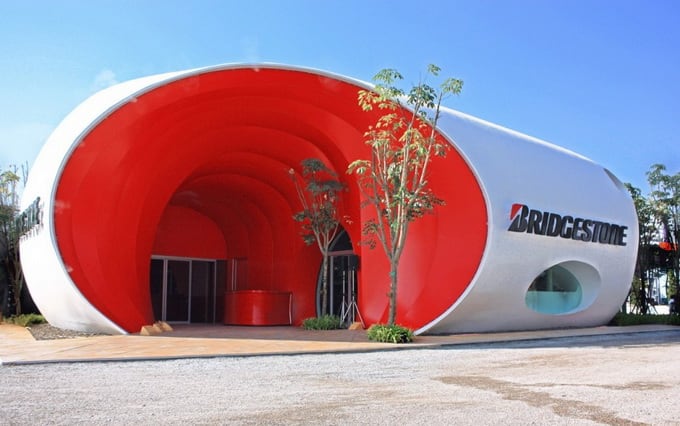
Bridgestone is a Japanese multinational manufacturer best known for tyres, rubber products, and automotive components. Founded in 1931 by Shojiro Ishibashi in Kurume, Fukuoka, it grew from a domestic industrial company into one of the world’s largest tyre makers, with factories and subsidiaries across many countries.
| Founded | 1931 |
|---|---|
| Founder | Shojiro Ishibashi |
| Headquarters | Tokyo, Japan |
| Core business | Tyres, rubber goods, automotive parts |
| Name origin | English rendering of ishibashi, meaning “stone bridge” |
What Bridgestone makes
Bridgestone’s main business is tyre manufacture. That means passenger car tyres, truck and bus tyres, motorcycle tyres, off-road tyres, and specialist products for industrial and agricultural use. Tyre production combines rubber compounding, fabric and steel reinforcement, moulding, vulcanisation, and testing. The company also makes a broader range of rubber-based industrial materials and automotive parts, but tyres remain the most visible part of its identity.
Tyres are not only functional components; they shape ride quality, road noise, grip, fuel efficiency, and safety. For designers and architects, that matters because a company like Bridgestone carries strong associations with engineering, material performance, and mobility. Its products sit at the point where chemistry, manufacturing, and everyday transport meet.
How did Bridgestone begin?
Bridgestone began as a Japanese industrial company founded by Shojiro Ishibashi, whose surname literally means “stone bridge.” The company name reverses and translates that idea into English. That choice gave the brand an international sound while still preserving a reference to the founder’s name.
Its early growth came during Japan’s industrial expansion in the twentieth century, when demand for tyres and rubber goods increased alongside motorisation. From there, Bridgestone expanded beyond domestic production into overseas manufacturing and global distribution. By the early twenty-first century it operated a large network of plants in many countries, reflecting the scale and logistics required for modern tyre supply.
Why does Bridgestone matter in design and architecture?
Bridgestone matters because it is a major industrial brand with a strong material identity. Tyre makers occupy a distinct place in visual culture: their products are highly engineered, repetitive, and physically specific, yet the public often encounters the brand through sponsorship, retail environments, and exhibition or pavilion design. Industrial manufacturers like Bridgestone often use architecture to present technical expertise, environmental goals, or corporate identity in a more legible form.
In a project such as the Bridgestone Pavilion by Architectkidd, the company name does more than identify a sponsor. It frames the building as a site where mobility, materials, and corporate image are presented together. That is typical of large manufacturers that use public-facing spaces to translate a technical business into spatial experience.
What does the company look like in practice?
Bridgestone’s operations are organised around factory production, research, distribution, and testing. In tyre manufacture, raw rubber and chemical additives are mixed into compounds, formed into components such as treads and sidewalls, assembled on drums, and cured under heat and pressure. Quality control is central, because a tyre must perform consistently under load, friction, weather, and speed.
The company’s presence also appears in branding: corporate logos, product lines, motorsport sponsorship, and branded buildings or installations. Like many large manufacturers, Bridgestone uses design language that signals precision and reliability. The result is an organisation defined as much by material process as by corporate scale.
Frequently Asked Questions
Is Bridgestone only a tyre company?
No. Tyres are its best-known product, but Bridgestone also makes rubber goods, industrial materials, and automotive parts. Those other products sit in the same manufacturing world, using similar expertise in polymers, reinforcement, and durability.
Where does the name Bridgestone come from?
The name comes from a translation and rearrangement of the founder’s surname, Ishibashi. In Japanese, ishi means stone and bashi or hashi means bridge, so the company name effectively turns “Ishibashi” into “Bridgestone.”
Why is Bridgestone linked to architecture at all?
Large manufacturers often use architecture for pavilions, showrooms, and event structures that present the brand in public space. In those contexts, the building becomes part of the company’s identity work. Bridgestone’s connection to architecture usually comes through this kind of commissioned project rather than through a building trade of its own.
At a glance
- Founded
- 1931
- Address
- Tokyo, Japan
Articles mentioning Bridgestone