
Brock Davis is an American artist and creative director known for turning ordinary objects, studio scraps, and digital posts into compact visual jokes and image-based ideas. He built his reputation in advertising before becoming widely followed for self-initiated work on Instagram, where small staged scenes, altered objects, and deadpan humor became his signature.
Stories from Brock Davis
3 stories

About Brock Davis
- Field: advertising, art direction, and contemporary image-making
- Known for: witty object interventions, Instagram posts, and visual one-liners
- Materials and methods: everyday objects, food, packaging, household items, photography, and simple digital editing
- Career base: commercial creative work alongside personal art practice
- Associated with: brands and large-scale projects such as Apple, Harley-Davidson, Porsche, and Banksy’s Dismaland
Read the full overviewHow Brock Davis makes his work, What kind of artist is Brock Davis?, Why does his work matter?, What does his work look like in practice?
How Brock Davis makes his work
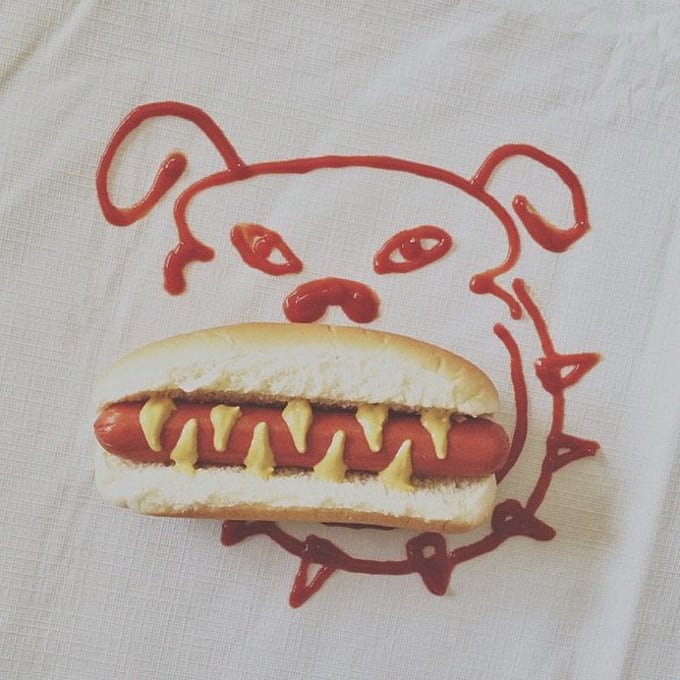
Davis works by shifting scale, context, or function just enough to make an ordinary thing feel strange and funny. A banana may become a visual pun, a pile of cut paper may read as a landscape, or a photographed object may suggest a larger idea with almost no apparent intervention. The humor is usually dry and precise, and the construction is often simple enough that the thought behind it does the heavy lifting.
That economy matters. His images rely on careful composition, clean lighting, and a strong read at phone-screen size, which suits the social media environment where much of his audience meets the work. The result is closer to a visual sentence than a traditional finished object: compact, immediate, and built around a single idea.
What kind of artist is Brock Davis?
Davis sits between commercial art direction and studio practice. His advertising background shows in the clarity of the concepts and the polished presentation, but the work is not advertising in the usual sense. Instead of selling a product, it often turns product language, design systems, or common consumer goods into material for satire and play.
His career also reflects a broader shift in contemporary image culture, where an artist can build an audience through self-published posts rather than galleries alone. Instagram became not just a portfolio but a primary medium for testing ideas, serial humor, and quick visual invention. That makes Davis part of a generation of artists who treat the feed as an exhibition space.
Why does his work matter?
Davis helped define a style of image-making that is low-cost, clever, and highly shareable without feeling disposable. His work shows how a strong concept can matter more than technical complexity, especially when the final image depends on timing, framing, and wit. That has made him influential for designers, illustrators, and artists working in short-form visual culture.
He also bridges two worlds that are often kept separate: high-volume commercial creativity and personal art making. His work for major brands and projects such as Dismaland sits alongside pieces that look improvised or casual, yet all of it depends on the same skills: concept development, visual editing, and control of tone. In that sense, his practice is less about a single style than about a method for making ideas visible fast.
What does his work look like in practice?
In practice, Brock Davis’s work often uses found materials and simple staging. A broken object may be repaired in a way that creates a joke, a food item may be arranged to resemble something else, or a photograph may isolate one small adjustment that changes the meaning of the whole image. The materials are rarely precious, but they are handled with attention to surface, color, and proportion.
Because so much of the work is photographic, the final piece is usually an image rather than the altered object itself. That matters: the photograph is not just documentation, but the finished artwork. A viewer sees a complete thought in one frame, often with no need for explanation, which is a key reason his work travels well online.
Frequently Asked Questions
Is Brock Davis mainly an Instagram artist?
Instagram is central to his public identity, but it is not the whole practice. Davis came from advertising and creative direction, and that experience shapes how he builds and presents ideas. The platform became the best-known outlet for work that already depended on concise visuals and quick recognition.
Does he make physical objects or only photos?
He makes both, but the photographed image is often the final form the audience sees. Many pieces begin as small physical setups, altered objects, or temporary arrangements made from everyday materials. The photo preserves the idea and gives it wider circulation than the object alone would have.
Why is his work described as humorous?
The humor comes from misdirection, visual puns, and a sharp mismatch between expectation and result. A familiar object is made to behave like something else, or a small intervention suggests a larger absurdity. The tone is usually restrained rather than loud, which makes the joke land with more force.