Harley-Davidson is an American motorcycle manufacturer known for heavyweight cruiser motorcycles, a strong brand identity, and a long association with open-road riding culture. Founded in Milwaukee, Wisconsin, in the early 1900s, the company built its reputation on large V-twin machines, loud exhaust notes, and a design language that became part of American popular style. Its motorcycles have also become a graphic shorthand for rebellion, freedom, and customisation.
- Founded in Milwaukee in 1903.
- Best known for heavyweight motorcycles, especially cruisers and touring bikes.
- Made its name with large-displacement V-twin engines and a distinctive visual identity.
- Survived the Great Depression and later competition from Japanese manufacturers.
- Its logo, parts, and styling have been widely copied, customised, and referenced in design.
Where Harley-Davidson came from
Harley-Davidson began as a small motorcycle business in Milwaukee, where William S. Harley and the Davidson brothers assembled early motorised bicycles and then purpose-built motorcycles. The company grew during the first decades of the 20th century by refining the machine for American roads: long distances, rough surfaces, and a preference for torquey engines over small, high-revving ones. That practical engineering choice became part of the brand’s identity.
The company’s survival through the Great Depression mattered as much as its early success. Many motorcycle makers disappeared in that era, but Harley-Davidson remained one of the few major American manufacturers still standing. Later, it weathered quality-control problems and intense competition from Japanese makers, which forced the company to rebuild its reputation while keeping the core look and feel that customers expected.
What makes a Harley-Davidson different?
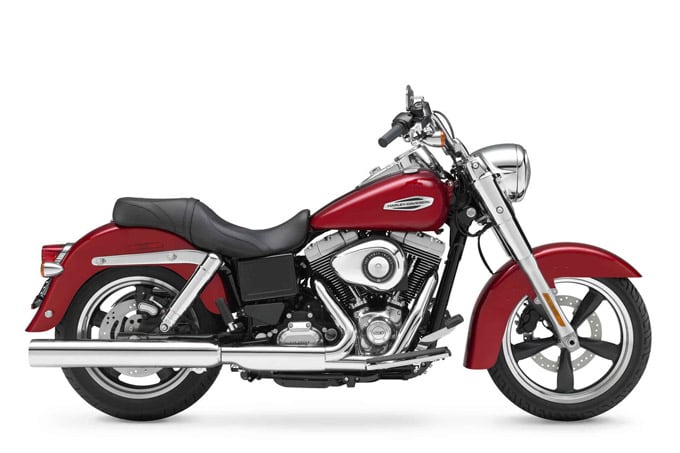
Harley-Davidson motorcycles are usually defined by their size, stance, and engine character. The company focuses on heavyweight models with engines above 750 cc, many of them built for relaxed highway cruising rather than racing or urban commuting. The low seat, long wheelbase, and substantial chrome or painted metal parts give the bikes a heavy, planted presence on the road.
The mechanical signature matters too. Traditional Harley V-twins produce a low, pulsing exhaust note and a strong visual rhythm in the engine cases, cylinders, and exposed hardware. In practice, that means the brand is as much about sensory recognition as transport: the shape, sound, and vibration of the machine are part of the product.
Why does Harley-Davidson matter in visual culture?
Harley-Davidson is one of the clearest examples of industrial design turning into cultural iconography. Its bar-and-shield logo, engine forms, tank badges, leather accessories, and chrome details have become instantly legible symbols, even far from motorcycling. Designers and artists borrow those cues to signal American style, toughness, heritage, or machine-made romance.
That visual power helps explain why Harley-Davidson appears in objects beyond motorcycles, including special-edition turntables and other branded collaborations. Those products often borrow the company’s black-and-orange palette, badge shapes, and mechanical styling cues to transfer motorcycle identity onto another object. The result is less about function alone and more about the emotional charge of the Harley name.
How Harley-Davidson is made and maintained
Harley-Davidson motorcycles are built around large engines, metal chassis components, and a finish culture that values durability, paint, and surface detail. On many models, riders expect visible fasteners, polished engine parts, stitched seats, and custom paintwork. The factory product is only the starting point; ownership often includes add-ons, replacement parts, and aftermarket customisation.
That custom culture has shaped the brand for decades. Pipes, handlebars, saddlebags, windshields, seats, and bodywork are frequently swapped or modified, and many riders treat the motorcycle as a base platform rather than a finished object. Harley-Davidson’s design therefore lives in both the stock machine and the heavily personalised one.
Frequently Asked Questions
Is Harley-Davidson just a motorcycle company?
Harley-Davidson is a motorcycle manufacturer, but the brand functions as much more than that. It has become a symbol attached to clothing, accessories, rallies, photography, and other lifestyle products. That broader identity helps explain why the company’s name and graphics show up in design objects unrelated to transport.
Why are Harley-Davidson motorcycles usually so large?
The company built its reputation around heavyweight bikes designed for cruising, long-distance travel, and a strong road presence. Large engines deliver relaxed power at low speeds and an unmistakable mechanical character. That approach set Harley apart from smaller, more utilitarian motorcycles and remained central to its brand.
What is the bar-and-shield logo?
The bar-and-shield is Harley-Davidson’s best-known emblem, usually seen on tanks, apparel, and branded accessories. It combines a strong geometric badge form with the company name, making it easy to recognise at a glance. In design terms, it works because it is simple, bold, and adaptable across many materials and scales.
At a glance
- Founded
- 1903
- Address
- Milwaukee, United States
Articles mentioning Harley-Davidson