
Columbia, Missouri is a mid-Missouri city best known as the home of the University of Missouri and as the county seat of Boone County. It sits between St. Louis and Kansas City, has long functioned as a college town, and is often called “CoMO” or “The Athens of Missouri.” Its mix of university life, civic institutions, and surrounding Ozark-influenced landscapes has made it an important site for photography, publishing, and experimental design in the state.
Stories from Columbia, Missouri
3 stories

About Columbia, Missouri
- Columbia is the largest city in Mid-Missouri and the principal city of the Columbia metropolitan area.
- The University of Missouri shapes the city’s economy, culture, and visual identity.
- The city’s nickname “The Athens of Missouri” reflects its academic and civic reputation.
- Columbia appears often in work that uses campus architecture, streets, fields, and weather as visual material.
- Its role as a college town gives it a dense concentration of galleries, studios, presses, and student-led making.
Read the full overviewWhere is Columbia, Missouri?, Why does Columbia matter in visual culture?, What does Columbia look like in practice?, How has the city shaped art and design work?
Where is Columbia, Missouri?
Columbia lies in central Missouri, roughly halfway between the state’s two largest metropolitan areas. That position has made it a regional center for administration, education, and the arts. As the seat of Boone County, it also gathers a range of public buildings and civic spaces that give the city a clear institutional character.
The city’s scale matters. Columbia is large enough to support museums, newspapers, university departments, and independent studios, but compact enough that campus, downtown, and residential districts remain closely linked. For makers and image-makers, that produces a workable city of repeated motifs: limestone buildings, brick streets, tree cover, student housing, sports facilities, and the changing weather of the interior Midwest.
Why does Columbia matter in visual culture?
Columbia matters because the University of Missouri has turned the city into a place where art, journalism, architecture, and research overlap. School buildings, libraries, dormitories, and athletic facilities provide a steady supply of formal subjects. At the same time, the university brings faculty, visiting artists, photographers, writers, and designers who use the city as both subject and studio.
That concentration of institutions gives Columbia a visual language that is distinct from Missouri’s bigger commercial centers. The city looks academic rather than industrial: columns, quads, lawns, older brick blocks, and a strong emphasis on public life. In photographs, that often reads as ordered space interrupted by seasonal decay, clouds, snow, or the ordinary clutter of a working town.
What does Columbia look like in practice?
In practice, Columbia is a city of layered surfaces. On the university campus, architecture tends toward formal brick and stone, with broad lawns and a visible hierarchy of buildings. Downtown adds smaller commercial fronts, murals, bars, record shops, and the kind of storefront signage associated with student populations. On the edges of the city, roads give way to fields, woods, drainage ditches, and new housing developments.
That mix is useful to photographers and designers because it offers contrasts without needing to travel far. A project can move from a classical campus façade to a vacant lot, then to a winter road or a suburban fringe in the same afternoon. Columbia’s visual identity comes less from a single monument than from these repeated shifts between institutional order and everyday Midwestern texture.
How has the city shaped art and design work?
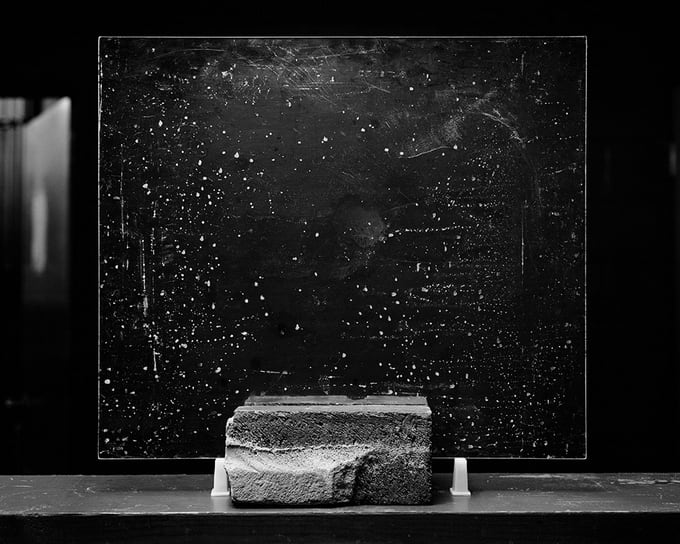
Columbia has supported work that treats place as material. Photographers such as Drew Nikonowicz have used Missouri landscapes and the city’s surroundings to build images that feel both factual and unsettled, often drawing on black-and-white tonal contrast to emphasize open space, distance, and weather. In that kind of work, Columbia is not just a backdrop; it is part of the subject’s meaning, because the city sits at the edge of the landscape it records.
The city also supports making in less direct ways. University labs and studios introduce digital tools, printing methods, and fabrication experiments, while the local publishing and arts scene provides places for critique, exhibition, and circulation. That matters in a publication about how things are made: Columbia is a city where institutional resources and regional conditions meet, and that combination affects the look and the method of the work produced there.
Frequently Asked Questions
Is Columbia, Missouri a college town?
Yes. The University of Missouri is the city’s defining institution, and student life shapes everything from housing and retail to public events and visual culture. The city’s rhythm changes with the academic calendar, which gives it a different feel from cities whose economies depend mainly on manufacturing or logistics.
Why is Columbia called “The Athens of Missouri”?
The nickname points to the city’s academic character and its reputation for civic culture, debate, and learning. Like “Athens” in other place nicknames, it signals a city that sees itself as centered on education rather than raw commerce. The phrase has stuck because the university remains so visible in the city’s daily life.
What kinds of projects are associated with Columbia?
Photographic projects, university-based design experiments, and work that uses the Midwest landscape as a formal subject often connect to Columbia. The city appears in pieces that rely on campus architecture, small-town urbanism, and the surrounding terrain. It is especially visible in work that treats place, weather, and institutional space as part of the image-making process.