
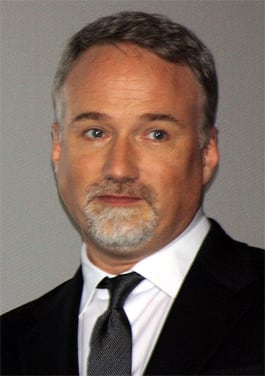
David Fincher is an American film and music video director known for controlled camera movement, precise composition, and thrillers that turn surfaces into sources of unease. He built his reputation on commercials and music videos before moving into features, where he became associated with polished images, cool lighting, and stories driven by obsession, surveillance, and moral damage.
- He began in music videos and advertising, where technical control shaped his style.
- His films often use muted color, careful framing, and meticulous editing to build tension.
- Recurring subjects include control, masculinity, paranoia, media, and institutional power.
- He is associated with major late-20th- and early-21st-century thrillers and dramas.
Where did his style come from?
Fincher emerged from the production-heavy world of American music videos in the 1980s and 1990s, a setting that rewarded exact timing, visual punch, and strong post-production work. That background stayed visible in his feature films. He tends to plan shots rigorously, favor digital precision when it serves the image, and use lighting and color to flatten or sterilize spaces before unsettling them with plot or behavior.
His early feature work, including Alien 3, showed how well he could work inside a large studio machine while still imposing a recognizable look. Later films refined that approach. In place of flamboyant camera tricks, he often uses slow movement, restrained framing, and repeated details that make a room, office, or suburban house feel watched.
What does a Fincher film look like?
A Fincher film usually looks immaculate before it starts to feel wrong. Faces are often lit with hard, cool light; interiors carry a slightly drained palette; and production design favors surfaces that read as expensive, controlled, or impersonal. The images rarely feel warm. Even when the setting is ordinary, the frame feels engineered.
Editing plays a large part in the effect. Fincher likes scenes that accumulate pressure through repetition, procedural action, and small shifts in behavior. The result is less about sudden shock than about sustained dread. In Se7en, Fight Club, Zodiac, and The Social Network, the visual design supports stories about systems that trap people: police work, consumer culture, murder investigation, and digital ambition.
Why does David Fincher matter?
Fincher matters because he helped define a modern studio style that is disciplined, technological, and psychologically cold without becoming visually plain. He showed that a mainstream thriller could be both highly engineered and aesthetically distinctive. His films also helped make grim, unsentimental urban and institutional spaces feel central to prestige cinema in the 1990s and 2000s.
He is also important as a director of process. Fincher is known for many takes, tight supervision, and a willingness to spend time in post-production shaping rhythm, color, and sound. That method influences how his films feel: not spontaneous, but exact. For makers in film, editing, lighting, and cinematography, he is a reference point for how technical control can become part of meaning.
Which films are most associated with him?
Several titles define his career. Se7en established his reputation for grim atmosphere and methodical dread. Fight Club paired stylized imagery with anti-consumerist rage and a volatile sense of identity. Zodiac replaced cathartic resolution with procedural frustration, using period detail and restrained camera work to mirror obsession.
He later broadened that range with The Curious Case of Benjamin Button and The Social Network, both of which earned major awards recognition. The former used digital effects to stretch time and aging into a melancholy visual concept. The latter turned a contemporary tech origin story into something severe, fast, and emotionally glacial, with design and pacing doing as much work as dialogue.
Frequently Asked Questions
Is David Fincher only known for thrillers?
No. Thrillers are the core of his reputation, but his work also includes drama, satire, and biographical storytelling. The Social Network and The Curious Case of Benjamin Button show how he uses the same formal control outside crime or horror structures. Even when the genre changes, the precision and emotional distance remain.
What technical traits are most associated with his direction?
He is associated with exact shot design, careful color correction, controlled lighting, and very deliberate editing. His productions often rely on extensive takes and fine-tuning in post-production. That technical rigor gives his films their polished but uneasy surface.
Why do his films often feel so cold?
The coldness comes from a combination of visual and dramatic choices. Fincher often strips away warmth in the palette, holds the camera at a measured distance, and focuses on behavior rather than sentiment. That approach turns emotion into something hard-won and sometimes damaged, which is central to the power of his films.
Articles mentioning David Fincher
