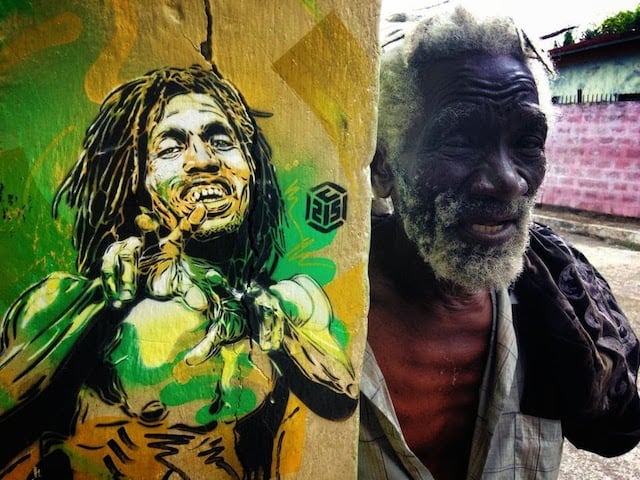
Jamaica is a Caribbean island nation made up of one large island in the Greater Antilles, with Kingston as its capital and main port. The island covers 10,990 square kilometres and lies south of Cuba and west of Hispaniola. Long before European colonisation, the Taíno called it Xaymaca, an Arawakan word usually understood as “land of wood and water.”
- A sovereign island country in the Caribbean Sea.
- Largest city and capital: Kingston.
- Geography shaped by mountains, coastal plains, and a dense urban core on the south-east coast.
- Cultural influence reaches far beyond its size through music, sport, and visual culture.
- Historically named Xaymaca by the Taíno, later shortened to Jamaica.
Where is Jamaica, and what does it consist of?
Jamaica sits in the western Caribbean, about 145 kilometres south of Cuba and 191 kilometres west of Hispaniola. It is the third-largest island in the Greater Antilles and the fifth-largest island country in the Caribbean. The country consists mainly of the single island itself, along with a scattering of smaller offshore cays and rocks.
Its landscape is not flat or uniform. The Blue Mountains rise in the east, the north coast is steep and forested in places, and the south has broader plains and harbour areas that helped shape settlement and trade. That geography matters to the island’s visual identity: Kingston’s street life, coastal fishing villages, and inland farming districts all produce different built environments, signs, colours, and materials.
Why does Jamaica matter culturally?
Jamaica has had an outsized impact on global culture, especially through music, language, and style. Reggae, dancehall, dub, and sound system culture emerged there and travelled widely, carrying with them ways of speaking, dressing, performing, and designing spaces for music. That influence also shows up in visual culture: album sleeves, hand-painted signs, dancehall flyers, street murals, and the graphic language of small businesses.
The country’s cultural force also comes from diaspora. Jamaican artists, designers, writers, and musicians have shaped cities such as London, Toronto, New York, and Miami, carrying island aesthetics into new contexts. In practice, Jamaican visual culture often combines improvisation with strong typography, bright colour, and direct public communication. It can feel handmade, urgent, and highly local even when it reaches a global audience.
What does Jamaica look like in practice?
On the ground, Jamaica is a place of sharp contrasts: resort architecture beside modest shopfronts, roadside fruit stalls beside modern office towers, mountain roads above dense residential districts, and painted walls that shift quickly as new crews, parties, and businesses appear. Kingston in particular is a city where posters, signage, taxis, music venues, and murals build a layered public surface. Artists working there often treat the street as a living exhibition space rather than a fixed gallery wall.
Materials and techniques matter here. Public-facing design often relies on paint, corrugated metal, plywood, vinyl, concrete, and digital printing, depending on budget and location. A dancehall promo might use glossy poster stock and saturated inks; a neighbourhood store might depend on hand-lettered boards or painted cinderblock; a mural may combine aerosol, brushwork, and sprayed outlines. Jamaica’s visual culture is not one style but a set of working methods adapted to heat, weather, music, movement, and constant reuse.
How did Jamaica get its name?
The original Taíno name, Xaymaca, reflects the island’s pre-colonial history. Spanish colonisation in the 16th century altered local governance, land use, and settlement patterns, and the English later took control in the 17th century. The English-language form “Jamaica” developed from the indigenous name through European transcription and pronunciation.
That history still matters because place names preserve older layers of meaning even when the political order changes. In Jamaica’s case, the name points back to the island’s first known inhabitants and to the long continuity of life there before and after colonisation. For a cultural publication, that reminder is important: contemporary music, design, and urban form sit on top of a much older geography and history.
Frequently Asked Questions
Is Jamaica only known for music?
No. Music is the island’s most globally visible export, but Jamaica also has a strong legacy in literature, sport, food culture, and public art. Its visual culture is especially rich in Kingston, where signage, murals, performance spaces, and street graphics shape daily life. The island’s influence comes from a broader creative ecosystem, not a single genre.
What is Kingston’s role in Jamaican culture?
Kingston is the capital, the main commercial centre, and the heart of much of Jamaica’s modern cultural production. Many of the island’s most important music studios, design studios, and street-based creative scenes are tied to the city. It is also a key site for understanding how Jamaican culture circulates through architecture, public space, and visual media.
What does the phrase “land of wood and water” mean?
It is the usual translation of the Taíno name Xaymaca. The phrase refers to the island’s forested hills, inland rivers, and abundant coastal water. It describes a landscape that has shaped settlement, agriculture, and the look of buildings and streets for centuries.
At a glance
- Coordinates
- 17.983334, -76.8
Articles mentioning Jamaica