
Cuba is a Caribbean island country made up of the main island of Cuba, the Isla de la Juventud, and several smaller archipelagos. Its capital is Havana, and its second-largest city is Santiago de Cuba. The country sits between the Atlantic and the Caribbean Sea, with the United States to the north, Mexico to the west, and Haiti and the Dominican Republic to the southeast.
Stories from Cuba
15 stories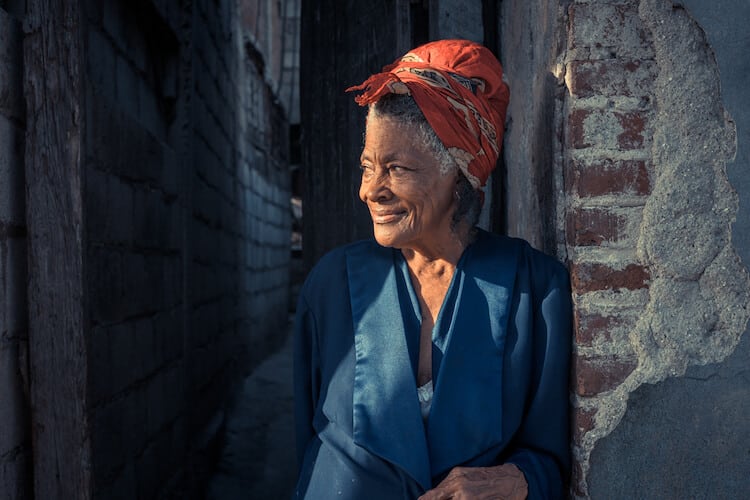




About Cuba
- Archipelagic island nation with a long coastline and strong maritime culture
- Colonial Spanish architecture, Afro–Cuban traditions, and revolutionary history shape its public image
- Havana is the main center for politics, culture, publishing, and tourism
- Street life, music, dance, and domestic craft remain central to everyday visual culture
- Cuba often appears in photography and design for its colors, textures, and preserved urban fabric
Read the full overviewWhere is Cuba, and what kind of place is it?, Why does Cuba matter in visual culture?, What does Cuba look like in practice?, How has Cuba been represented abroad?
Where is Cuba, and what kind of place is it?
Cuba occupies a strategic position at the entrance to the Gulf of Mexico, where the Caribbean meets the wider Atlantic world. That geography has made the island a contact zone for trade, migration, colonial rule, revolution, and cultural exchange. Its landscape ranges from flat agricultural plains to mountain ranges such as the Sierra Maestra, but most references to Cuba in visual culture focus on its cities, coasts, and rural settlements shaped by tropical light.
As a nation, Cuba is not a single island but a chain of islands and cays organized around the largest landmass in the Caribbean. That wider geography matters because fishing, sugar cultivation, port life, and coastal settlement have all shaped how the country looks and functions. The built environment reflects these forces: Spanish colonial plazas, pastel facades, weathered stone, and later twentieth-century concrete blocks all sit within the same urban field.
Why does Cuba matter in visual culture?
Cuba has long been a source of strong visual identity. Photographers, illustrators, and filmmakers are drawn to its dense streets, vintage automobiles, painted walls, shaded arcades, and the daily improvisation of public life. The appeal is not only aesthetic. Cuba’s visual character comes from material conditions: building stock that has aged in place, a climate that marks surfaces quickly, and a culture that reuses, repairs, and adapts objects for long periods.
That makes the island especially visible in photography. Havana’s balconies, fading signage, patterned ironwork, and interiors lit by strong sun create recognizable images with little need for staging. Cuban visual culture also includes music and performance, especially Afro-Cuban traditions, carnival forms, and dance, all of which shape dress, gesture, and street presence. In design terms, Cuba offers a study in color under constraint: bright paint, worn plaster, patched metal, and dense ornament surviving beside scarcity.
What does Cuba look like in practice?
In practice, Cuba is experienced through streets, homes, and small-scale making as much as through monuments. Old Havana preserves layers of Spanish colonial urban planning, while later neighborhoods show twentieth-century housing, informal repair, and public life spilling into the street. Laundry lines, open windows, painted signs, and everyday objects placed in doorways all become part of the visual field. The result is an environment where architecture and ordinary use are hard to separate.
Craft and repair play a central role in that environment. Furniture is mended, appliances are adapted, vehicles are kept running through improvised maintenance, and materials are reused until they fail completely. This practical ingenuity shapes the look of the place. It also explains why Cuban imagery often feels tactile: peeling paint, sun-faded posters, hand-lettered typography, woven textiles, and patched surfaces carry as much meaning as formal landmarks.
How has Cuba been represented abroad?
Cuba is often represented through a narrow set of images: classic cars, cigars, salsa, colonial facades, and political symbolism. Those motifs are real, but they can flatten the country into a postcard. Better work pays attention to structure and context, showing the relationship between people, public space, and material conditions rather than isolating spectacle.
Photographers and artists who work carefully in Cuba often focus on pattern, rhythm, and lived surfaces. Portraiture can capture dress and bearing; architectural photography can reveal how light, humidity, and maintenance shape buildings over time; documentary work can show how tradition persists through adaptation. The most convincing images treat Cuba as a lived place, not a decorative backdrop.
Frequently Asked Questions
Is Cuba only known for Havana?
No. Havana is the best-known city and the political and cultural center, but Santiago de Cuba, Camagüey, Trinidad, Cienfuegos, and many smaller towns also shape the country’s identity. Each region has different architectural, musical, and social traditions. Reducing Cuba to Havana misses much of its range.
Why do Cuban streets appear so distinctive in photographs?
Cuban streets often combine aged colonial buildings, tropical light, dense signage, and everyday repair. Surfaces weather visibly, and people use public space intensely, so the street scene carries many layers at once. Photographers respond to that combination because it creates strong color, texture, and composition without heavy staging.
What materials and techniques are especially associated with Cuba?
Common associations include plaster, stucco, painted masonry, ironwork, timber shutters, tile, and hand-lettered signage. In the realm of making, repair and improvisation matter as much as formal craft. Objects are often maintained, repurposed, and adapted for long use, which gives Cuban material culture a patched but resilient character.