
Joshua Reynolds was an eighteenth-century English portrait painter who helped define the look and status of British art in the age of the Royal Academy. He became famous for formal portraits of aristocrats, writers, officers, and actors, and for arguing that painting should aim at a higher, more ideal form he called the “Grand Style.”
Stories from Joshua Reynolds
1 story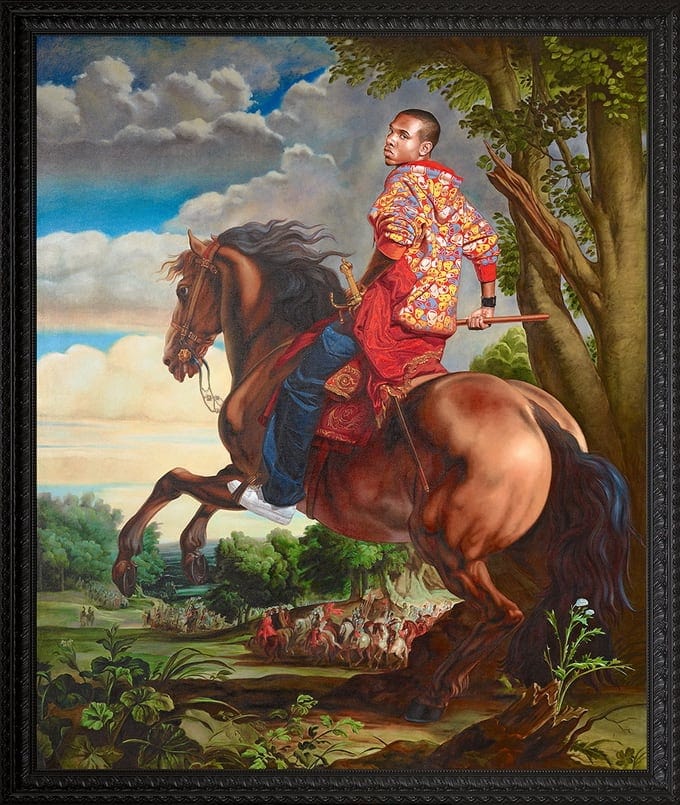
About Joshua Reynolds
| Born | 16 July 1723, Plympton, Devon, England |
|---|---|
| Died | 23 February 1792, London, England |
| Known for | Portrait painting, theory of the Grand Style |
| Movement | British portraiture, Neoclassicism-adjacent academic painting |
| Institutional role | Founder and first president of the Royal Academy |
| Title | Sir; knighted in 1769 |
Read the full overviewWhy Reynolds mattered, What did the “Grand Style” look like?, How did Reynolds actually work?, Why does Reynolds still appear in modern art discussions?
Why Reynolds mattered
Reynolds gave portraiture an intellectual ambition that went beyond likeness. He believed painters should study the old masters, borrow freely from classical sculpture and Renaissance painting, and refine everyday appearance into something more elevated. That approach shaped the visual language of elite portraiture in Britain for decades: sitters still looked like themselves, but they were arranged, lit, and clothed to suggest virtue, taste, rank, and historical weight.
His influence also came through institution-building. As the first president of the Royal Academy, Reynolds helped turn painting into a more public, professional, and theory-driven field. His lectures, later published as the Discourses on Art, became central reading for artists who wanted art to be judged by standards of design, invention, and disciplined study rather than by craft alone.
What did the “Grand Style” look like?
Reynolds used the term “Grand Style” for art that selected and improved nature instead of copying it exactly. In practice, that meant smoother surfaces, balanced compositions, restrained colour, and poses borrowed from antique sculpture or Renaissance masters. Faces could be idealised, backgrounds simplified, and costumes arranged so the sitter seemed to belong to a larger tradition of civic and cultural authority.
His portraits often carry this method clearly. Subjects are shown with noble posture, expansive gestures, and a carefully staged sense of presence. Even when the likeness is sharp, the overall effect is polished and generic in the best eighteenth-century academic sense: the individual becomes a public type as much as a private person.
How did Reynolds actually work?
Reynolds painted in oil, usually on canvas, and built his portraits through layering, glazing, and revision. He experimented with pigments and mixtures, sometimes with uneven long-term results, because he wanted certain colour effects and surface qualities that would serve a broad, luminous finish. That technical risk is part of his legacy: many paintings were made to impress at first glance in candlelit or formal interiors, not necessarily to preserve bright colour for centuries.
He also worked at speed and scale, maintaining a busy London studio that served a large clientele. Assistants may have helped with preparatory tasks and repeated elements, but Reynolds controlled the final image and the psychological framing of the sitter. His career depended on the market for portraiture, and on the social rituals of commissioning art as a sign of status, office, and cultural aspiration.
Why does Reynolds still appear in modern art discussions?
Reynolds matters because he stands at the centre of debates about imitation, originality, and idealisation that still shape art criticism. His model of high art helped establish academic standards that later artists both followed and attacked. Modern painters who borrow from older styles often meet Reynolds indirectly, because he represents the idea that painting can quote the past while remaking it for the present.
That makes him relevant to artists such as Kehinde Wiley, who rework historical portrait conventions to place contemporary Black subjects inside the visual authority once reserved for European elites. Wiley’s work depends on knowing exactly what Reynolds and his successors made portraiture do: turn clothing, pose, and composition into signs of power. Reynolds provides the old grammar; later artists rewrite it.
Frequently Asked Questions
Was Joshua Reynolds only a portrait painter?
No. Portraiture was his main business and his greatest strength, but he also wrote about art, shaped institutions, and influenced the standards by which painting was taught and judged. His lectures mattered almost as much as his canvases because they set out a theory of what ambitious painting should try to achieve.
What is Reynolds best known for in art history?
He is best known for championing the Grand Style and for leading the Royal Academy at its founding. He also set a benchmark for English portrait painting, where elegance, social authority, and painterly control were fused into a single image. Many later artists defined themselves in relation to that model, whether by following it or resisting it.
Why was Reynolds knighted?
George III knighted him in 1769 as recognition of his standing as a leading painter in Britain. The honour signalled that painting, especially portraiture at the highest level, could count as a significant public art rather than a purely manual trade. Reynolds’s place in elite society was part of the message his career conveyed.