
Julien Douvier is a Strasbourg-based photographer and animator known for polished cinemagraphs: still images in which a small area moves in a seamless loop. He makes urban scenes, landscapes, and branded visuals that feel carefully staged and tightly controlled, with motion used sparingly to sharpen attention rather than distract from it.
Julien Douvier on FreeYork
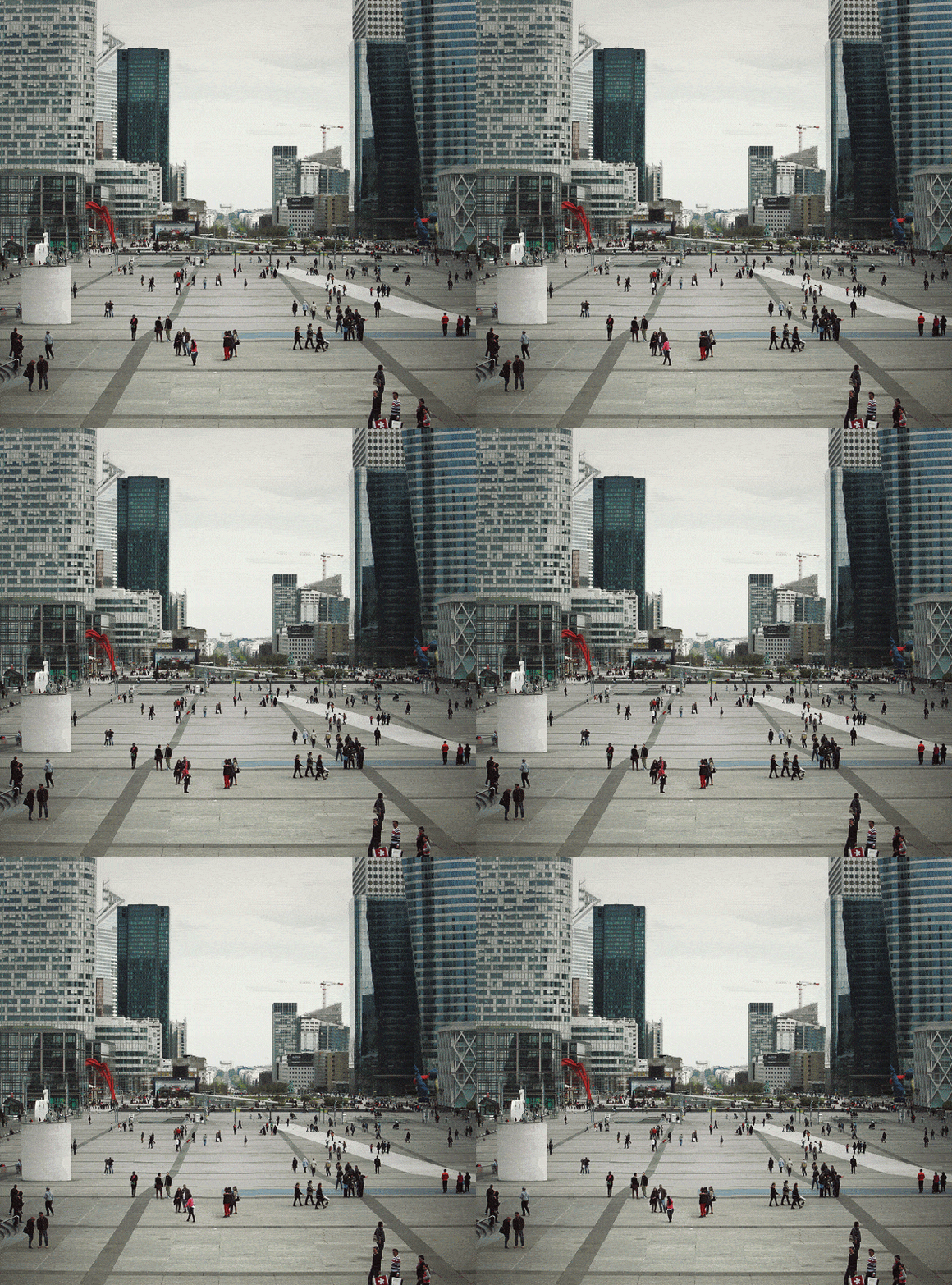
What makes Julien Douvier’s work distinct?
Douvier’s images sit between photography and motion design. A building facade may remain fixed while clouds drift, a train window may flicker with movement, or water may pulse inside an otherwise frozen frame. That restrained motion gives the image an uncanny quality: it still reads as a photograph, but one detail keeps breathing.
The effect depends on precision. The moving element must loop cleanly, the composition must hold still, and the edit must hide the seam. Douvier’s work stands out because the technical control is visible in the finished image without overpowering it. The result is often elegant, slightly surreal, and easy to adapt for editorial or commercial use.
How are cinemagraphs made?
A cinemagraph begins with a photograph or short video clip. The maker isolates one area for motion and freezes the rest of the frame, usually with masking and careful compositing in editing software. The loop has to feel continuous, so the start and end frames need to match in tone, position, and rhythm.
That process can be laborious even when the final image looks minimal. Small changes in light, camera movement, or subject motion can break the illusion. Douvier’s “manicured” look comes from this kind of post-production discipline: the shot is planned for the edit, and the edit is refined until the motion appears effortless.
Why do brands commission this style?
Cinemagraphs offer a middle ground between a static photograph and a full video ad. They load quickly, loop cleanly on screens, and hold attention without demanding sound or a long viewing time. For social media and digital campaigns, that makes them useful when a client wants something more striking than a still image but less involved than a film.
Douvier’s clean style fits that need well. His images have enough restraint to feel premium, but enough motion to create a hook in a feed or banner. That combination has made cinemagraph work attractive to brands that want visual polish and a contemporary digital look.
What kinds of subjects does he use?
Douvier often turns to urban life and nature. Both subjects lend themselves to subtle motion: traffic, reflections, wind, water, smoke, light. In city scenes, the contrast between fixed architecture and moving details can make the frame feel alive. In natural settings, motion often reads as softer and more atmospheric.
Because the motion is usually limited to one element, the rest of the composition matters more. Line, color, and balance do a lot of the work. The still portions need to be strong enough to carry the image on their own, which is why his cinemagraphs often resemble carefully composed editorial photographs first, animations second.
Questions
Is a cinemagraph the same as a GIF?
Not exactly. A cinemagraph is a style of image made to combine stillness and motion, while a GIF is a file format that can be used to display that motion. Many cinemagraphs are shared as GIFs or short looping videos, but the term describes the visual approach rather than the container.
What skills are needed to make work like Julien Douvier’s?
The process draws on photography, composition, and post-production editing. Strong control over lighting, framing, masking, and loop timing matters more than dramatic animation. A good cinemagraph often depends on restraint and careful retouching rather than complex movement.
Why does this kind of image feel so unusual?
The eye expects a photograph to stay still, so even a small motion interrupts that expectation. That slight contradiction creates tension and keeps the viewer looking. When the movement loops cleanly and the rest of the image holds steady, the effect can feel both calm and uncanny.