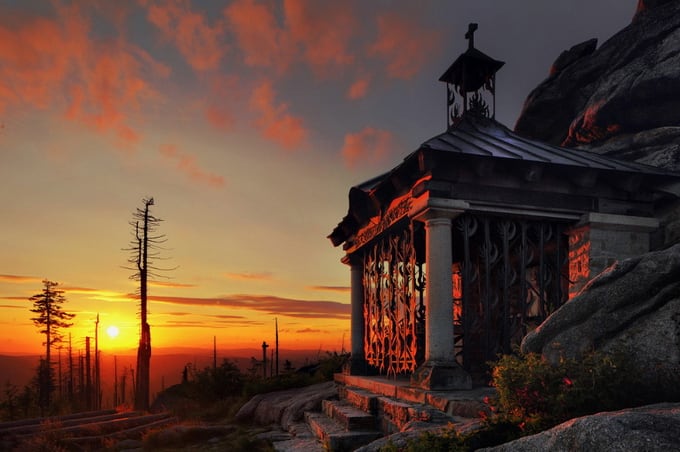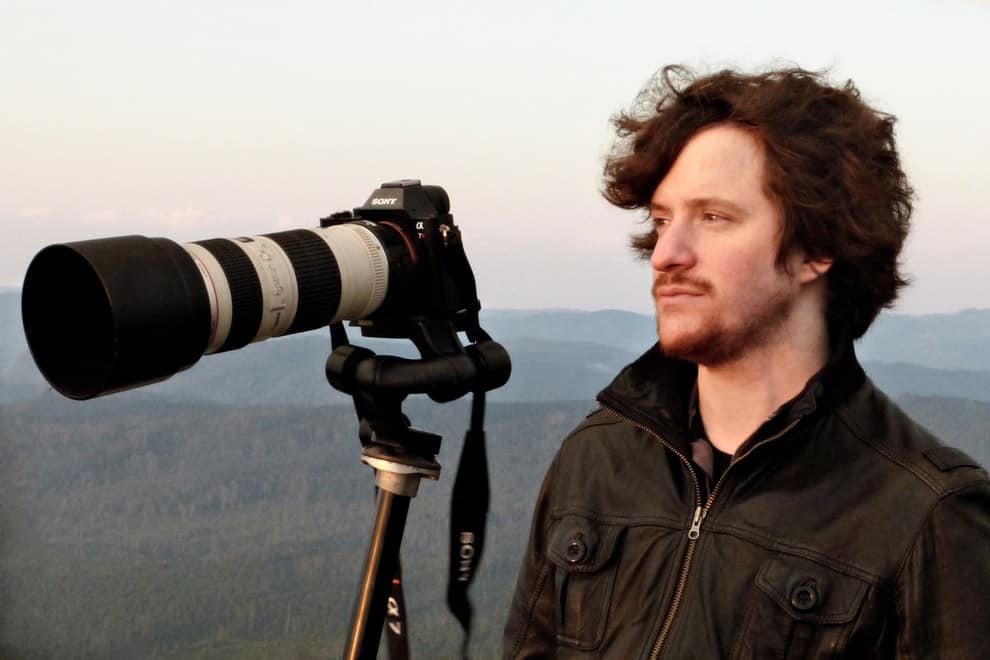
Kilian Schönberger is a German photographer and geographer known for landscape images that use composition, weather, and texture to turn ordinary terrain into something eerie or dreamlike. Born in 1985, he works across forests, alpine regions, rural settlements, and cityscapes, but he is most closely associated with moody photographs of temperate and high-latitude landscapes.
- German photographer and geographer, born in 1985.
- Best known for landscape work in fog, winter light, forests, and alpine settings.
- Colorblind, which he has described as shaping his way of seeing structure, pattern, and form.
- Photographs both rural and urban environments, often with a quiet, atmospheric tone.
- Lives and works between Cologne and Bavaria.
What makes his photography distinctive?
Schönberger’s work stands out because it treats visual limitation as a method. He has spoken about being colorblind and using that condition to focus less on hue and more on structure: the branching of trees, the rhythm of trunks, the repetition of rooftops, and the geometry of roads or slopes. That emphasis gives his images a clear skeleton. Even when the subject is messy or overgrown, the frame often feels ordered.
This approach fits landscape photography well, especially in the conditions he prefers. Mist, snow, low winter sun, and dim forest light simplify a scene by softening detail and reducing color contrast. In practice, that means his images often look stripped down and austere, with muted palettes and strong attention to line, depth, and surface.
Where did his visual style come from?
Schönberger’s background in geography matters to his photography. Geography trains attention on terrain, climate, settlement patterns, and how places are shaped over time. That perspective appears in the way he photographs not just “nature” but the built and natural environment together: crooked pines, mountain roads, isolated villages, and dense urban edges all become part of the same visual field.
His work also reflects a wider tradition in German landscape image-making, where atmosphere and place often matter more than spectacle. Instead of bright, dramatic color or overtly theatrical scenes, he frequently chooses conditions that flatten the image into tones, texture, and shape. The result can feel quiet, but it is rarely neutral; the photographs often carry a sense of solitude, pressure, or uncertainty.
Why does Kilian Schönberger matter?
Schönberger matters because he shows how a photographer can build a recognizable style from constraints rather than despite them. Colorblindness does not simply appear as a biographical note in his case; it affects the logic of the images. By leaning into pattern, contrast, and spatial structure, he produces photographs that are legible without depending on saturated color.
He is also a useful contemporary example of how landscape photography has expanded. His subjects move between remote forests and winter fields on one hand and towns, architecture, and urban density on the other. That range keeps his practice from becoming a single-genre niche. It positions him as a photographer of environments, not just scenic views.
What do his photographs look like in practice?
A typical Schönberger image often uses fog, snow, or dusk to reduce the scene to essentials. Trees may appear as repeated vertical marks, a road may cut a thin line through a valley, or a village may sit in a washed-out field of gray and white. The photographs tend to be calm on first glance, then become more intricate as the viewer notices repeated forms and small shifts in tone.
His preference for temperate and high-latitude landscapes gives the work a specific mood. These places can feel raw, damp, and compressed by weather, and he uses that feeling rather than trying to overcome it. In that sense, the subject is not only what stands in front of the camera, but also the climate that shapes how the subject appears.
Frequently Asked Questions
Is Kilian Schönberger mainly a landscape photographer?
Yes, landscape photography is the core of his practice, especially forests, alpine regions, and winter scenes. He also photographs cities and architecture, but those images still tend to focus on environment, structure, and atmosphere rather than on people or events. The unifying interest is how places look and feel under certain conditions.
How does colorblindness affect his work?
He has described colorblindness as pushing him toward pattern, shape, and contrast. Rather than reading a scene through subtle color differences, he concentrates on composition and structure. That can be an advantage in situations where fog, snow, or muted light already compress the color range.
What kind of mood do his photographs usually create?
They often feel quiet, cold, and slightly uncanny. Winter light, mist, and sparsely populated landscapes give the images a subdued emotional temperature. Even when the subject is familiar, the framing makes it feel remote or newly strange.
Articles mentioning Kilian Schönberger