
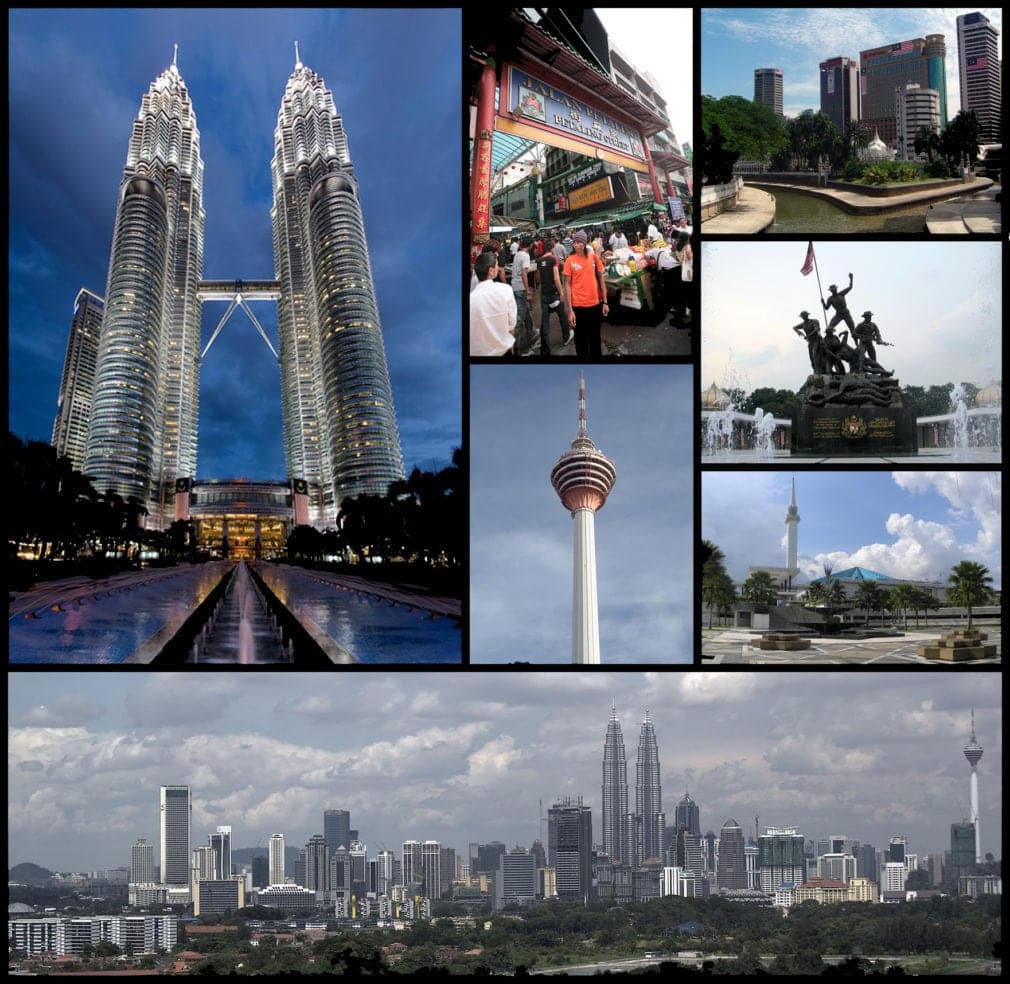
Kuala Lumpur is the federal capital of Malaysia and its largest city, a dense commercial and administrative centre built at the meeting point of roads, rail lines and river systems in the Klang Valley. It began as a tin-mining settlement in the 1850s and grew under British colonial rule into a planned capital, then into a modern metropolis shaped by finance, migration, retail, high-rise construction and a strongly visual street culture.
| Fact | Detail |
|---|---|
| Country | Malaysia |
| Status | Federal capital city |
| Region | Klang Valley, central Peninsular Malaysia |
| Origin | 19th-century tin-mining settlement |
| Known for | Skyscrapers, government institutions, multicultural neighbourhoods, design and commercial production |
How Kuala Lumpur began
Kuala Lumpur formed at the confluence of the Klang and Gombak rivers, a location that supported trade and mining in the 19th century. Its name is often translated as “muddy confluence,” a plain description of the ground that gave the settlement its first shape. Chinese miners, Malay traders and other migrant communities established the town around tin extraction, shop lots and transport routes.
British colonial administration later made it a centre of governance and infrastructure. Brick buildings replaced much of the early timber town after repeated fires and floods, and rail, roads and civic institutions turned Kuala Lumpur into the political and economic core of what would become independent Malaysia.
What does Kuala Lumpur look like on the ground?
The city presents a sharp mix of old and new fabric. Glass towers and luxury malls stand near shophouses, hawker centres, prayer halls and small workshops. Colonial-era facades survive in parts of the centre, but the dominant image is vertical: office towers, hotel slabs, transit hubs and elevated roads stacked over a crowded street level.
That density matters for visual culture. Kuala Lumpur is a place of signage, reflective surfaces, night lighting and layered circulation, which makes it a frequent subject for photography, illustration and editorial image-making. In practice, the city offers strong contrasts: polished corporate architecture, humid tropical light, saturated colour, and busy public interiors such as markets, stations and food courts.
Why does Kuala Lumpur matter in Malaysian design and media?
Kuala Lumpur concentrates publishing, advertising, fashion, technology and state institutions, so it functions as both a market and a production centre. Many artists, photographers and illustrators working in Malaysia build their careers there, where commercial commissions, exhibitions and media work are more concentrated than elsewhere in the country. The city also hosts universities, galleries and creative studios that feed a steady stream of visual work.
For makers, the city’s value lies in its overlap of cultures and industries. Malay, Chinese, Indian and international influences shape everyday design choices, from typography and packaging to food presentation and public art. That mix gives Kuala Lumpur a distinct visual language: pragmatic, metropolitan and highly hybrid, with traditions of ornament and commerce sitting close together.
Why do so many image-makers use Kuala Lumpur as a backdrop?
Photographers and illustrators return to Kuala Lumpur because it compresses many kinds of imagery into a small area. A single day can produce portraits, street scenes, skyline studies, architectural details and indoor commercial spaces. The city’s weather, traffic and density also create a recognisable atmosphere: glare, shadow, rain-slick pavement and a constant sense of movement.
That visual energy appears in editorial photography, digital illustration and product storytelling. Artists often use Kuala Lumpur not just as location but as texture: a source of neon, foliage, concrete, crowd patterns and urban rhythm. When a work mentions the city, it often signals an urban Malaysian context that is modern but not generic, rooted in a specific Southeast Asian environment.
Frequently Asked Questions
Is Kuala Lumpur the capital of Malaysia?
Yes. Kuala Lumpur is the federal capital and seat of Parliament, which makes it the main political centre of the country. It is also the largest city in Malaysia by population.
What is Kuala Lumpur best known for visually?
The city is known for tall buildings, busy commercial districts, multicultural street life and a layered skyline. Its visual identity includes colonial facades, modern towers, markets, transit systems and dense urban signage. Tropical light and frequent rain also shape how surfaces and colours appear there.
Why does Kuala Lumpur appear so often in design and photography articles?
It offers a strong mix of modern infrastructure, cultural variety and recognisable street scenes. That makes it useful for fashion shoots, editorial portraits, city studies and commercial campaigns. As a result, it shows up often as both subject and setting in visual work from Malaysia.