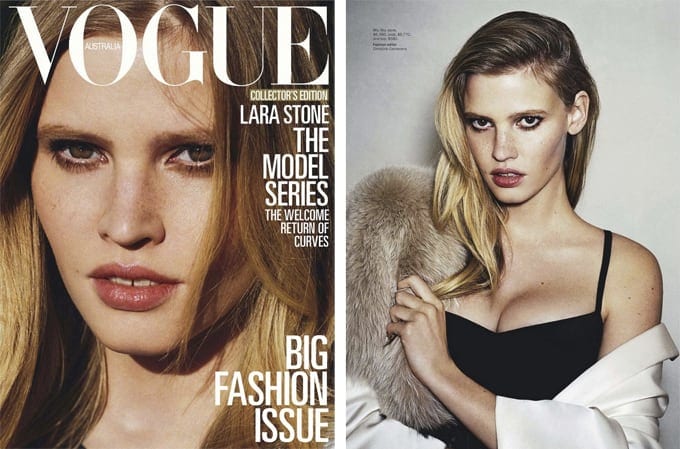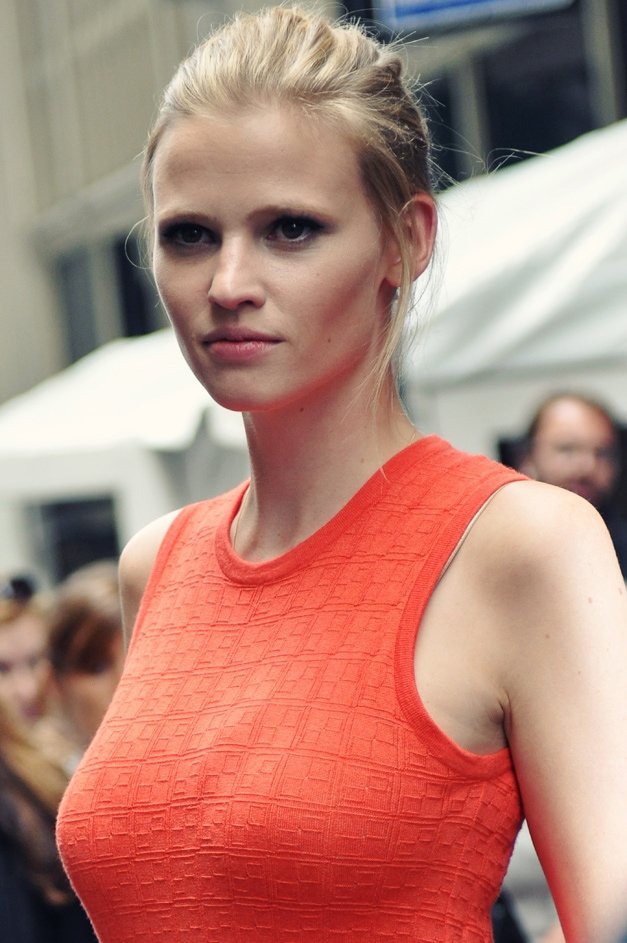
Lara Stone is a Dutch fashion model known for her distinctive gap-toothed smile, strong facial structure, and a career that moved between high-fashion editorials, runway work, and major luxury campaigns. Born Lara Catherina Stone in 1983, she became one of the most recognisable models of the late 2000s and early 2010s, appearing on international Vogue covers and ranking among the world’s highest-paid models in 2012.
| Born | 20 December 1983 |
|---|---|
| Nationality | Dutch |
| Known for | Fashion modelling, editorial covers, runway appearances, luxury advertising |
| Notable recognition | 8th on Forbes’ top-earning models list in 2012 |
Why Lara Stone stood out
Stone became prominent at a moment when fashion still relied heavily on a narrow model ideal. Her look did not read as blandly interchangeable: the gap between her front teeth, heavy brows, and blunt, sculptural face gave photographers a strong visual anchor. That made her effective both in glossy beauty imagery and in fashion stories that wanted a little tension or edge.
Her career also mattered because it showed that high-fashion modelling could reward a face with character rather than pure conventional prettiness. That was especially visible in editorial work, where a model’s ability to hold a pose, signal mood, and work with light can matter as much as measurements.
How did she become so visible?
Stone worked across the core machinery of fashion: runway shows, magazine editorials, and campaign photography. Those three formats each ask for something different. Runway demands consistency and presence; editorials ask for range and collaboration with styling, lighting, and art direction; campaigns require a face that can carry a brand across billboards, print, and digital media.
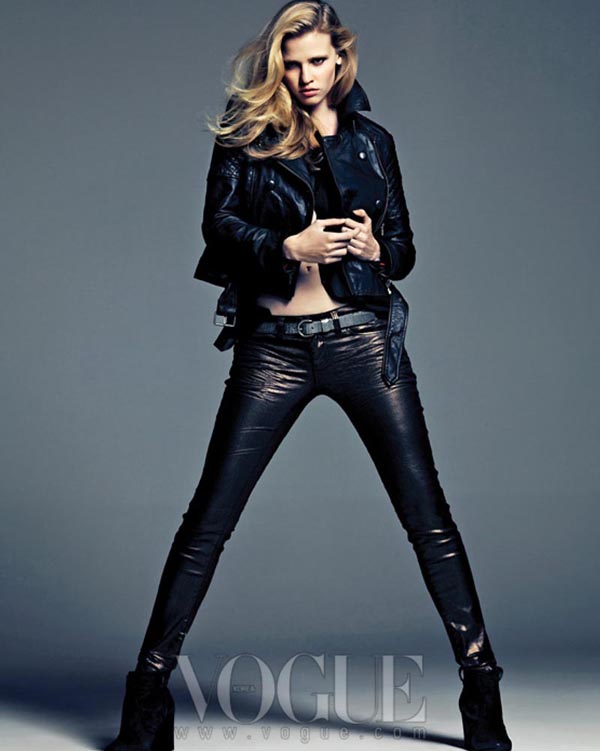
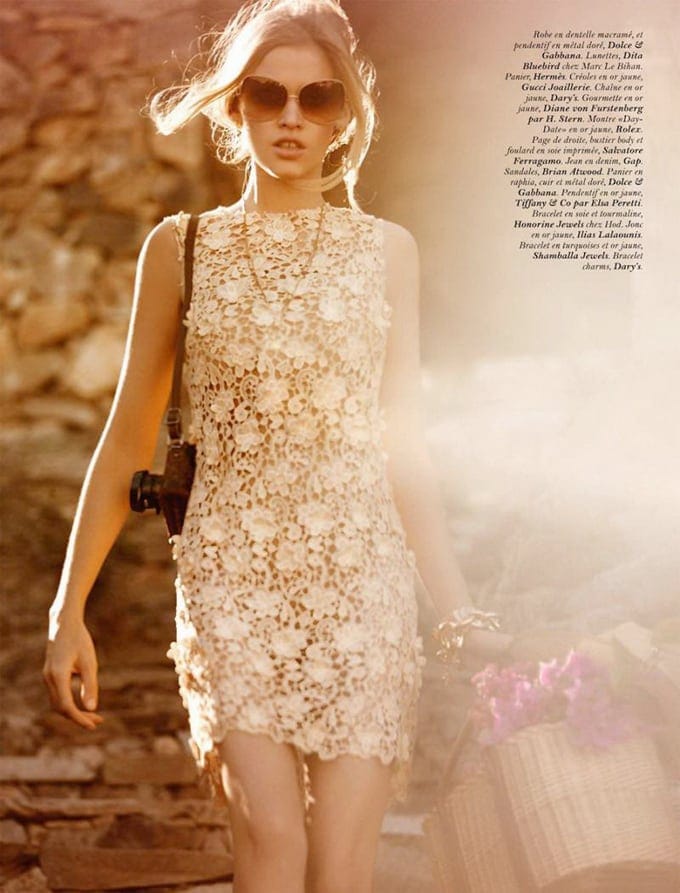
Her visibility grew through repeated appearances in international fashion magazines, including Vogue editions in Australia, Korea, and Paris. Cover work is not just decorative. It signals editorial confidence, commercial relevance, and a model’s fit with the visual language of a specific market or publication.
What does Lara Stone represent in fashion?
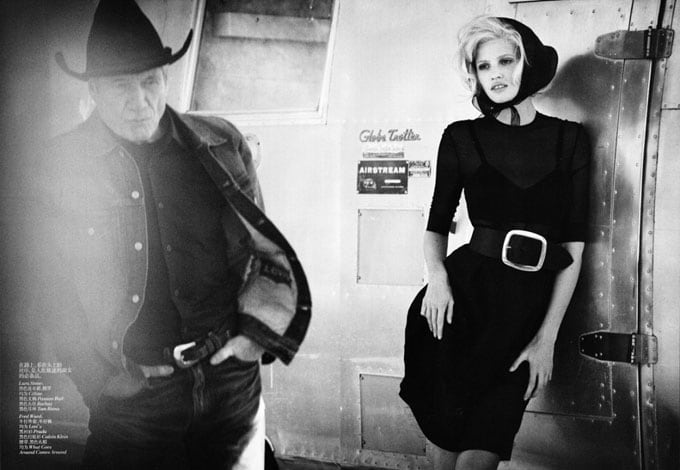
Stone represents a period in fashion when individuality could be packaged as luxury. Her appeal lay partly in contrast: polished but not delicate, glamorous but not generic. Photographers could use that contrast to give a picture more pressure and more personality, whether the styling was severe tailoring, soft beauty makeup, or retro references.
She also sits within the economics of modelling at the highest level. A model who appears in major campaigns and cover stories becomes part of the commercial face of fashion houses and magazines. The Forbes ranking in 2012 reflected that kind of market value, where image, exclusivity, and repeat visibility translate directly into income.
What kinds of images is she associated with?
Stone is often associated with clean, tightly controlled fashion photography: direct gaze, defined bone structure, and styling that lets the face do most of the work. In practice, that can mean minimal makeup, precise hair, or a strong costume element that frames the body without overwhelming it. The result is usually a picture that feels sharp and legible rather than dreamy or diffuse.
She also appears well in beauty-driven work, where skin texture, lip shape, and expression become central. That made her useful for covers and campaigns that wanted sophistication without blandness. The model’s face becomes part of the graphic design of the page.
Frequently Asked Questions
Is Lara Stone mainly a runway model or an editorial model?
She worked in both areas, which is part of why she became so visible. Editorials and covers established her image, while runway work kept her tied to the fashion season cycle and to designer collections. That combination usually produces a stronger career than a single lane alone.
Why was the gap in her teeth discussed so often?
Fashion writing often treats distinctive features as shorthand for individuality. Stone’s gap-toothed smile became part of her signature look because it set her apart from models who fit a more uniform beauty standard. In images, that feature gave her face a memorable asymmetry that photographers could emphasise rather than correct.
What made her important to magazines like Vogue?
She could support a range of editorial moods, from polished luxury to sharper, more unconventional fashion stories. That flexibility matters to magazines, which need models who can adapt to different creative teams and visual concepts. Her repeated Vogue appearances show that she was useful not just as a face, but as a reliable image-maker’s subject.
Articles mentioning Lara Stone