
Natasha Poly is a Russian fashion model known for her long career on runways and in major advertising campaigns. She became one of the defining catwalk faces of the 2000s and 2010s, especially in high-fashion work where her sharp walk, long limbs, and controlled expression made her a frequent choice for editors and luxury brands.
Stories from Natasha Poly
3 stories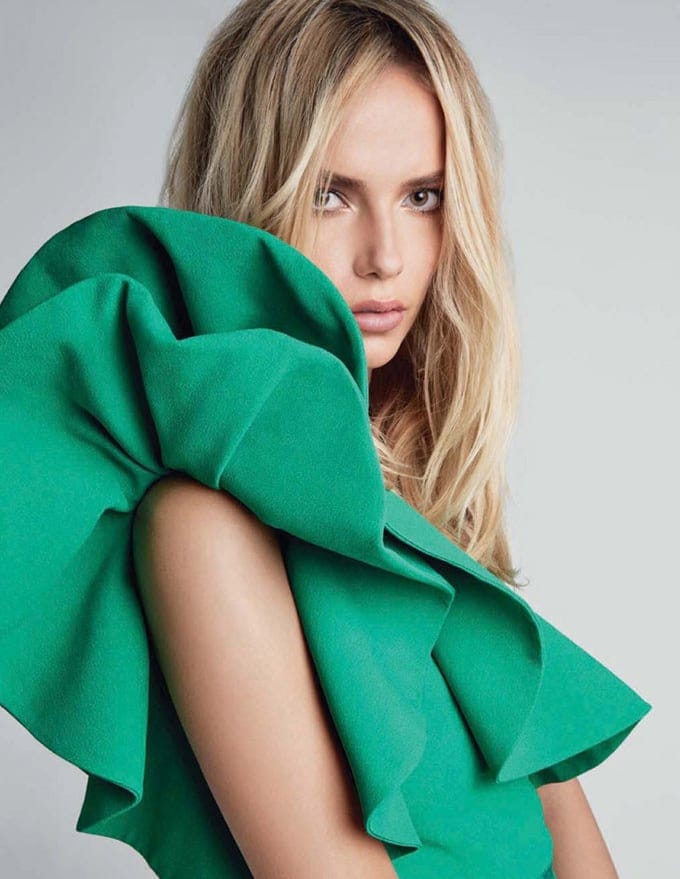
About Natasha Poly
| Born | July 12, 1985, in Perm, Russia |
|---|---|
| Nationality | Russian |
| Known for | Runway modelling, campaign work, fashion editorials |
| Also known as | Natalya Sergeyevna Polevshchikova |
| Career note | Named an “icon” by Models.com in 2012 |
Read the full overviewHow Natasha Poly became a major model, What does Natasha Poly look like in practice?, Why she mattered in fashion imagery, What kinds of work is she associated with?
How Natasha Poly became a major model
Natasha Poly emerged from the Russian model pipeline that reshaped fashion in the early 2000s. Born Natalya Sergeyevna Polevshchikova, she entered international modelling while still young and quickly moved from local discovery to a visible presence in Paris, Milan, and New York. Her work arrived at a moment when luxury brands were looking for models who could carry both dramatic runway clothes and closely lit advertising images.
Her name became attached to a very specific kind of fashion presence: severe but polished, glamorous without softness, and suited to clothes that depend on line and movement. That made her useful across seasons and markets. Editors, casting directors, and photographers could read her easily on a runway, in an editorial spread, or in a campaign built around a single striking pose.
What does Natasha Poly look like in practice?
Poly is best understood through performance rather than celebrity. On the runway, she is known for a forceful walk, upright posture, and a face that can shift from blank to intense without losing control. Those qualities help a garment hold attention. A sharp shoulder line, a narrow waist, or a dense fabric such as satin or leather often reads more clearly when a model moves with that kind of precision.
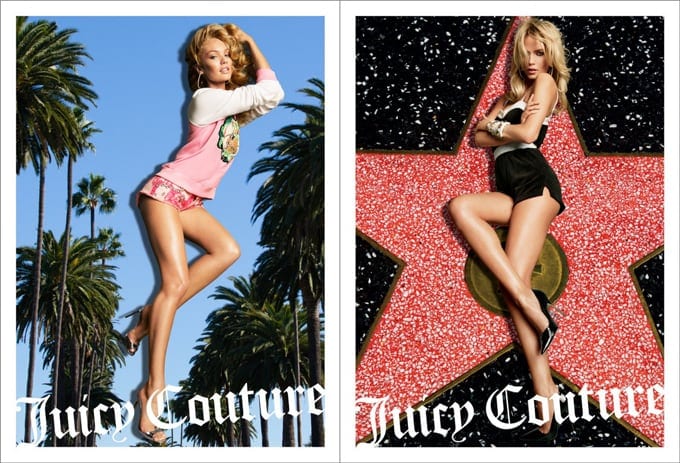
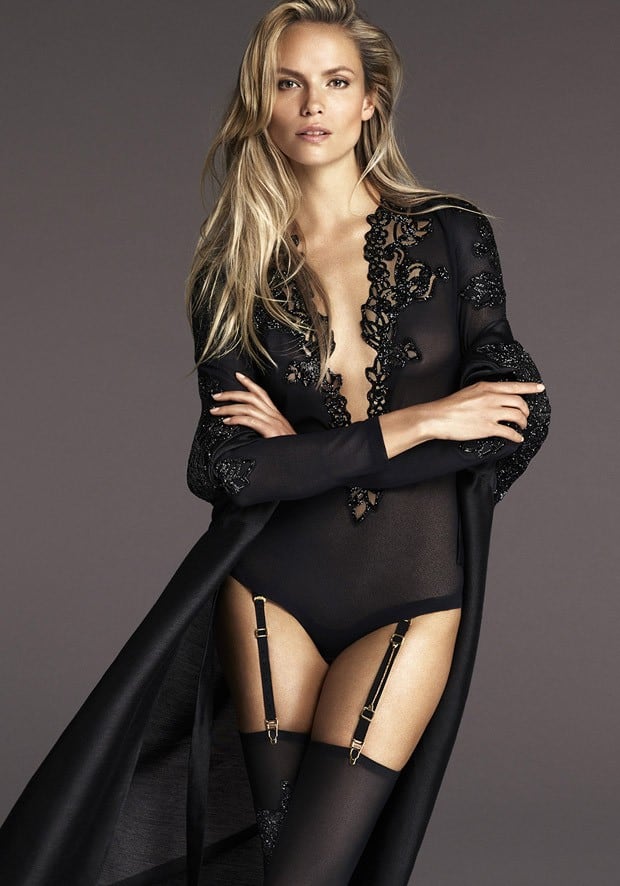
In print, she has frequently been used for campaigns that need a clear, high-contrast image. Her features and expression work well in luxury advertising because they register quickly and do not compete with the garment. That is why she appears in work for brands such as La Perla and Juicy Couture, where the image depends on texture, pose, and the mood of excess or glamour.
Why she mattered in fashion imagery
Poly’s importance lies in consistency. Fashion images are made from many variables: tailoring, textile, styling, makeup, lighting, retouching, and the model’s ability to translate all of them into one coherent frame. Poly handled that machinery especially well. She could make a highly constructed look seem easy to wear, which is one of the most valuable skills in commercial fashion photography.
She also belonged to the era when the supermodel returned as a recognisable figure in luxury fashion, even if the market was more fragmented than in the 1990s. Her presence in campaigns and editorials helped keep the model herself visible as part of the brand identity, not merely as a hanger for clothes. That made her useful to magazines such as Vogue China and to labels seeking a strong, international visual signature.
What kinds of work is she associated with?
Poly is associated with runway shows, beauty campaigns, lingerie advertising, and high-fashion editorial photography. Each of those settings uses the body differently. Runway work depends on movement and proportion; lingerie campaigns depend on silhouette, skin, and controlled sensuality; editorials often use the model as one element in a larger visual argument about styling or mood.
Her career is also a reminder that modelling is a technical profession. A model must understand pace, stance, lighting, lens distance, and how clothing behaves on the body. Poly’s long career suggests that she mastered those basics and adapted them across changing fashion cycles, from glossy early-2000s glamour to the more polished, digitally circulated campaigns of the 2010s.
Frequently Asked Questions
Is Natasha Poly a runway model or a print model?
She is both, but her reputation was built heavily on runway work. The catwalk gave her visibility and helped define her image, while campaigns and editorials extended that visibility into print and advertising. Many models do one better than the other; Poly was effective in both settings.
Why do fashion brands choose models like Natasha Poly?
Brands choose models who can make clothing look intentional. Poly’s look and movement suit garments with strong tailoring, slick surfaces, and structured silhouettes. In advertising, that matters because the model has to support the product without stealing focus from it.
What does it mean that she was called an “icon” by Models.com?
It signals industry recognition rather than a formal award. Models.com uses its own categories to identify models with major influence, long careers, or unusual staying power. In Poly’s case, it marks her as a figure who helped define fashion imagery during her peak years.