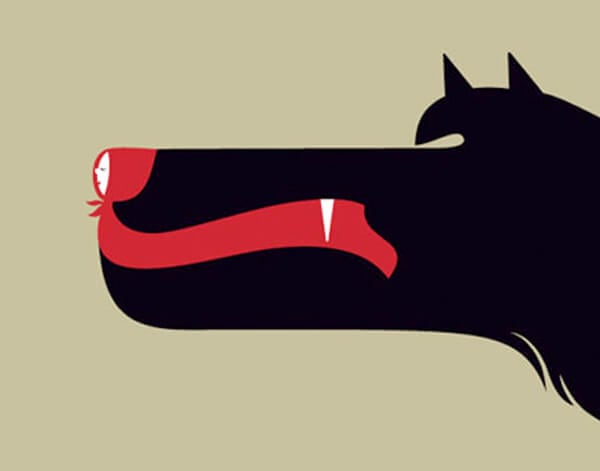
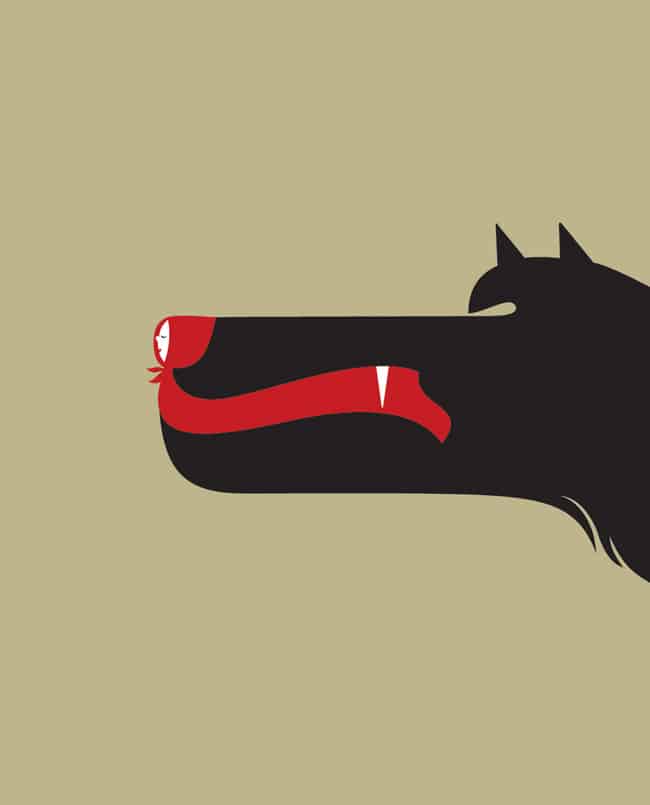
Noma Bar is an Israeli graphic designer and illustrator known for images that hide one picture inside another, often by using negative space. Born Avinoam Noma Bar in 1973, he built a career on spare, highly compressed compositions that turn simple shapes into visual riddles. His work has appeared in magazines, newspapers, books and advertising, where the goal is usually instant recognition with very few marks.
- Best known for using negative space to build double images and visual puzzles.
- Works across editorial illustration, magazine covers, posters and advertising.
- Published more than 550 illustrations and over sixty magazine covers.
- Books of his work include Guess Who – The Many Faces of Noma Bar and Negative Space.
- His images rely on economy: a few flat shapes, strong contrast and careful figure-ground reversal.
What makes Noma Bar’s work distinctive?
Bar’s images usually begin with a clear silhouette or block of color, then reveal a second reading inside it. A face may be formed from the cut-out between two profiles; a political figure may emerge from a weapon, animal, or household object. The effect depends on negative space, the part of the composition that is left empty or reserved, which he uses as actively as ink or paper.
This approach makes his work feel immediate and compact. It can carry satire, critique or humor without needing much text, which is one reason editors and publishers have used him so widely. The image often rewards a quick glance first and a slower second look after the hidden form becomes visible.
Where did his style come from?
Bar comes out of editorial illustration and graphic design, where images have to communicate fast and survive reproduction at small sizes. That background helps explain the clarity of his drawings: few colors, strong edges and no unnecessary texture. The compositions often behave like logo design or a print cut-out, but they are used to tell stories rather than identify a brand.
His work also draws on the older tradition of visual punning in print culture, from newspaper cartoons to optical illusions. What distinguishes him is consistency. He does not treat negative space as a one-off trick; it is the engine of the image itself.
How is negative space used in practice?
In Bar’s hands, negative space is not just blank background. It becomes a shaped void that defines faces, limbs, animals or objects by what is absent rather than what is drawn. That means the surrounding forms have to be planned with unusual precision: a curve placed a little too high can destroy the hidden image, while a sharper edge can make the whole composition click into place.
This method suits flat reproduction, especially in magazines and newspapers, where strong silhouette and contrast matter more than fine detail. It also gives his work a clean, reproducible look that translates well across print and digital screens. The result is often economical but never casual; each shape has to do two jobs at once.
Why does Noma Bar matter?
Bar showed that editorial illustration could be intellectually playful without becoming decorative or obscure. His images meet the demands of commercial publishing while still asking for active reading. That balance has made him influential among illustrators and art directors looking for work that can communicate quickly and still leave a mark.
He also helped keep negative space central in contemporary graphic language. The technique is old, but Bar made it feel current by using it on topical subjects, from culture to politics. His covers and printed illustrations are now a recognizable reference point for designers who want brevity, wit and visual compression.
Frequently Asked Questions
Is Noma Bar mainly an illustrator or a graphic designer?
He is both, though he is best known for illustration. His output sits in the overlap between editorial illustration, poster design and graphic design, with the same visual logic moving across all three. The work is structured like design, but it is usually commissioned to communicate a specific idea or story.
What is negative space in his work?
Negative space is the empty area around and between forms. Bar uses it as a drawing tool, shaping that emptiness so it reads as a face, object or symbol. In his illustrations, what is not drawn often matters as much as the filled areas.
Where has his work appeared?
His illustrations have appeared in publications including Time Out London, the BBC, The Observer, The Economist, Wallpaper* and Random House books. He has also published two monographs of his work with Mark Batty Publisher. The range shows how adaptable his style is across editorial, publishing and commercial contexts.
Articles mentioning Noma Bar