
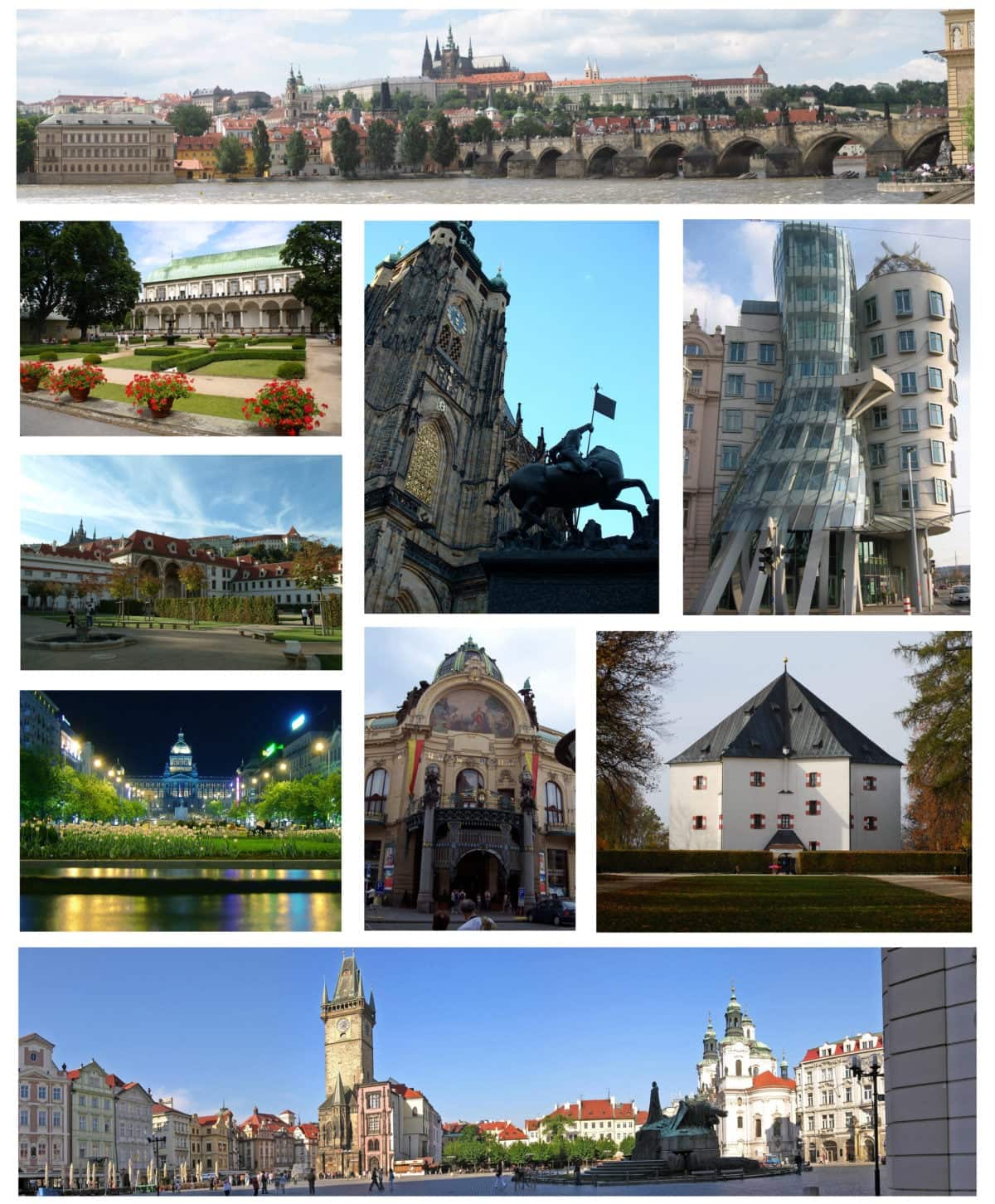
Prague is the capital and largest city of the Czech Republic, and the historic capital of Bohemia. Built on the Vltava river in the north-west of the country, it is a major Central European city with a long architectural history and a dense urban core of medieval streets, baroque churches, Art Nouveau facades, and modern interventions. Its size, preserved fabric, and strong cultural institutions make it a frequent setting for design, photography, and contemporary art.
| Type | Capital city |
|---|---|
| Country | Czech Republic |
| Historical region | Bohemia |
| River | Vltava |
| Population | About 1.3 million |
| Urban area | Nearly 2 million |
| Climate | Temperate oceanic; warm summers, chilly winters |
Why does Prague matter in visual culture?
Prague matters because the city itself is a layered visual field. Romanesque remains sit beside Gothic towers, baroque domes, socialist-era blocks, and contemporary work, so a single street can show several centuries of building ideas at once. That density gives photographers, architects, illustrators, and set designers a place where texture and silhouette matter as much as scale.
The city also functions as a stage for public art and urban image-making. Its bridges, squares, and historic facades are not neutral backdrops; they shape how people shoot dance, fashion, food, sculpture, and architecture. In practice, Prague often appears in images as a city of stone, plaster, iron, and brick, with strong lines, shadows, and ornament.
What does Prague look like on the ground?
Prague’s historic center is known for narrow streets, clustered roofs, and a skyline marked by spires and towers. The Vltava river divides the city and creates long views toward bridges and the castle district, making water and stone equally central to its identity. Many of the city’s best-known buildings rely on traditional masonry, stucco, and roof tile, which give the old districts a warm, layered surface.
Outside the oldest quarters, the city includes 19th-century apartment blocks, industrial buildings, postwar housing, and new residential projects. That mix matters for contemporary makers because Prague is not preserved as a museum city only; it is also a place where new facades, interior divisions, adaptive reuse, and public sculpture have to negotiate a powerful historic setting.
How has Prague shaped architecture and design?
Prague has long supported architectural experimentation within a strongly historic frame. Designers working there often have to respond to existing brick vaults, courtyard plans, rooflines, and street regulations that favor continuity over spectacle. As a result, many projects in the city deal with thresholds, privacy, light control, and material contrast rather than wholesale reinvention.
That tension is visible in contemporary housing, retail, and exhibition spaces, where glass, timber, metal, and brick are used to soften or punctuate older structures. Prague’s built environment rewards careful detailing: a divider, facade, or opening can change how a room feels, but it also has to fit an urban language already shaped by centuries of construction.
Why does Prague recur in art and photography?
Prague offers strong visual cues for artists: patterned pavements, ornate street lamps, historic facades, statues, and a river that produces reflections and long perspective lines. Dance photographers, sculptors, and illustrators often use those cues to create work that feels theatrical without needing elaborate sets. The city itself supplies contrast between grandeur and everyday life.
It also supports satire and image-based critique. Contemporary artists have used Prague’s public spaces and recognisable landmarks to place absurd figures, pop references, and altered objects into scenes that depend on the city’s authority as a historic capital. In that sense, Prague can act as both subject and frame: a place with enough visual weight to anchor work, and enough public visibility to let interventions stand out.
Frequently Asked Questions
Is Prague the same as Bohemia?
No. Prague is the capital city of the Czech Republic and the historic capital of Bohemia, but Bohemia is the larger historical region. The city sits within that region and has long served as its political and cultural center. The distinction matters because many references to Prague also point to the broader history of Bohemian art, architecture, and craft.
What makes Prague especially useful for architecture coverage?
Prague combines preservation pressure with active development, which creates visible differences between old and new work. Historic masonry, courtyards, and dense street patterns set a high bar for any contemporary intervention. That makes the city useful for reporting on facades, adaptive reuse, spatial division, and material choices.
Why do so many image-led projects use Prague as a setting?
Prague has a clear visual identity that reads quickly in photographs and film. Spires, bridges, vaulted interiors, and river views provide instant context, while the city’s layered architecture gives artists strong contrasts in surface and scale. Those qualities make it a reliable setting for work that needs atmosphere without explanation.