Stop motion is an animation technique that makes a physical object appear to move by photographing it one frame at a time after tiny adjustments between shots. When the frames play in sequence, the object seems to act on its own. The method depends on material craft as much as timing: puppets, armatures, clay figures, paper cut-outs, LEGO bricks, household objects and even food can become animated performers.
- Each frame is a separate still image; movement is built by incremental changes.
- Common materials include puppets with armatures, clay, paper, fabric, wood, and found objects.
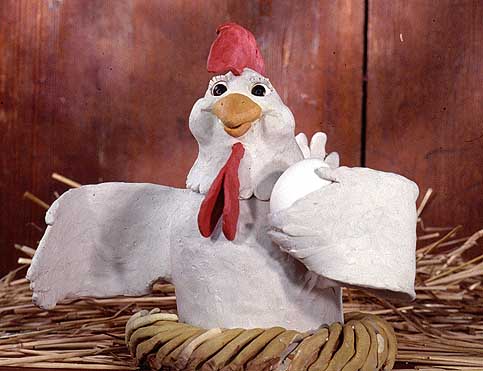
- Clay animation is a form of stop motion made with plasticine or similar malleable materials.
- The technique can look handmade, tactile, and slightly irregular, which is often part of its appeal.
- It is used in film, television, adverts, music videos, and fine art installations.
How stop motion works
Stop motion begins with a subject placed in front of a camera. The animator moves it a very small amount, takes a photograph, moves it again, and repeats the process until the action is complete. When those still frames are played at normal speed, the object seems animated. The visible gaps between poses are what give stop motion its characteristic rhythm: crisp, slightly staccato, and often full of deliberate, handmade detail.
The technique rewards control over material. A puppet built on a wire armature can hold a pose precisely. Clay can be pressed, stretched, and deformed to show expression and transformation. Flat paper figures can glide across a surface, while objects like bricks, wool, or vegetables can become characters if they can be nudged and photographed consistently.
Where did stop motion come from?
Stop motion developed alongside the earliest years of cinema, when filmmakers were already experimenting with how a camera could make impossible things appear real. Early trick films used the same frame-by-frame logic to make objects vanish, multiply, or change shape. As animation studios refined the process, stop motion became a distinct practice rather than just a visual trick, with dedicated puppets, miniature sets, and specialised lighting setups.
Its history is tied to model making, puppetry, and practical effects. Filmmakers drew on toy theatres, mechanical displays, and theatre marionettes, then translated those traditions into photographed images. That lineage still matters: stop motion often feels like cinema made from objects that remember being handled. The technique keeps the maker’s fingerprints visible, even when the final image is polished and elaborate.
Why does stop motion matter?
Stop motion matters because it gives physical materials a performance. Unlike computer animation, which can smooth every motion into seamless continuity, stop motion often preserves tiny imperfections: a slight wobble, a change in light, a surface that catches the lens differently from one frame to the next. Those traces can make the image feel intimate, handmade, and strangely alive.
It also remains useful because it can do things that other forms cannot replicate easily. A patchwork puppet can age, tear, or transform in front of the camera. Clay can liquefy into a new face. A sandwich, a shoe, or a miniature house can become part of a narrative without losing its objecthood. That flexibility has made stop motion attractive to artists, advertisers, and filmmakers who want the audience to notice texture, scale, and touch.
What does it look like in practice?
In practice, stop motion usually involves a set, a camera mounted in place, controlled lighting, and a sequence plan broken into small beats. Animators use rigs, wires, pins, replacement parts, or armatures to keep figures steady between frames. Some productions rely on replacement animation, where mouths, eyes, or whole limbs are swapped out one frame at a time; others use mouldable materials that can be reshaped continuously.
Clay animation, often called claymation, is the best-known variation. Its surfaces can smear, squash, and reform in ways that feel especially elastic. But stop motion is broader than clay alone. Cut-out animation, puppet animation, LEGO animation, and object animation all belong to the same family. The method can serve comedy, horror, children’s programming, and experimental film alike, because the core effect stays the same: matter made to move through patience, precision, and repeated stillness.
Frequently Asked Questions
Is stop motion the same as animation?
Stop motion is one branch of animation, not a synonym for the whole field. Animation also includes drawn animation, computer-generated animation, rotoscoping, and other methods. Stop motion specifically means building movement from photographed objects or puppets moved frame by frame.
What materials are used for stop motion?
Animators use whatever can hold a pose, catch light well, and be adjusted in tiny increments. Common choices include clay, silicone, foam latex, fabric, wood, paper, wire armatures, and everyday objects such as toys or food. The material often shapes the style of the film, because each surface moves and reflects light differently.
Why does stop motion feel so distinctive?
Stop motion feels distinctive because it makes viewers aware of both movement and construction. The figures move with a slight physical resistance that comes from real objects being repositioned by hand. That combination of realism, tactility, and visible effort gives the form its particular charm and also its unsettling edge when used for horror or surreal imagery.
Articles mentioning Stop motion