
Sulfur is a chemical element, symbol S, atomic number 16, known for its bright yellow solid form and its highly reactive chemistry. It occurs naturally in volcanic regions, hot springs, mineral deposits, petroleum, and living organisms, and it plays a major role in pigments, dyes, fireworks, fertilizers, rubber processing, and photography-related processes.
Stories from Sulfur
4 stories

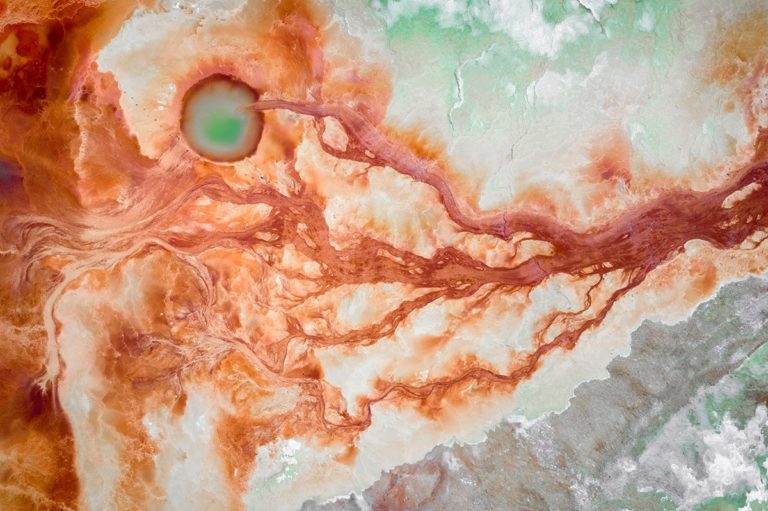

About Sulfur
- A non-metal element that usually appears as yellow crystals at room temperature.
- Found as elemental sulfur or in compounds such as sulfides and sulfates.
- Turns up in making, not just in geology: vulcanized rubber, pigments, matches, pesticides, fertilizers, and some photographic and printing workflows.
- Its sharp smell is actually associated with sulfur compounds like hydrogen sulfide, not pure sulfur itself.
- Important industrially because it is both abundant and chemically flexible.
Read the full overviewWhat sulfur is made of, Where does sulfur come from?, Why sulfur matters in visual culture, How sulfur appears in practice
What sulfur is made of
Elemental sulfur most often exists as S8, a ring-shaped molecule made of eight sulfur atoms. In pure form, it is a brittle, lemon-yellow solid that can be crushed into powder or melted into a mobile amber liquid when heated. It is not a metal, and it conducts neither heat nor electricity especially well.
Sulfur sits in a useful middle ground chemically. It can gain or lose electrons, and it forms compounds with oxygen, hydrogen, metals, and carbon. That flexibility is why sulfur chemistry runs through so many industries: it can stabilize rubber, help make acids, and bind to metals in ores and pigments.
Where does sulfur come from?
Sulfur comes from both deep geological processes and industrial refining. Natural deposits form near volcanoes and hot springs, but most sulfur used today is recovered during the processing of oil and natural gas, where it appears in sulfur-containing compounds that must be removed for fuel quality and emissions control. Refiners separate and purify it as a by-product, turning waste into a commodity.
Historically, miners also extracted sulfur directly from volcanic fields, especially in places where underground gases deposited it near the surface. Mount Ijen in Indonesia is one of the best-known examples, where miners haul raw sulfur from crater areas under difficult and dangerous conditions. That work shows sulfur not as an abstract element but as a heavy, physical material shaped by heat, fumes, and labor.
Why sulfur matters in visual culture
Sulfur matters to visual culture because it changes color, texture, and surface behavior in controlled ways. It appears in pigments and dyes, in the chemistry of photographic development and film fixing, and in vulcanization, the process that cross-links natural rubber so it becomes stronger and more durable. The material is part of the hidden infrastructure behind images, prints, tools, and protective equipment.
It also carries a distinctive visual identity. Yellow sulfur fields, orange fumes, and pale crystalline deposits often read as signs of heat and geologic activity. In photography, sulfurous landscapes can look almost unreal because the color itself signals both mineral presence and instability; the substance marks places where the earth is actively changing.
How sulfur appears in practice
In the studio or factory, sulfur is usually encountered as a compound rather than as pure elemental sulfur. Sodium thiosulfate, for example, became essential in photographic fixing because it removes unexposed silver halides from film and paper. Sulfur also enters through sulfur-based dyes, mordants, and vulcanizing agents used in industrial textile and rubber production.
As a raw material, it is handled with caution. Burning sulfur produces sulfur dioxide, a pungent gas used in some industrial processes but also a major air pollutant. The element’s usefulness comes with environmental cost, which is why modern sulfur handling is tied closely to emissions control, refinery technology, and safety systems.
Frequently Asked Questions
Is sulfur the same thing as the smell of rotten eggs?
No. The smell usually comes from sulfur compounds such as hydrogen sulfide, not from elemental sulfur itself. Pure sulfur has little smell at room temperature. The association survives because many sulfur-bearing compounds are volatile and strongly odorous.
Why is sulfur yellow?
Elemental sulfur appears yellow because of the way its molecules absorb and reflect light. The most common form at room temperature is S8, a ring structure that produces the familiar bright color. Other sulfur compounds can be colorless, white, red, or black depending on their structure and impurities.
How is sulfur used in making things?
Sulfur is used to harden rubber, produce fertilizers, make sulfuric acid, and support several dye and pigment processes. It also shows up in photographic chemistry through sulfur-bearing compounds used in fixing and toning. Its value lies in how many different materials it can stabilize, alter, or bind together.