The Hobbit is a fantasy novel by J. R. R. Tolkien, first published in 1937, that follows the journey of Bilbo Baggins from a comfortable hole in the ground into a world of dragons, treasure, riddles, and war. It began as a children’s book, but its language, invented history, and detailed worldbuilding helped make it one of the defining texts of modern fantasy.
- Published in 1937 as The Hobbit, or There and Back Again.
- Written by J. R. R. Tolkien, an English scholar and philologist.
- Introduces Middle-earth in a lighter, more compact form than The Lord of the Rings.
- Shaped later fantasy fiction through its map, invented names, songs, and mythic geography.
- Its imagery still appears in design, film, illustration, and housing culture, especially the idea of the “hobbit hole.”
What kind of book is it?
The Hobbit is an adventure novel built around a domestic protagonist who resists adventure until it arrives at his door. Bilbo Baggins lives in a carefully ordered underground home, which matters because Tolkien uses that comfort as the starting point for the book’s larger movement toward risk, travel, and transformation. The plot sends Bilbo with a company of dwarves and the wizard Gandalf toward the Lonely Mountain, where they confront trolls, goblins, spiders, riddles, and Smaug the dragon.
The book sits between fairy tale and epic legend. Its prose is brisker and less grave than Tolkien’s later work, but it already contains the features that define his fiction: invented languages, named landscapes, old songs, and a sense that the visible world rests on deeper layers of history.
How was it made?
Tolkien wrote the story for his children and revised it from a private tale into a publishable manuscript. The book’s texture comes from his training in philology and medieval literature. He borrowed the feel of Norse sagas, Old English poetry, and fairy tale forms, then filtered them through a precise interest in names, etymology, and material detail.
That craftsmanship shows in the objects and places the book describes. There are heirloom swords, a ring with a hidden power, carved doors, furnaces, caves, mail shirts, barrels, and gold piled like a physical substance with weight and smell. The world feels built from handwork and trade, not abstract magic. Even the illustrations associated with early editions helped establish the book’s visual identity: round doors, hills with cutaways, dwarven gear, and maps with clear routes.
Why does it matter?
The Hobbit became one of the most influential fantasy novels ever published because it made a secondary world feel coherent, habitable, and specific. Later fantasy often copied its structure: a reluctant hero, a fellowship, a quest map, coded runes, ancient treasure, and a landscape shaped by ruins and memory. Tolkien’s influence spread far beyond literature into film design, game worlds, illustration, and themed interiors.
The book also helped fix the visual idea of the “hobbit hole” in popular culture: a small, earth-sheltered dwelling with a round door, domestic clutter, and a sense of low-tech comfort. That image turns up in architecture, tiny-home culture, and set design because it presents a form of shelter that is both rustic and carefully made. It reads as a crafted space, not just a fictional one.
What does it look like in practice?
In practice, The Hobbit is recognizable through its balance of coziness and peril. A scene may begin with tea, cakes, and polished pans and end with fire, darkness, or pursuit. That contrast gives the book its rhythm and makes its images memorable: smoke from a hill, a glittering sword, a ring passing from hand to hand, a dragon asleep on treasure.
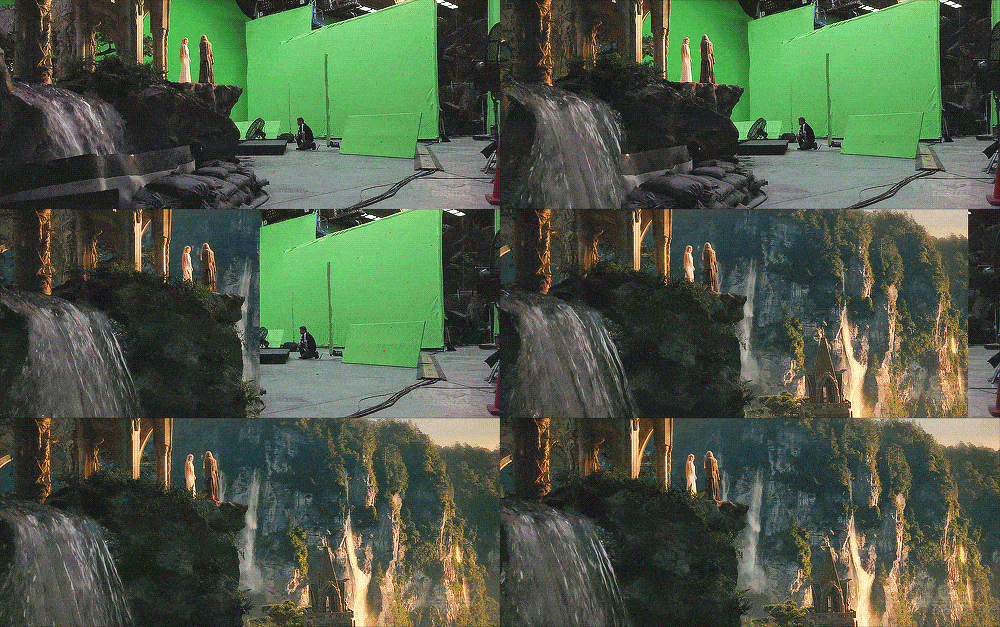
Its afterlife is visible in many forms. Film adaptations translated the book into costume, prosthetics, miniature sets, matte painting, CGI creatures, and large-scale landscape design. Designers and builders borrow its rounded doorways, earthen interiors, and sense of embedded architecture when they want a space to feel handmade, secluded, or storybook-like. The book’s visual power lies in that tension between shelter and expedition.
Frequently Asked Questions
Is The Hobbit a children’s book?
It was first published as a children’s book, and its tone is lighter and more playful than Tolkien’s later fiction. That said, it has enough linguistic play, mythic structure, and moral complexity to appeal well beyond children’s literature. It is usually read now as both a children’s classic and an origin point for modern fantasy.
How is it different from The Lord of the Rings?
The Hobbit is shorter, simpler, and more self-contained. It follows one main quest and keeps a fairy-tale rhythm, while The Lord of the Rings expands Middle-earth into a far larger political and historical conflict. Bilbo’s story is also warmer and more comic, even when it turns dangerous.
Why do designers and builders still reference it?
The book’s most durable image is architectural: the hobbit hole. That combination of round forms, low-profile construction, and sheltered domesticity offers an appealing model for spaces that want to feel intimate and handcrafted. The novel also gives makers a vocabulary of texture, from timber and stone to ironwork, maps, and carved detail.
Articles mentioning The Hobbit