Thomas Romain is a French animator and character designer known for bridging French television animation and Japanese anime production. He co-created Code Lyoko with Tania Palumbo and later co-designed and co-directed Oban Star-Racers, a Franco-Japanese series that led to a long career working in Japan.
| Field | Animation, character design, direction |
|---|---|
| Nationality | French |
| Known for | Code Lyoko, Oban Star-Racers, anime-style redrawings of children’s sketches |
| Career base | France and Japan |
| Notable working method | Turning rough drawings into polished animated characters |
What Thomas Romain does
Romain works in the parts of animation where a project first takes shape: character design, visual development, and series direction. That means drawing the figures, refining their proportions and costumes, and helping decide how a show will look and move on screen. His work sits between illustration and production, where a rough idea becomes something animators can actually use.
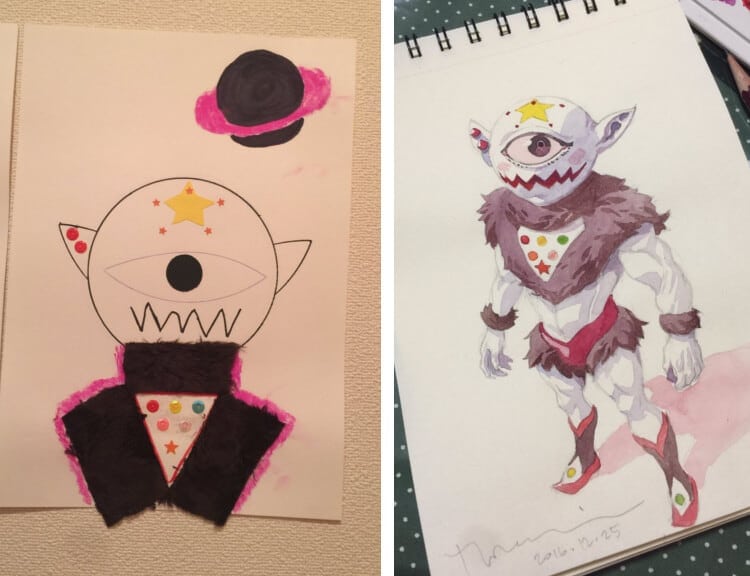
He became widely known outside the industry for an online side project in which he redraws his children’s sketches as finished anime-style characters. The appeal of that work comes from the contrast between a child’s loose, inventive line and the disciplined rules of animation design. It shows the same skill he brings to professional production: preserving an idea’s energy while making it usable.
How did he get started in animation?
Romain first gained attention through Code Lyoko, an animated science-fiction series he co-created with Tania Palumbo. The show combined 2D characters with a digital virtual-world setting, and it helped establish his reputation for visual inventiveness. It also placed him in the collaborative environment of series development, where story, design, and production constraints all have to work together.
His next major step was Oban Star-Racers, which he co-designed and co-directed. That series was made as a Franco-Japanese collaboration and marked the beginning of his working relationship with Japanese animation circles. For a French animator, that is significant because it required adapting to a different production culture, pacing, and visual expectation while keeping a show coherent across studios.
Why does his work matter?
Romain matters because he sits at a productive boundary between French and Japanese animation. His career reflects how styles travel: ideas developed in one country can be reshaped through another country’s production methods. That cross-cultural exchange is not just administrative. It affects line quality, facial acting, timing, and the balance between stylisation and clarity.
His public drawings from children’s doodles made that process legible to a wider audience. They show animation as a craft of interpretation, not just imitation. A child may sketch a monster, robot, or hero with only a few marks; Romain turns that into a character with posture, costume logic, and expressive detail. The result stays faithful to the original idea but gains the structure needed for animation or illustration.
What does his style look like in practice?
Romain’s finished images usually keep the core invention of the original sketch while adding the things animation design depends on: consistent silhouette, readable features, and a palette that supports the character’s personality. He tends to treat a doodle as a brief rather than as a finished object. From that brief, he builds a figure that could stand in a scene, be animated from multiple angles, and still look lively.
That approach also explains why his work has resonated with artists, parents, and animation fans. It demonstrates a core principle of design for moving image media: the best character design does not overwrite spontaneity, but organizes it. Romain’s drawings make that visible in a way that is easy to understand and hard to fake.
Frequently Asked Questions
Is Thomas Romain mainly known as an animator or a character designer?
He is both, but his reputation rests heavily on character design and visual development. Those roles shape how a series looks before animation begins, which makes them central to the final result. His public profile grew further because his redrawings of children’s sketches showed those skills outside the usual production context.
What was his role in Japanese animation?
Romain’s key early connection to Japanese animation came through Oban Star-Racers, a Franco-Japanese production that he co-designed and co-directed. That project brought him into contact with Japanese studios and helped establish his career in Japan. It is one reason his work is often discussed as part of transnational animation rather than purely French television.
Why are his drawings from children’s sketches so popular?
They make professional animation design look both technical and playful. The drawings keep the spirit of a child’s idea while adding the structure, anatomy, and visual logic needed for a finished character. That combination makes the process feel accessible without simplifying the craft involved.
Articles mentioning Thomas Romain