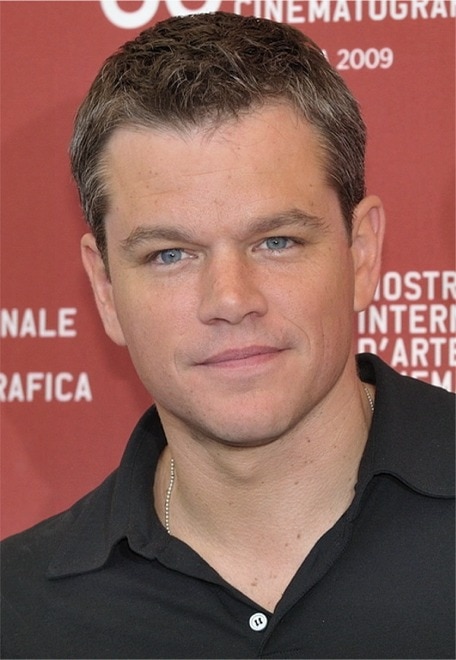
Matt Damon is an American actor, screenwriter, and producer whose career took off with Good Will Hunting (1997), the film he co-wrote with Ben Affleck and starred in. He has worked across studio films, prestige dramas, and large-scale franchises, and he has also built a parallel profile as a producer and public advocate. In visual-culture coverage, Damon often appears as a recognizable star name attached to high-budget spectacle, awards-season projects, and occasional brand or charity campaigns.
- Breakout came from Good Will Hunting, which he co-wrote with Ben Affleck.
- Won the Academy Award and Golden Globe for Best Original Screenplay for that film.
- Known for moving between serious drama, action franchises, and studio entertainment.
- Frequently used as a bankable, widely recognized face in posters, trailers, and publicity.
- Has also worked as a producer and philanthropist beyond acting.
How did Matt Damon become famous?
Damon became famous through an unusual combination of authorship and performance. Good Will Hunting gave him both a script credit and a lead role, which meant the industry could see him as more than a promising young actor. The film’s success turned him into a major name almost overnight and established a pattern that has followed him ever since: Damon as a figure who can carry a script, anchor a cast, and attract an audience.
That early success mattered because it arrived at a moment when Hollywood still separated stars into clear categories. Damon crossed those lines quickly. He could appear in intelligent, dialogue-driven work and then move into more commercially driven projects, which made him useful to directors and studios looking for both credibility and scale.
What kind of screen persona does he have?
Damon’s screen persona often blends competence, restraint, and a kind of plainspoken intensity. He is frequently cast as a man under pressure: a soldier, scientist, fixer, con artist, athlete, or government operative. Even when a film becomes larger than his character, his presence usually signals seriousness and control rather than flamboyance.
That quality makes him especially effective in projects that depend on trust. He reads well as a central figure in stories built around problem-solving, moral compromise, or technical expertise. In visual terms, his face is familiar enough to anchor a poster, but not so stylized that it overwhelms the ensemble or the premise.
Why does Matt Damon matter in film culture?
Damon matters because his career shows how a star can move between authorship, acting, and production without losing public recognition. He belongs to a generation that still benefited from the prestige of screenplay credit and the commercial power of movie stardom. That combination gave him leverage: he could develop projects, choose varied roles, and remain visible over decades.
He also matters as a recurring reference point in contemporary media. His name carries immediate associations with American prestige cinema, blockbuster reliability, and a certain middle-aged, mainstream male stardom that remains easy to market. For poster designers, publicity teams, and casting directors, that kind of recognizability has practical value.
Where does he show up in visual culture?
Damon appears in the visual culture of film promotion in especially direct ways. He is the sort of actor whose image can be used to stabilize a campaign: on a poster, in a trailer cut, or in a press photo, he gives a project an immediate center of gravity. In ensemble films, his placement often signals seniority or narrative importance rather than glamour.
He also appears in broader media contexts where celebrity legibility matters more than performance. Charity work, interviews, and “celebrity camera club” type features rely on a public face that audiences already know. Damon’s long visibility makes him useful in those settings because he reads quickly, even outside the frame of a specific role.
Frequently Asked Questions
Is Matt Damon mainly an actor or a screenwriter?
He is best known as an actor, but his breakthrough came from screenwriting as much as performance. Good Will Hunting made both parts of his career visible at once, and that dual identity still shapes how he is discussed. Later work has leaned more heavily on acting, but the writing credit remains central to his reputation.
What kinds of films is he associated with?
Damon is associated with prestige drama, action, science fiction, and commercial entertainment. He has worked in films that depend on emotional realism as well as films built around spectacle or high-concept premises. That range is part of why he remains a useful marquee name.
Why does his name come up in design and publicity coverage?
Because Damon is highly recognizable, his presence changes how an image or campaign reads. A poster with his name signals a particular kind of mainstream seriousness, and a press image with him carries established star value. In publicity terms, that makes him less a surprise and more a stabilizing element.
Articles mentioning Matt Damon