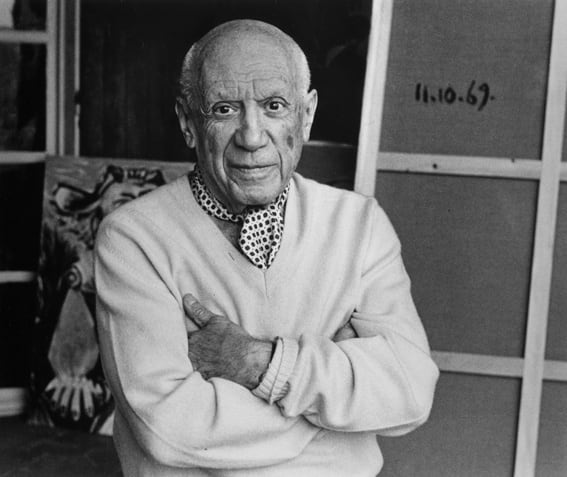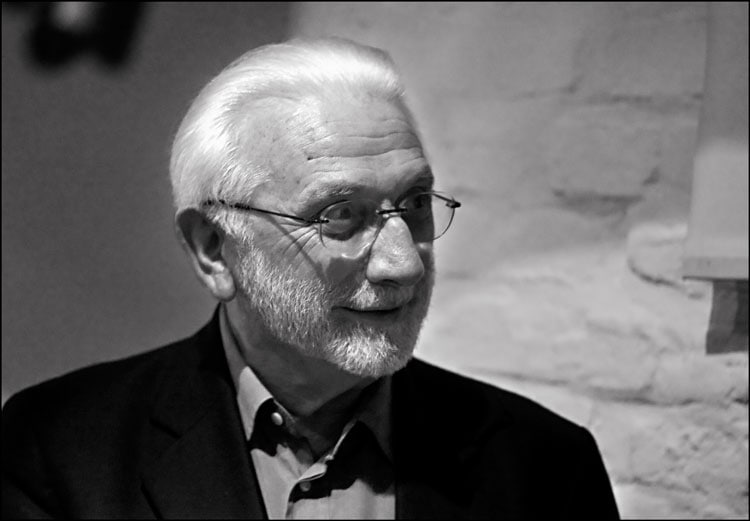
Lucien Clergue was a French photographer known for images of nudes, seascapes, and the raw surfaces of the Camargue. He helped push photography toward fine-art status in France, not only through his own printmaking and exhibition work but also through institutions, teaching, and advocacy. His photographs often balance formal control with a close attention to natural texture: salt, sand, skin, bone, water, and shadow.
| Field | Photography |
|---|---|
| Born | 1934, Arles, France |
| Died | 2014 |
| Known for | Fine-art photography, nude studies, landscapes of the Camargue, photographic advocacy |
| Materials and processes | Black-and-white photography, darkroom printing, gelatin silver prints, contact with film archives and exhibition prints |
| Institutional role | Member and later president of the Académie des Beaux-Arts |
Why Lucien Clergue mattered
Clergue mattered because he treated photography as an art form at a time when many institutions still regarded it as secondary to painting or sculpture. He built a career that combined authorship with activism: he made pictures, organized exhibitions, founded a festival, and argued publicly for the medium’s legitimacy. That combination helped create a wider audience for French photography after the war.
His rise also showed how a strong visual identity could come from a specific place. The white glare of the southern French coast, the salt flats and wetlands of the Camargue, and the region’s Roman and bullfighting culture all fed into his imagery. Rather than using location as a backdrop, he turned it into a set of recurring visual materials.
What do Lucien Clergue’s photographs look like?
Clergue’s best-known work uses crisp black-and-white contrasts, simplified forms, and bodies treated almost as landscapes. In his nude studies, curves of a back or hip can read like dunes, shells, or waves. He often framed the body tightly, reducing distraction and making the image depend on contour, shadow, and tonal separation.
His landscape and seascape images work in a similar way. Salt marshes, driftwood, beaches, and nets become graphic structures rather than descriptive scenes. The result is not documentary in the usual sense; the pictures are composed to emphasize pattern, rhythm, and surface, often with a strong sense of austerity.
How did he work?
Clergue worked mainly with black-and-white photography and relied on darkroom decisions to shape the final print. Contrast, density, and cropping mattered as much as the original exposure. That control gave his pictures their sharp visual edge and made the print itself part of the artwork, not just a record of a moment.
He also moved between personal work and collaborative or institutional projects. He photographed artists and cultural figures, produced books and portfolios, and used exhibitions to place photography in the museum and academy world. His practice sits between image-making and cultural brokerage, with each side reinforcing the other.
What role did the Camargue play?
The Camargue was not just a subject for Clergue; it was a visual engine. The region’s pale light, salt crusts, marsh water, and open horizons suited his interest in strong tonal shapes. The local environment offered materials that could be translated directly into abstraction: glinting water, reeds, sand, fish skeletons, and weathered wood.
This connection to place also gave his work a distinct French identity without making it narrowly regional. He used the Camargue to explore universal photographic concerns: how light defines form, how texture carries meaning, and how a landscape can become almost tactile on paper. Those concerns helped his images travel well beyond southern France.
How is he remembered today?
Clergue is remembered both for his photographs and for the space he helped carve out for photography as an art. His election to the Académie des Beaux-Arts signaled that the medium had entered France’s official cultural institutions more fully than before. That recognition was part of a broader shift in which photographers gained visibility as artists rather than technicians alone.
For many viewers, his work remains associated with clean, high-contrast compositions and a disciplined eroticism. The images are not lush or sentimental. They are controlled, formal, and rooted in materials that resist softness: salt, skin, stone, and bright southern light.
Frequently Asked Questions
What is Lucien Clergue best known for?
He is best known for black-and-white photographs of nudes and landscapes, especially those connected to the Camargue. His images often turn the human body and the natural world into similar kinds of visual form. He also became an important advocate for photography as a fine art in France.
Was Lucien Clergue mainly a documentary photographer?
No. Although his work comes from real places and real bodies, it is shaped for formal effect rather than straightforward documentation. He used framing, contrast, and darkroom printing to produce images that feel constructed and highly graphic.
Why does the Camargue matter in his work?
The Camargue gave him a set of recurring textures and light conditions that matched his visual style. Salt flats, water, reeds, and open sky became part of his photographic language. The region helped define his work’s stripped-down, tactile look.
Articles mentioning Lucien Clergue