
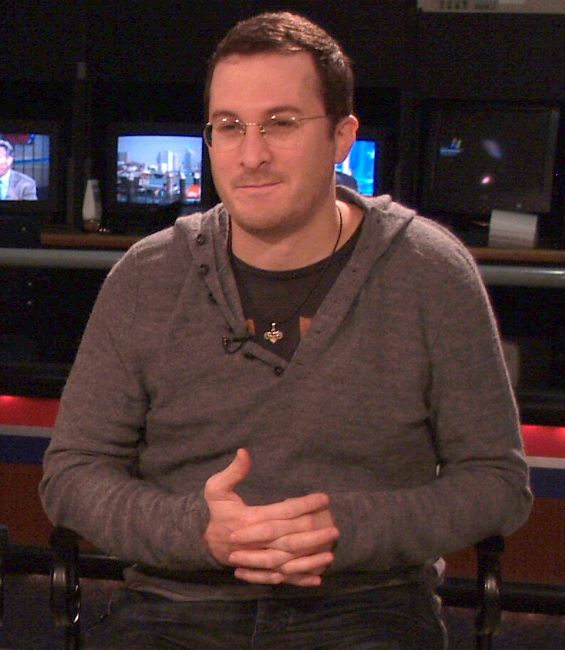
Darren Aronofsky is an American film director, screenwriter, and producer known for psychologically intense films that combine stark realism, formal control, and bodies under pressure. He emerged in the 1990s from independent cinema, first drawing notice with his thesis short Supermarket Sweep and then with features such as Pi, Requiem for a Dream, and Black Swan. His work often focuses on obsession, addiction, faith, performance, and collapse, using aggressive editing, tight framing, repeated motifs, and sound design that makes physical strain feel immediate.
- American filmmaker associated with psychological drama and art-house cinema
- Broke through with low-budget, high-intensity films shot with formal discipline
- Frequently uses close-ups, repetition, and disorienting sound to show fixation and decline
- Often returns to themes of ambition, sacrifice, compulsion, and bodily damage
- Works across independent production and larger studio-backed projects
How did Darren Aronofsky emerge?
Aronofsky was born in Brooklyn, New York, in 1969 and studied film and social anthropology at Harvard University before training at the American Film Institute. That education shows up less as academic reference than as structure: his films are built around behavior, ritual, and systems of belief. His early recognition came from Supermarket Sweep, a student film that helped establish his interest in compressed storytelling and disturbed momentum.
His debut feature, Pi (1998), was made on a small budget and used harsh black-and-white imagery, jittery editing, and electronic noise to turn mathematical obsession into a physical experience. The film became an influential example of how independent production could produce a distinctive style with minimal resources. It also set the pattern for much of his later work: a central character driven by a single idea until the idea consumes them.
What makes his films recognizable?
Aronofsky’s films often make the camera behave like a pressure device. He favors extreme close-ups, shallow depth of field, rapid cutting, and repeated inserts of hands, skin, pills, food, or machinery. These choices collapse the distance between viewer and subject, so that panic, craving, or exhaustion becomes part of the viewing experience rather than just a plot point.
Sound carries equal weight. He uses pulsing music, industrial textures, and sudden silence to sharpen bodily sensation. In Requiem for a Dream, for example, repeated visual motifs and escalating cuts turn routine actions into a spiral of addiction. In Black Swan, mirrors, feathers, makeup, and damaged nails help carry the story of performance becoming self-erasure.
What themes run through his work?
Aronofsky returns again and again to people who push themselves beyond healthy limits. The forms vary—mathematical genius, religious devotion, dance, wrestling, motherhood, or fame—but the underlying structure is similar: ambition becomes fixation, and fixation becomes damage. His characters often seek transcendence through discipline, only to find that discipline collapsing into compulsion.
That pattern gives his films their harsh emotional clarity. He does not usually treat obsession as a metaphor for artistic dedication alone; it also appears as addiction, self-punishment, or denial. The result is work that often feels moral without being tidy, and intimate without being gentle.
Why does Aronofsky matter in contemporary cinema?
Aronofsky matters because he showed that an independent film could be both formally daring and widely discussed without softening its edge. He helped make a mode of prestige filmmaking in which psychological distress, bodily detail, and aggressive style could coexist. His films influenced how later directors approached montage, interiority, and the visual depiction of mental strain.
He also moved between indie production and major studio systems without abandoning his emphasis on texture and tension. Even when working with larger budgets, he often keeps the frame claustrophobic and the emotional stakes extreme. That consistency has made him a recognizable authorial voice: not a neutral storyteller, but a filmmaker whose editing, camera distance, and sound design are part of the argument.
Frequently Asked Questions
What is Darren Aronofsky best known for?
He is best known for films about obsession, addiction, performance, and psychological breakdown. Requiem for a Dream, Black Swan, The Wrestler, and Pi are among the titles most often associated with his name. Each uses intense formal control to put the viewer inside a character’s unraveling.
Is Aronofsky considered an art-house director?
Yes, although that label only partly fits. His films have circulated strongly through art-house and festival culture, but several have also reached broad mainstream audiences. The common thread is not budget level or distribution path, but a consistent visual style and an interest in difficult states of mind.
What techniques appear often in his films?
He often uses close-ups, quick cuts, repeated visual motifs, and soundtracks that mix music with harsh ambient noise. These techniques create urgency and make physical action feel stressful and immediate. He also uses mirrors, reflections, and bodies in close detail to show divided identity or bodily vulnerability.