Braille is a tactile writing system made of raised dots that lets blind and partially sighted readers read by touch. It uses a six-dot cell, arranged in two columns and three rows, to encode letters, numbers, punctuation, and many symbols.
- Invented in the 1820s by Louis Braille, a French student who adapted an earlier military code.
- Each character is formed from one to six raised dots in a fixed cell.
- It is used in many languages and can represent print, music, mathematics, and shorthand.
- Braille appears in paper, embossed labels, packaging, signage, and digital refreshable displays.
How Braille works
Braille depends on touch rather than sight. The six-dot cell creates 64 possible combinations, including the blank cell, which gives enough variation to build alphabets and symbol sets. In English braille, different patterns stand for letters, while additional contractions can shorten common words or letter groups in literary braille.
The system is read from left to right with the fingertips. Because the dots are raised from the back of the page, production uses embossing rather than printing ink. That physical structure matters: dot height, spacing, and the quality of the paper all affect whether a page can be read cleanly.
Where did Braille come from?
Braille grew out of practical needs in early nineteenth-century France. Louis Braille, who lost his sight as a child, adapted a raised-dot code developed by Charles Barbier for military night communication. Barbier’s system was too complex for everyday reading, but Braille simplified it into a compact alphabet that could be learned, written, and read efficiently.
By the mid-1800s, schools for blind students in France and beyond began adopting the system, though acceptance was uneven. Some institutions resisted it because teachers and sighted authorities were more comfortable with embossed Roman letters. Braille eventually prevailed because it allowed faster reading and, just as importantly, gave blind readers a practical way to write for themselves.
Why does Braille matter?
Braille matters because it supports literacy, not just access. Audio can convey information, but braille helps readers spell, punctuate, and understand the structure of language. It remains important for schoolwork, note-taking, editing, and reading material where precision matters, such as medicine, law, and mathematics.
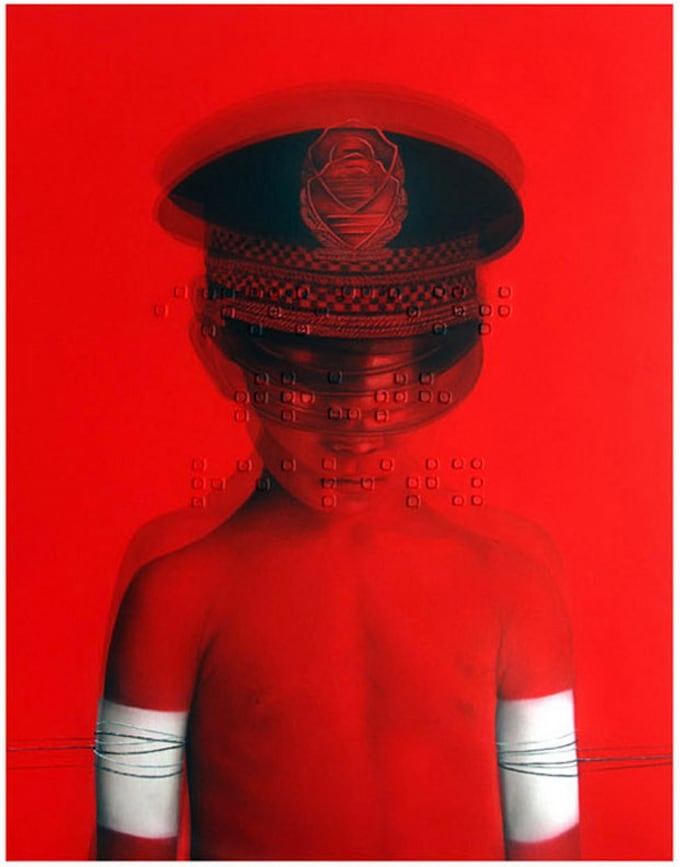
It also has cultural force. Braille on signage, elevators, exhibition labels, and packaging signals that public spaces expect blind users to move through them independently. When designers treat braille as an afterthought, the result is often shallow dots, poor placement, or decorative misuse that cannot be read. Good braille is made to be touched, not admired from afar.
What does Braille look like in practice?
On the page, braille appears as neat fields of small, evenly spaced bumps. On packaging, it is usually embossed directly into cardboard, plastic, or foil so the dots survive handling. In public interiors, braille often sits alongside tactile arrows, raised letters, and high-contrast signage to create a layered wayfinding system.

Contemporary braille also appears on refreshable electronic displays, where pins rise and fall to form changing cells. That technology extends the same basic code into screens and digital devices. The core design has changed little because the six-dot cell is efficient, durable, and adaptable across media, which is why it remains one of the most successful information systems ever devised.
Frequently Asked Questions
Is Braille a language?
No. Braille is a writing system, not a language. Different languages use their own braille conventions to represent their alphabets, punctuation, and contractions.
Can sighted people learn Braille?
Yes. Sighted people can learn to read braille with touch, and many do so for teaching, design, editing, or accessibility work. Learning it also helps identify bad embossing and poorly placed signage.
Why is Braille sometimes missing from products and buildings?
It is often omitted because designers treat accessibility as optional or add it too late in the process. Cost, space, and lack of knowledge also play a role. When braille is planned early, it can usually be integrated cleanly into labels, packaging, and wayfinding systems.
Articles mentioning Braille