
Bali is a province of Indonesia centered on the island of Bali, with Denpasar as its capital. It also includes a few smaller offshore islands. Geographically, it sits between Java and Lombok at the western end of the Lesser Sunda Islands, and culturally it is one of the country’s best-known destinations for Hindu ritual, craft, and tourism.
Stories from Bali
31 stories


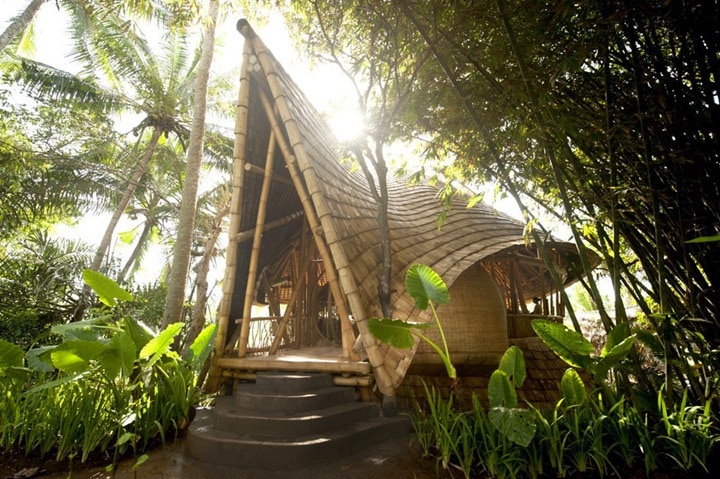


About Bali
- A province of Indonesia, not a separate country
- Includes the main island of Bali and several smaller islands
- Capital: Denpasar, on the south side of the island
- Located between Java and Lombok in the Lesser Sunda Islands
- Known for architecture, craft traditions, landscapes, and tourism
Read the full overviewWhere is Bali?, What makes Bali culturally distinct?, Why do designers keep looking to Bali?, How Bali appears in architecture and visual culture
Where is Bali?
Bali lies just east of Java and west of Lombok in the Indonesian archipelago. The island sits in a strategic position along sea routes that have long connected cultures across the region, which helped shape its history as a trading and artistic center. Today, the province covers the main island plus smaller islands such as Nusa Penida, Nusa Lembongan, and Nusa Ceningan.
Denpasar, on Bali’s southern coast, serves as the provincial capital and administrative center. Much of the island’s population, infrastructure, and visitor economy is concentrated in the south, while the interior remains more rural, with rice terraces, temples, and village compounds still forming the visual core of daily life.
What makes Bali culturally distinct?
Bali stands out in Indonesia because Hindu traditions remain central to public life. Daily offerings, temple festivals, processions, and ceremonial calendars shape streets, homes, and workplaces. That religious structure is not separate from design; it informs ornament, layout, material choices, and the rhythm of building and maintenance.
The island’s built environment often combines stone carving, split gateways, courtyards, pavilions, and open-air circulation. Timber, volcanic stone, thatch, bamboo, and carved ornament appear in both traditional and contemporary projects. In many villages, compounds are arranged around family and ritual functions, while temples use layered thresholds and courtyards to organize movement and meaning.
Why do designers keep looking to Bali?
Designers are drawn to Bali for two reasons at once: its visual richness and its pressure points. The island has become a global reference for resort design, landscape integration, and craft-led hospitality. At the same time, rapid development has produced familiar tensions around land use, water demand, traffic, waste, and the loss of local character.
That mix makes Bali especially visible in discussions of ecological design. Projects there often try to work with climate rather than against it, using shade, ventilation, verandas, local material palettes, and low-rise forms. Bamboo structures and lightweight pavilions show how contemporary architecture can borrow from vernacular building without copying it literally.
How Bali appears in architecture and visual culture
In practice, “Bali” in design usually means an identifiable set of cues: layered roofs, indoor-outdoor planning, strong threshold spaces, lush planting, and a preference for tactile surfaces over polished uniformity. Resort architecture on the island often stages movement through gardens, water features, and open pavilions, turning arrival into a sequence of views and pauses.
But Bali is not just a style to quote. Its most persuasive work comes when designers engage local labor, local timber and bamboo knowledge, stone carving, and the realities of tropical weather. The island’s visual culture is also sustained by textiles, offerings, masks, dance, and ceremonial objects, which give architecture a wider context of making and display.
Frequently Asked Questions
Is Bali a city, an island, or a province?
Bali is both a province and an island. The province includes the main island of Bali and several smaller nearby islands. Denpasar is the provincial capital.
Why is Bali so often mentioned in design articles?
Bali offers a strong model of climate-aware building, landscape integration, and craft-based construction. It also attracts intense development, so it becomes a useful case study for the trade-offs between tourism, ecology, and local identity. That makes it a frequent reference point for architects, interior designers, and writers on place-making.
What materials are closely associated with Bali?
Bamboo, timber, volcanic stone, clay tile, and thatch are all strongly associated with Balinese building traditions. In contemporary projects, these materials often appear alongside exposed concrete, steel, and glass, especially in hospitality and pavilion design. The most convincing work tends to keep the material palette local and climate-responsive rather than decorative.