Beirut is the capital and largest city of Lebanon, and the country’s main seaport. Built on a peninsula at the midpoint of Lebanon’s Mediterranean coast, it has long been a commercial gateway between the Mediterranean and the Levant, with a metropolitan area that extends beyond the city into surrounding suburbs.
- Capital of Lebanon and its largest city
- Major Mediterranean port with a long trade history
- City fabric shaped by Ottoman, French Mandate, modernist, and postwar rebuilding layers
- Known for dense urban neighborhoods, coastal edge, and a mix of religious and cultural institutions
Why does Beirut matter?
Beirut matters because it concentrates politics, publishing, architecture, finance, and cultural production in a relatively small urban area. For much of the 20th century, it served as a regional center for education, art, and media, drawing people from across the Arab world. That role continued despite repeated crises, war, and reconstruction, which changed the city’s physical form while leaving its symbolic weight intact.
Its importance to visual culture lies in the city’s density of styles and repair. A walk through Beirut can pass from Ottoman-era street patterns to French Mandate facades, from mid-century apartment blocks to new towers and patched-up buildings. That layered condition gives the city a legible history in masonry, concrete, shutters, balconies, signage, and unfinished edges.
What does Beirut look like on the ground?
Beirut is neither a planned capital nor a single architectural story. It is a tight urban core wrapped by suburbs, with districts that vary sharply in scale and texture. Older quarters show narrow streets, stone buildings, arcades, and internal courtyards, while later expansion brought larger apartment blocks, commercial strips, and infrastructural corridors. The seaside edge, port zones, and postwar developments add another register entirely.
The city’s appearance is strongly shaped by construction methods used over time: load-bearing stone and masonry in older buildings, reinforced concrete in much of the 20th century, and newer glass-and-steel systems in commercial projects. Repairs are visible everywhere. Facades may be half-restored, windows mismatched, and walls marked by age, pollution, or conflict damage. That unfinished quality is part of Beirut’s urban image rather than a departure from it.
How has Beirut been shaped by rebuilding?
Beirut’s modern history is inseparable from destruction and reconstruction, especially after the Lebanese Civil War and later shocks. Rebuilding brought new roads, property consolidation, luxury developments, and preservation debates over what should be kept, replaced, or adapted. Those choices affected not just the skyline but also the social life of neighborhoods, including who could remain, who left, and which streets became commercialized.
In architecture and craft, rebuilding also revived older knowledge. Stonework, plaster repair, carpentry, tiled surfaces, and traditional spatial patterns have returned in some projects as alternatives to anonymous developer-led construction. In practice, that often means working with local materials and hand skills rather than treating heritage as decoration. Beirut therefore stands as a city where restoration, adaptation, and loss are all visible at once.
Beirut in art, design, and everyday life
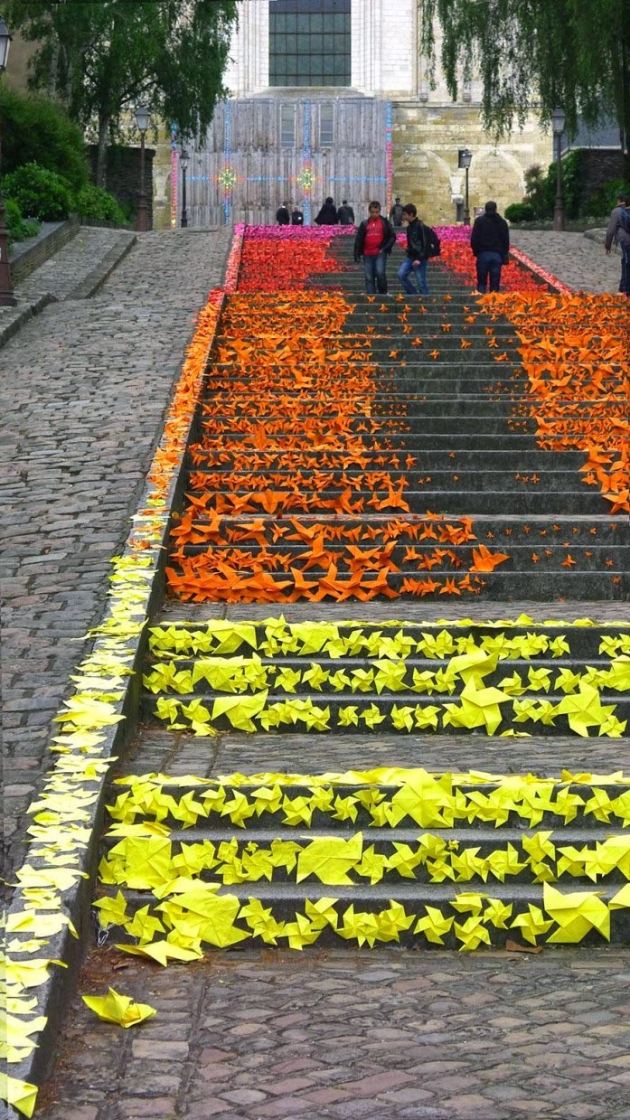
Beirut appears often in photography, architecture, and street art because it offers strong visual contrasts. Painted stairways, murals, balconies, and weathered facades become part of the city’s public image. Artists and designers respond to both its beauty and its instability, using the city as a subject for memory, portraiture, and urban observation.
Everyday life also reflects that mix of fragility and improvisation. Streets function as social space, where commerce, domestic routines, and public gathering overlap. In many neighborhoods, the built environment is not finished in a clean, seamless sense; it is maintained through constant adjustment, repair, and reuse. That practical density is one reason Beirut remains such a powerful reference point for discussions of place, resilience, and urban form.
Frequently Asked Questions
Is Beirut a city or a metropolitan area?
Beirut is the city, while the Beirut metropolitan area includes the city and its suburbs. In practice, the urban area functions as a larger continuous settlement, especially for transport, housing, and work. Administrative boundaries do not fully match how the city is experienced on the ground.
Why is Beirut so important in architecture writing?
Beirut offers a concentrated example of layered urban history. Its buildings show colonial influence, local construction traditions, wartime damage, and contemporary redevelopment in close proximity. That makes the city useful for studying how architecture records political and social change.
What materials are most associated with Beirut’s built environment?
Stone, masonry, and reinforced concrete are central to Beirut’s urban fabric. Older buildings often use local stone and hand-finished details, while later construction relies heavily on concrete frame systems and infill. In restoration work, plaster, carpentry, metal shutters, and tile also matter because they shape how older structures are repaired and reused.
At a glance
- Address
- Beirut Governorate, Lebanon
- Coordinates
- 33.886944, 35.513054
Articles mentioning Beirut