Bob Marley was a Jamaican singer, songwriter, guitarist and bandleader who helped turn reggae into a global popular music. Born Nesta Robert Marley in 1945 and active until his death in 1981, he fronted The Wailers and later Bob Marley & The Wailers, recording songs that linked ska, rocksteady and reggae with Rastafarian belief, political urgency and a highly distinctive vocal style.
| Fact | Detail |
|---|---|
| Full name | Nesta Robert Marley |
| Born | 6 February 1945, Nine Mile, Jamaica |
| Died | 11 May 1981, Miami, Florida, United States |
| Known for | Lead vocals and rhythm guitar with The Wailers; reggae performance and songwriting |
| Breakthrough role | International face of reggae in the 1970s |
| Notable groups | The Wailers; Bob Marley & The Wailers |
How Bob Marley became central to reggae
Marley began recording in the early 1960s in Kingston, when Jamaica’s popular music was moving from ska toward the slower, heavier pulse of rocksteady and then reggae. With Peter Tosh and Bunny Wailer in The Wailers, he helped shape a sound built on off-beat guitar, bass-forward arrangements and vocals that could move from a calm, conversational line to a sharp, piercing hook. That combination made the music direct and memorable, and it also made room for lyrics about oppression, faith, romance and survival.
His work mattered because it travelled. Marley’s recordings with Lee “Scratch” Perry and later with Island Records reached listeners far beyond Jamaica, and songs such as “No Woman, No Cry,” “Get Up, Stand Up,” “I Shot the Sheriff” and “One Love” made reggae legible to international audiences. He did not invent the genre, but he became its most visible ambassador, and for many listeners his voice became the sound of reggae itself.
What did Bob Marley stand for?
Marley’s public image joined music, politics and religion. He identified with Rastafarianism, and that belief system shaped his themes, his language and his appearance: dreadlocks, the red-gold-green colours, and references to Zion, Babylon and spiritual liberation. He sang about black pride and anti-colonial struggle, but he also insisted on love, unity and personal discipline rather than simple slogans.
That mix gave his work unusual reach. Political songs such as “War” and “Exodus” carried real urgency, yet they were built as strong pop records with memorable melodies and tight band arrangements. Marley’s appeal came from that balance: the music could function as protest, devotional expression and mainstream entertainment at the same time.
Why does Bob Marley still matter?
Marley’s significance extends beyond sales figures. He helped define how a regional music could become global without losing its local identity. The bass-heavy production, the guitar skank, the group vocals and the emphasis on performance all became part of reggae’s international grammar, and later genres from dub to dancehall to hip-hop borrowed from the energy and political stance of his records.
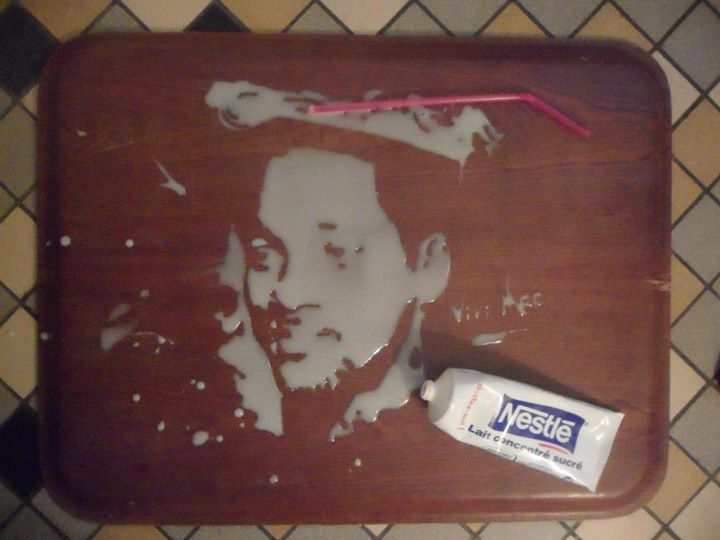
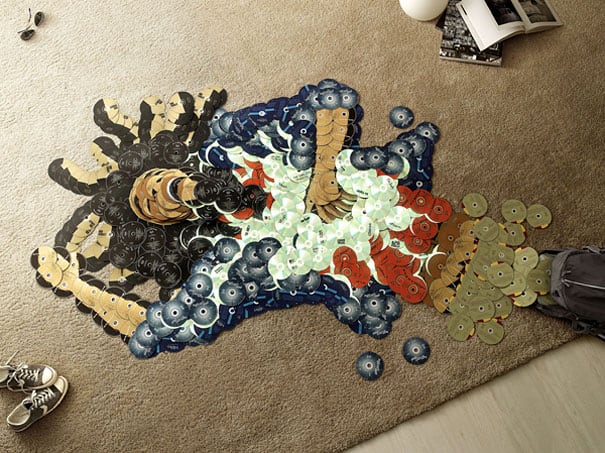
He also became a visual reference. His face, hair and colours are used constantly in posters, t-shirts, album art, murals and commemorative objects. That has made him one of the most reproduced musicians in modern culture, often reduced to iconography, but the original power of the image came from the music it promoted: a working band, a handmade sound and a clear public voice.
How was his image made?
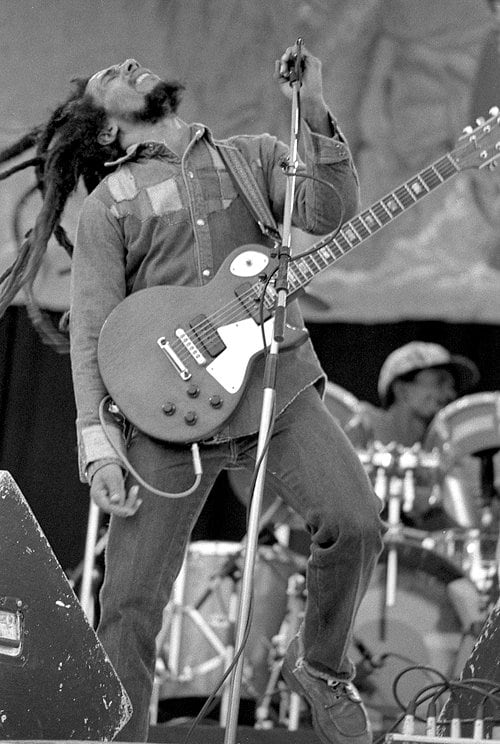
Marley’s look was not accidental. Stage clothing, album photography and later archive imagery all reinforced a careful balance of charisma and humility. He appeared as a working musician rather than a polished pop star, often holding a guitar or standing with bandmates rather than being separated from them by spectacle. That visual language helped make The Wailers look like a collective, even as Marley became the focal point.
Designers and portrait artists still draw on that image because it is instantly recognisable: profile view, dreadlocks, knitted cap, relaxed shoulders, half-smile, guitar in hand. In collage, print and digital illustration, Marley often becomes shorthand for reggae, Caribbean identity or music activism. Good depictions keep the person visible behind the symbol: not just a logo, but a performer whose style emerged from a specific musical and political moment.
Frequently Asked Questions
Was Bob Marley only a reggae musician?
No. Marley worked across ska, rocksteady and reggae, and his earliest recordings belong to the faster, leaner sound of early 1960s Jamaican popular music. Reggae became his strongest and most lasting association, but his career developed through several related styles.
What made his songs different from other reggae records?
His songs often paired strong melodic hooks with plainspoken lyrics and a very controlled band sound. The rhythm section carried much of the weight, while Marley’s voice stayed clear and direct, so the records worked both as dance music and as messages. That clarity helped the songs travel outside Jamaica.
Why do portraits of Bob Marley appear so often in visual culture?
Marley offers a simple, powerful silhouette and a set of colours and signs that are easy to recognise. Artists use him to signal music, rebellion, Jamaica or Rastafarian identity, often in highly stylised ways. The risk is cliché, but the image remains durable because the original figure was so distinct.
Articles mentioning Bob Marley