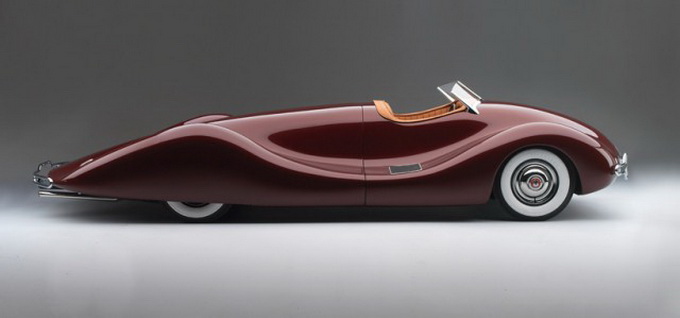
Bugatti is a French performance-automobile marque founded in 1909 in Molsheim, Alsace, by the Italian-born designer and engineer Ettore Bugatti. The company became known for cars that combined speed, technical ingenuity, and sculptural bodywork, with a strong emphasis on craftsmanship, proportion, and finish.
- Founded in 1909 in Molsheim, then part of the German Empire and later France.
- Built by Ettore Bugatti, who treated car making as both engineering and art.
- Made its reputation in racing, where Bugatti cars won many early motorsport events.
- Associated with lightweight chassis, advanced engines, and carefully resolved bodies.
- Today the name still signals ultra-high-performance cars and showpiece design objects.
Why Bugatti mattered
Bugatti mattered because it helped define the idea of the automobile as a designed object, not just a machine. Ettore Bugatti came from a family of artists and brought a strong sense of line, balance, and visual rhythm to his cars. His workshop produced vehicles that were engineered for competition but finished with unusual elegance, making them stand out from the rougher, more purely functional machines of the same era.
The marque also mattered on the track. Early Bugattis were competitive in Grand Prix racing, hill climbs, and endurance events, and the company’s success gave its name real authority. That racing record fed directly into its image: Bugatti became shorthand for precision, rarity, and speed backed by serious mechanical work.
What did Bugatti cars look like?
Classic Bugatti cars often have long hoods, narrow radiators, flowing fenders, and exposed mechanical elements that make their structure visible. The proportions are usually tidy rather than bulky, with an emphasis on lightness and clarity. Details such as turned aluminium parts, polished metal, and finely spaced rivets give the cars a crafted, almost jewelry-like quality.
That visual language still shapes the brand’s modern identity. Contemporary Bugatti cars use carbon fibre, composite panels, and advanced aerodynamics, but they continue to present themselves as engineered sculpture. Even when the surfaces are highly technical, the forms are controlled and deliberate, with an attention to finish that separates them from ordinary supercars.
How was it made?
Early Bugatti production combined careful handwork with precision engineering. Chassis, engines, and bodywork were assembled in small numbers, often with close attention to tolerances and custom details. The company was not interested in mass production in the Ford sense; it built expensive machines for a narrow market of wealthy buyers and racers.
That approach remains important to the brand’s image. Modern Bugatti vehicles are still made in limited numbers and often use high-end materials such as carbon fibre, machined metal, leather, and bespoke interior trim. Special editions and one-off commissions often add hand-finished surfaces, custom paint, and experimental materials, which keeps the marque tied to the world of luxury fabrication as much as automotive performance.
What happened to the company?
The original Bugatti company struggled after the death of Ettore Bugatti and the disruptions of war. Its identity changed hands over time, and the marque was revived in later decades through different corporate owners. The modern Bugatti name is therefore not a continuous small atelier in the original form, but a brand that has been rebuilt around the same ideas of rarity, engineering ambition, and spectacle.
That historical break matters because it explains why Bugatti can appear both antique and futuristic at once. The original cars belong to the early era of motor sport and artisanal coachbuilding, while the current cars use aerospace-like methods, digital design, and extreme powertrains. The shared thread is not a single factory method, but a consistent commitment to making the car itself a prestige object.
Frequently Asked Questions
Was Bugatti always a luxury brand?
No. The early company was also a serious racing constructor, and its reputation came first from competition. Luxury followed from the quality of the engineering and the expense of the cars, not from a marketing strategy built around comfort alone. Even today, the brand’s luxury image is inseparable from performance.
Why do collectors value early Bugattis so highly?
Collectors value them because they are rare, historically important, and visually distinctive. The cars represent a peak moment in early automotive design, when racing technology and artisanal fabrication overlapped. Provenance, originality, and condition matter enormously, especially for surviving chassis with documented competition history.
Is Bugatti still connected to Ettore Bugatti’s original philosophy?
Only in part, but the influence is still visible. Modern Bugatti vehicles are far more powerful and technologically complex than the originals, yet they still stress craftsmanship, precision, and formal elegance. The name continues to carry Ettore Bugatti’s idea that a car can be both a machine and a designed object.
At a glance
- Founded
- 1909
- Address
- Molsheim, German Empire
Articles mentioning Bugatti