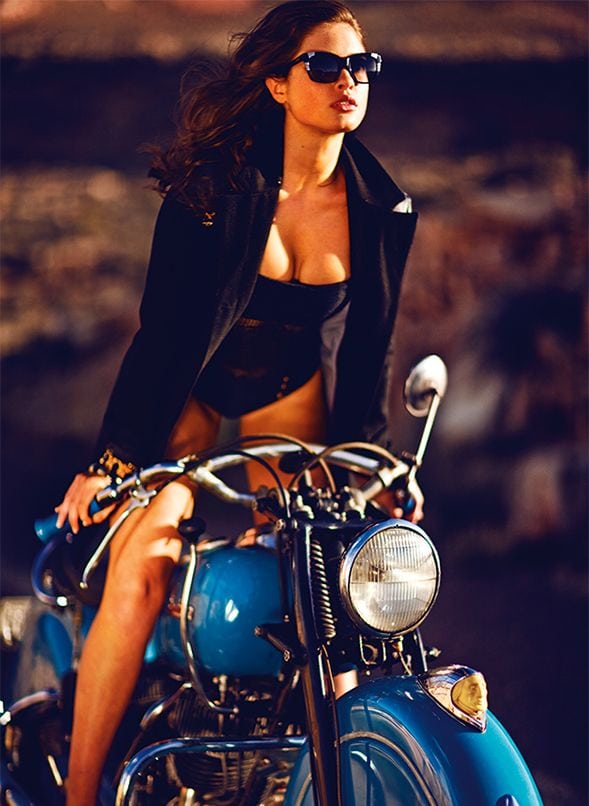
Chen Man is a Chinese fashion photographer known for glossy, digitally edited images that helped define a new visual language for magazine covers, celebrity portraits, and global advertising in the 2000s and 2010s.
| Born | 1980, Beijing, China |
|---|---|
| Field | Fashion photography, portraiture, advertising |
| Known for | Highly stylized editorial images with strong retouching, saturated colour, and theatrical posing |
| Notable clients | Fashion magazines, luxury brands, and international companies such as GUESS |
| Visual language | Digital compositing, polished skin tones, bold styling, and cinematic settings |
How did Chen Man become known?
Chen Man emerged from Beijing’s expanding contemporary fashion and media scene after training in photography and building a career in magazine work. She quickly became known for images that did not aim for casual realism. Instead, she used staging, retouching, and post-production as central parts of the picture, treating the final image as a constructed object rather than a simple record.
Her rise also matched a broader shift in Chinese visual culture. As domestic fashion publishing grew and brands looked for imagery that could compete internationally, photographers like Chen Man supplied a sleek, modern look that felt both local and global. Her work appeared in Chinese and international magazines, which helped turn her into one of the best-known Chinese fashion photographers of her generation.
What does her photography look like?
Chen Man’s images are usually immediately polished: skin is smoothed, colour is intensified, and the overall scene often feels sharper and more artificial than documentary photography. She frequently uses saturated reds, cool blues, metallic surfaces, and dramatic lighting. Faces and bodies are styled with precision, then placed into carefully arranged frames that borrow from high fashion, advertising, fantasy, and sometimes science fiction.
That polished surface is part of the point. Chen Man’s photographs often make visible the work of image-making itself: makeup, wardrobe, set design, digital retouching, and compositing all contribute to the final effect. The result is a style that reads as aspirational and glamorous, but also unmistakably mediated. For magazine editors and brand clients, that made her images useful as a shorthand for modern luxury.
Why does Chen Man matter in fashion photography?
Chen Man matters because she helped normalise a digitally intensive style of fashion image in China at a moment when magazines and advertisers were redefining what looked contemporary. Her work shows how fashion photography changed when Photoshop, digital cameras, and global branding became standard tools. She did not simply photograph clothing; she helped shape the visual identity around it.
Her influence also lies in representation. Chen Man’s portraits of Chinese models, celebrities, and public figures contributed to a more visible Chinese fashion image on the international stage. In an industry long dominated by Western aesthetics, her work offered a highly produced, confident alternative that could sit beside global editorial and advertising campaigns without trying to imitate them exactly.
What kinds of projects is she associated with?
Chen Man has worked across magazine covers, portrait series, beauty imagery, and commercial campaigns. Editorial photography gave her a space to test colour, styling, and narrative, while advertising required those same qualities to be translated into concise, brand-driven pictures. Her campaign work, including projects for companies such as GUESS, often places fashion in large-scale, cinematic settings that heighten the product’s visual drama.
One recurring feature of her commercial work is the use of location as spectacle. Natural environments, urban backdrops, and studio-built scenes become part of the image’s design rather than a neutral setting. In practice, that means location scouting, lighting, styling, and digital finishing all work together. The photograph becomes a designed surface, made through collaboration between photographer, art director, stylist, makeup artist, retoucher, and client.
Frequently Asked Questions
Is Chen Man mainly an art photographer or a commercial photographer?
She is best known as a fashion and advertising photographer, although her work often overlaps with art photography in its heavy styling and constructed imagery. Magazine commissions and brand campaigns form the core of her reputation. The images are commercial in purpose, but they are often discussed as visual culture rather than simple advertising.
Why do people talk about retouching in her work?
Retouching is not a minor adjustment in Chen Man’s photographs; it is part of the style. Skin smoothing, colour grading, and compositing help create the hyperreal finish associated with her images. That approach has drawn attention because it shows how digital post-production became central to contemporary fashion photography.
What makes her different from older fashion photographers?
Earlier fashion photography often relied on either studio glamour or location-based realism, with editing used more subtly. Chen Man pushes harder toward an edited, constructed look where every element feels designed. That gives her pictures a younger, more overtly digital identity and places her work squarely in the era of online media, global branding, and image saturation.
Articles mentioning Chen Man