
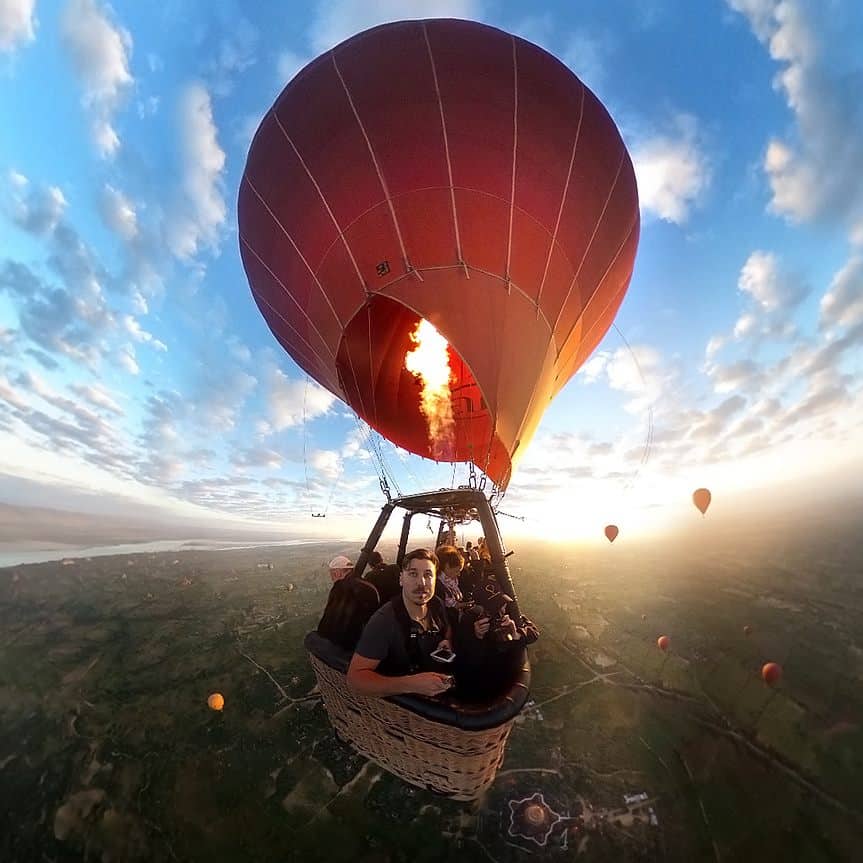
Dimitar Karanikolov is a Bulgarian architect, architectural visualiser, photographer, and studio founder known for aerial images that turn cities and landscapes into precise graphic compositions. His work moves between architecture, computer-generated imagery, and photography, with a strong focus on how built form reads from above.
| Field | Architecture, visualisation, photography, app development |
|---|---|
| Nationality | Bulgarian |
| Education | Architecture at the University of Architecture, Civil Engineering and Geodesy, Sofia |
| Known for | Aerial photography and architectural visualisation |
| Studios | ATK, BARABAR, MESHROOM |
| Based in | London |
From architecture school to image-making
Karanikolov graduated in architecture from UACEG in Sofia in 2002, then began building a career across design and digital production. He worked at Oosterhuis NL in Rotterdam in 2003 and later joined Foster + Partners in the UK, where architectural thinking and large-scale practice would have sharpened his sense of form, structure, and presentation.
That background matters because his later work does not treat photography as a separate field from architecture. His images often behave like visual analysis: they isolate geometry, pattern, and circulation, then use height and angle to make a place legible in a single frame.
What does Dimitar Karanikolov do?
He is best known for aerial photographs, especially of places where geometry and atmosphere meet: Venetian canals, Buddhist temples in Myanmar, and other dense urban or sacred landscapes. From above, he captures roofs, streets, courtyards, water, and shadows as interlocking shapes. The result is less like a tourist view and more like a drawn plan made vivid by light.
His practice also includes architectural visualisation and computer-generated imagery through his studio work. That mix of photography and CG gives his output a controlled look: clear edges, deliberate color, and a strong sense of composition. Even when the subject is irregular or crowded, the image tends to feel ordered.
Studios and collaborative work
In 2006 he co-founded Atelier Toshkov Karanikolov, or ATK, an architecture and CG company. In 2008 he began running MESHROOM, a London-based visualisation and design studio, which became another base for his image-making. These ventures show a practice built around making ideas visible rather than only producing finished buildings.
He also co-founded BARABAR in 2013, a mobile app development studio. That broadens his profile beyond static imagery and into digital products, but the thread connecting the projects is the same: design as a tool for organizing and presenting complex information.
Why his work stands out
Karanikolov’s images stand out because they combine architectural literacy with photographic technique. Many aerial photographers chase spectacle; his work is usually more exact. He understands how a roofline, a street grid, or a temple compound can become a picture without losing its real spatial logic.
That makes his photographs useful to readers interested in visual culture, not just scenery. They show how photography can function as interpretation, especially when the subject is architecture. His pictures do not simply record places; they recast them as patterns, systems, and forms.
Frequently Asked Questions
Is Dimitar Karanikolov mainly a photographer or an architect?
He is both, and the distinction is central to his work. His training in architecture shapes how he frames buildings and urban spaces, while photography gives him a way to present that understanding visually. The result sits between documentation and design.
What is MESHROOM?
MESHROOM is the London-based visualization and design studio that Karanikolov runs. It reflects the part of his practice focused on rendering, image production, and digital presentation. The studio sits within a wider career that also includes architecture and photography.
Why are his aerial photos often shared in design publications?
They translate places into clear visual structures, which makes them appealing to readers interested in form and composition. His images reveal how architecture, landscape, and movement create readable patterns from above. That clarity makes them useful as both art and visual analysis.
Articles mentioning Dimitar Karanikolov

