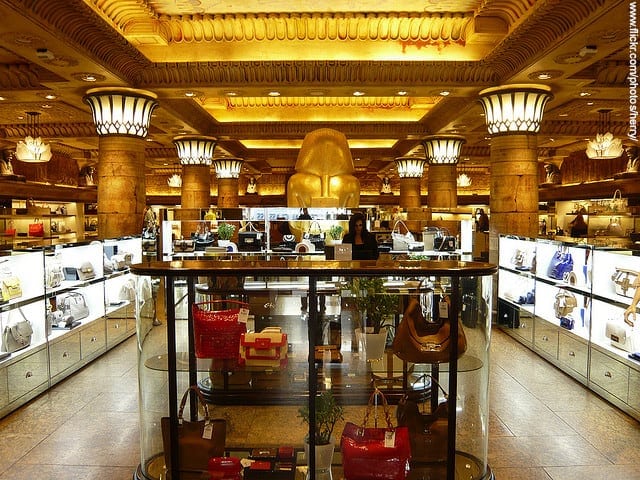
Harrods is a luxury department store on Brompton Road in Knightsbridge, London, known for its vast retail halls, elevated service, and use of the Harrods name across related businesses. Founded in the 19th century and expanded through successive rebuilds, it became one of Britain’s most recognisable retail landmarks. The store sells fashion, jewellery, beauty, food, homewares, and gifts, while the wider Harrods group has included banking, property, and aviation ventures.
- A London department store associated with luxury retail and conspicuous presentation.
- Best known for its Food Halls, designer departments, and elaborate seasonal displays.
- The building itself is part of its identity: large, ornate, and highly staged.
- The Harrods brand has been extended to other businesses beyond retail.
Where Harrods came from
Harrods began in 1849 as a small grocery and tea business in East London, founded by Charles Henry Harrod. It moved to Knightsbridge in the late 19th century and grew rapidly as London’s wealthiest districts expanded westward. A fire in 1883 led to reconstruction and enlargement, turning the store into a grander commercial complex and setting the tone for its future scale.
By the early 20th century, Harrods had become a destination as much as a shop. Its success depended on the department store model: many specialist counters under one roof, with strong visual merchandising, in-house services, and architecture designed to encourage browsing. That format gave customers access to goods that once required visits to many separate tradespeople.
What makes Harrods distinctive?
Harrods is not only a retailer but a carefully managed image. The exterior uses terracotta and ornate detailing, while the interior relies on polished surfaces, dense displays, and a sense of abundance. Food departments, perfume counters, fashion floors, and gift zones are arranged to create an atmosphere of rarity and occasion. Seasonal window displays and themed installations reinforce the store’s role as a spectacle.
The store is especially associated with luxury goods and luxury packaging. Products are often presented through branded counters, staffed concessions, and specialist departments that frame shopping as consultation and ceremony. That experience matters as much as the merchandise, and it is a large part of why Harrods remains a reference point in retail design and visual culture.
Why does Harrods matter?
Harrods matters because it shows how retail can operate as architecture, branding, and theatre at once. It helped define the department store as a place where choice, display, and service are orchestrated to produce status. Its model influenced other luxury stores in London and beyond, especially in how goods are classified, lit, staged, and sold.
The store also reflects London’s role in global luxury shopping. Tourists, collectors, and local customers visit for goods, but also for the brand’s symbolic value. Harrods has become shorthand for expensive retail, and that shorthand carries into fashion editorials, travel writing, and pop culture references.
What does it look like in practice?
In practice, Harrods appears as a multi-level retail environment with tightly managed departments, branded concessions, and premium service points. Its Food Halls are among the most famous areas: a mix of delicatessen, confectionery, butchery, and prepared foods presented with a market-like density but luxury pricing and finish. Elsewhere, shoppers encounter cosmetics counters, fine watches, eveningwear, and homeware arranged to highlight craftsmanship and exclusivity.
The store’s visual language depends on excess that is still orderly. Fixtures are polished, signage is controlled, and staff presentation is part of the design. Even the shopping bags, gift boxes, and seasonal decorations contribute to the brand’s identity, making Harrods recognisable far beyond Knightsbridge.
Frequently Asked Questions
Is Harrods just a department store?
No. The department store is the best-known part of the business, but the Harrods name has also been used for related ventures in banking, property, and aviation. Those businesses extended the brand beyond retail, though the store in Knightsbridge remains its core public identity.
What is Harrods most famous for?
Harrods is most famous for luxury retail, especially its Food Halls, designer fashion departments, and elaborate seasonal displays. It is also known for its building, which projects wealth and permanence through scale, ornament, and careful upkeep. For many visitors, the store is as much a destination as a place to buy something.
Why do people treat Harrods as a cultural landmark?
Harrods has long represented a particular version of London: affluent, theatrical, and intensely commercial. Its image appears in films, magazines, and travel accounts because it condenses ideas about luxury into a single place. That visibility has made it one of the city’s most recognisable retail institutions.
Articles mentioning Harrods