Land art is an art movement and working method in which the landscape is not just a setting but the material, site, and scale of the work itself. Artists cut, pile, dig, trace, arrange, or alter earth, rock, water, vegetation, and sometimes industrial materials to make forms that exist in direct relation to a place. The work may be temporary or remote, but it is always tied to the ground it changes.
- It emerged in the late 1960s and early 1970s, especially in the United States and Britain.
- Its materials often include soil, stone, sand, water, salt, timber, vegetation, concrete, steel, asphalt, and mineral pigment.
- Many works are built with heavy machinery as well as hand labour.
- Land art is defined by scale, site specificity, and environmental change over time.
- Some artists use land art to question galleries, ownership, permanence, and the boundary between art and nature.
What makes land art different from sculpture?
Land art does not treat the landscape as a pedestal for an object. The terrain becomes the medium: a trench, mound, spiral, ring, causeway, or cut line can be the work itself. That makes land art closer to excavation, agriculture, civil engineering, or surveying than to conventional studio sculpture, even when the result is formally simple.
The field developed partly as a reaction against the commercial art market and the white cube gallery. Artists wanted work that could not be lifted off a plinth, sold as a portable object, or understood without its site. A piece might be remote enough to require a journey, exposed enough to weather and erosion, or large enough to be seen best from the air.
Where did land art come from?
Land art took shape in the late 1960s, when artists in the United States, Britain, and parts of Europe began working directly with land on a monumental scale. Robert Smithson, Michael Heizer, Walter De Maria, Nancy Holt, Richard Long, and Hamish Fulton are among the figures most closely associated with the movement. Their work drew on minimalism, conceptual art, and earth-moving technologies, but also on older traditions of earthworks, land management, and ritual marking.
The term earthworks is often used alongside land art, though it can be broader. Some practitioners made permanent interventions in deserts, salt flats, or former industrial landscapes; others made brief arrangements of stones, leaves, or mud that could vanish in hours. That range matters, because land art is not one style. It covers both monumental excavation and fragile, almost documentary gestures.
How are land art works made?
Land art can involve hand tools, bulldozers, cranes, surveying equipment, pigments, and site preparation on the scale of construction. A work may be carved out of a hillside, traced in a field, or assembled from local materials gathered on site. Artists often work with contours, drainage, weather, and access routes as part of the composition, so the making process is inseparable from the land’s physical behavior.
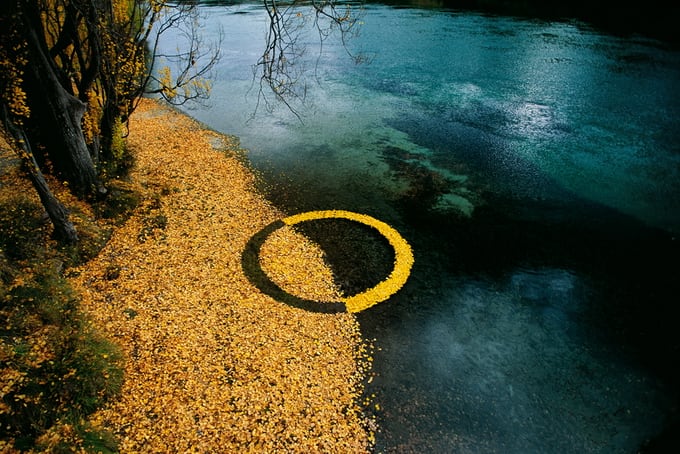
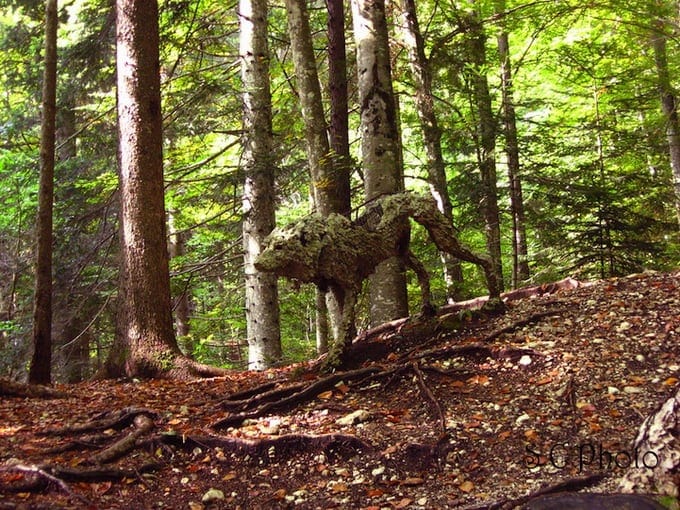
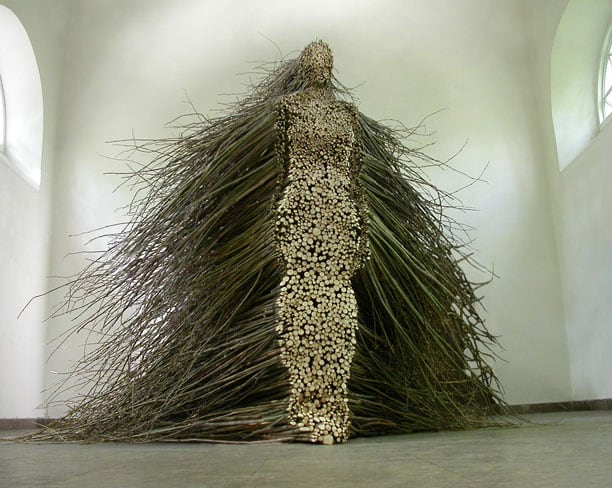
Smaller-scale land art often relies on arranging found natural materials into simple forms: circles of stones, lines of leaves, stacks of branches, or patterns made in sand. These works can be precise and formal, but they are also vulnerable. Wind, tide, rain, growth, and decay become collaborators in the final result. In that sense, making land art means accepting that the work will continue to change after the artist stops touching it.
Why does land art matter?
Land art changed what counted as an art medium. It expanded sculpture into terrain, time, and ecology, and it forced institutions to confront works that could not easily be displayed, collected, or conserved. The movement also made process visible: the trace of digging, moving, and placing often remains part of the meaning, not just the finished form.
Its influence reaches beyond art history. Contemporary environmental art, public art, and large-scale installation all inherit land art’s questions about site, damage, stewardship, and duration. At the same time, the movement has never been free of tension. Large earthworks can disturb habitats and reshape ground in ways that sit uneasily beside their ecological rhetoric. That contradiction is part of the subject, not a side note.
Frequently Asked Questions
Is land art always made outdoors?
Yes, in the strict sense, because land art depends on direct work with a site in the landscape. Some projects are remote landforms, while others are temporary interventions in parks, fields, deserts, shorelines, or urban edges. Even when documentation appears in a gallery, the work itself belongs to the site.
Is land art the same as environmental art?
Not exactly. Environmental art is a wider category that can include activism, ecological restoration, and social practice, while land art is specifically tied to the making of form in the landscape. Some works belong to both categories, but land art remains more focused on physical intervention, scale, and the relationship between form and terrain.
Can land art be temporary?
Yes, and many important examples are temporary by design. Artists may use leaves, stones, snow, tide marks, or other unstable materials so that weather and time complete the work. Temporary land art often survives only in photographs, maps, or written records, which becomes part of its meaning.
Articles mentioning Land art