
Leather is a durable material made by tanning animal hide or skin, most often cattle hide, so that it resists decay, holds shape, and can be cut, stitched, embossed, dyed, and finished for use in clothing, furniture, footwear, bags, bookbinding, and interior trim.
Stories from Leather
118 stories






About Leather
- It begins as rawhide, then changes through tanning into a stable, workable material.
- Its surface, thickness, and finish vary widely, from supple garment leather to stiff saddle leather.
- Common tanning methods include vegetable tanning and chrome tanning, which produce different looks and performance.
- Leather matters because it combines strength, repairability, and ageing qualities that many substitutes try to imitate.
- It appears in both handmade craft and industrial production, from saddlery to car seats.
Read the full overviewHow leather is made, What does leather look and feel like?, Where leather is used, Why leather matters now
How leather is made
Leather starts with animal skin, usually from cattle but also from sheep, goat, pig, deer, and other animals. Fresh hide decays quickly, so tanners first preserve it by salting or curing, then remove hair and unwanted tissue before tanning. Tanning stabilizes the collagen in the hide so it no longer rots and becomes flexible rather than stiff and brittle.
Vegetable tanning uses tannins from bark, leaves, or fruit. It produces firm leather that develops a warm patina and is common in belts, saddlery, luggage, and book covers. Chrome tanning uses chromium salts and is faster, cheaper, and more common for garments, upholstery, and mass-produced goods because it yields soft, supple leather with good water resistance.
What does leather look and feel like?
Leather can look polished, matte, oiled, nubuck, suede, cracked, embossed, or heavily grained. The grain is the natural outer surface of the hide; once that layer is altered, sanded, or split, the result changes in touch and performance. Full-grain leather keeps the grain intact and usually lasts the longest, while top-grain leather is corrected for a smoother appearance.
Its appeal comes from the way it changes over time. It creases, darkens, softens, and picks up marks from handling. Designers often use that ageing process deliberately, because leather can feel both immediate and long-lived: a new jacket may look crisp, while a well-used chair or bag gains character rather than simply looking worn out.
Where leather is used
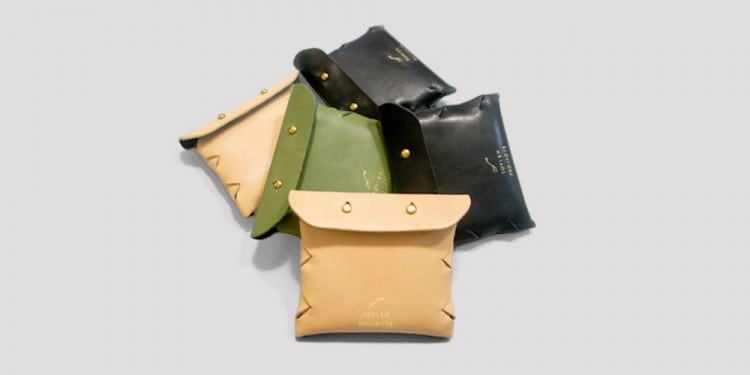
Leather shows up wherever a material needs to endure rubbing, bending, and pressure. Shoemaking relies on it for uppers, linings, soles, and trims; furniture makers use it for seats, straps, and panels; car interiors use it for steering wheels, dashboards, and upholstery; and fashion uses it for coats, boots, gloves, skirts, and accessories. It also remains important in belts, saddles, cases, and coin purses because it holds stitching well and keeps its form.
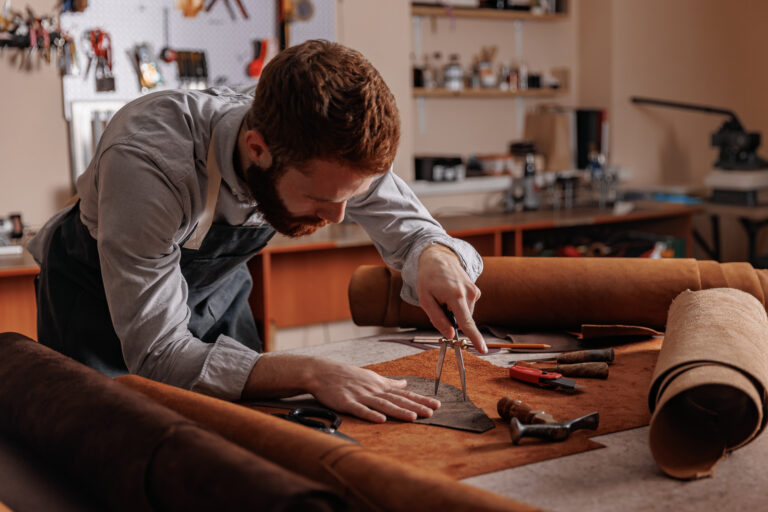
In practice, leatherworking involves cutting patterns, skiving edges, punching holes, stitching by hand or machine, burnishing edges, and applying dyes or finishes. Hardware such as buckles, rivets, snaps, and zips often appears alongside it. The material rewards careful construction: poor cutting or finishing shows quickly, while well-made leather goods age cleanly and can be repaired many times.
Why leather matters now
Leather sits at the intersection of craft, industry, and environmental debate. Historically, tanning supported local workshops and specialist trades, but industrial production turned it into a global commodity. That scale has brought consistency and lower prices, but also questions about chemicals, water use, animal sourcing, and the treatment of workers in tanning and finishing plants.
As a result, designers and manufacturers now compare leather with synthetic alternatives, recycled composites, and plant-based substitutes. Those substitutes can reduce dependence on animal hides, but they often behave differently: some wear faster, some crack, and some cannot yet match leather’s combination of strength, softness, and repairability. Leather remains central because it is both a material and a process, shaped as much by tanning and finishing as by the original hide.
Frequently Asked Questions
Is leather a natural material or a manufactured one?
Leather begins as a natural animal hide, but it does not become leather until it has been processed through tanning. That process changes the skin’s chemistry and structure, which makes the material durable and stable. For that reason, leather is best understood as a manufactured material made from an animal source.
What is the difference between vegetable-tanned and chrome-tanned leather?
Vegetable-tanned leather uses plant tannins and usually feels firmer, with a surface that deepens in color over time. Chrome-tanned leather uses chromium salts and is generally softer, more flexible, and quicker to produce. The two types suit different uses, so makers choose between them based on structure, finish, cost, and ageing behavior.
Why does leather develop a patina?
Patina comes from wear, light, oils, handling, and environmental exposure. On good leather, these changes are gradual and often attractive, because they soften the surface and add depth of color. The effect matters in design because it lets an object record use instead of simply deteriorating.