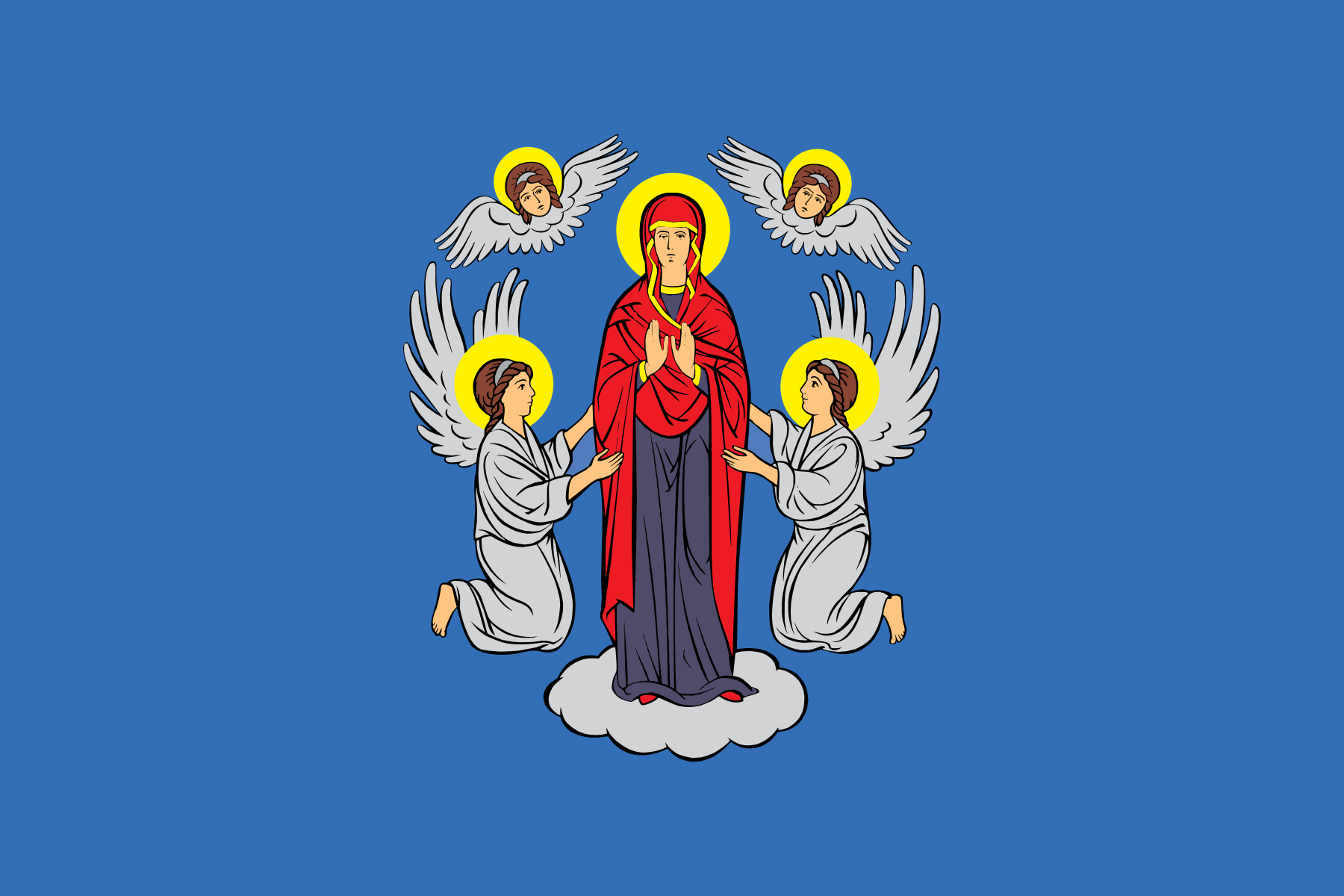
Minsk is the capital and largest city of Belarus, built on the Svislach and Niamiha rivers and shaped by its role as the country’s administrative, political, and cultural centre. It also serves as the headquarters city of the Commonwealth of Independent States, giving it a wider post-Soviet diplomatic role. For a city this large, Minsk is defined as much by its planned avenues and state institutions as by its river valleys and parkland.
- Capital city of Belarus and its largest urban centre
- Located on the Svislach and Niamiha rivers
- Has special administrative status within Belarus
- Serves as the administrative centre of Minsk Region and Minsk raion
- In 2012, its population was 1,901,700
Why Minsk matters
Minsk matters because it concentrates the institutions that shape modern Belarus. Government buildings, ministries, universities, museums, and transport networks all cluster there, making it the main stage for public life in the country. As the CIS administrative centre, it also carries a symbolic post-Soviet weight that extends beyond national borders.
The city’s importance is partly geographic and partly historical. Rivers gave the settlement a natural setting, but twentieth-century reconstruction and state planning gave it the broad boulevards, monumental scale, and formal centre associated with a capital city rebuilt under strong central control.
What does Minsk look like?
Minsk combines a large urban core with wide streets, open squares, and substantial green space. Its central districts often feel orderly and spacious rather than dense, with long facades, civic buildings, and apartment blocks arranged in a style associated with Soviet-era urban planning. Parks and riverbanks break up the hard edges of the built environment.
That combination matters for visual culture. Photographers and artists often find contrast here: reflective water, winter light, large public spaces, and architectural surfaces that carry the marks of different political periods. The city can read as both monumental and domestic, depending on the angle and season.
How did Minsk develop?
Minsk grew from an older settlement into a major regional centre, then into the capital of the Belarusian state. Its modern form was heavily affected by war, occupation, and reconstruction, especially in the twentieth century. Large sections of the city were redesigned after destruction, which is one reason so much of central Minsk feels planned rather than accumulated over centuries.
That history explains its layered appearance. Medieval origins are less visible than in older European capitals, but traces survive in its street pattern, place names, and the river landscape. The dominant visual language, however, comes from later state-building: broad avenues, government precincts, and carefully composed public space.
Why do artists and photographers use Minsk?
Minsk appears in photography and documentary work because it offers clear visual structures and a strong sense of place. Its scale is large enough to feel metropolitan, yet its central spaces often remain legible and open, which suits images that depend on geometry, atmosphere, and human presence in public space. The city’s architecture can frame portraits and street scenes with a formal, restrained mood.
In practice, Minsk is useful to image-makers because it contains contrast without chaos: Soviet modernism beside older neighbourhoods, river light beside concrete, official order beside everyday life. That makes it a practical location for work about memory, identity, and the look of post-Soviet cities.
Frequently Asked Questions
Is Minsk only a political capital?
No. Minsk is the administrative centre of Belarus, but it is also the country’s largest cultural, educational, and economic hub. Its museums, theatres, universities, and public spaces give it a broader urban life than its government role alone suggests.
Why is the river setting important?
The Svislach and Niamiha rivers give Minsk a defined landscape and soften its dense civic core. River corridors also create places for parks, paths, and reflective views, which are useful both for daily life and for photography.
What kind of architecture is most associated with Minsk?
Minsk is strongly associated with Soviet-era planning and reconstruction, especially in its central districts. That means wide avenues, monumental civic buildings, and large housing blocks, often arranged with a formal order that distinguishes the city from older, organically grown capitals.
At a glance
- Address
- Byelorussian Soviet Socialist Republic, Belarus
- Coordinates
- 53.9, 27.566668
Articles mentioning Minsk