
Miranda Kerr is an Australian fashion model who became one of the best-known faces of early-2000s commercial and editorial modelling. She built her career in Sydney as a teenager, then moved into international work through runway, lingerie, beauty and magazine campaigns that made her a recurring image in global fashion media.
Stories from Miranda Kerr
12 stories
About Miranda Kerr
- She began modelling at 13 and won the 1997 Dolly magazine and Impulse fragrances model search.
- Her breakthrough came in 2007 as one of the Victoria’s Secret Angels.
- She was the first Australian to take part in the Victoria’s Secret campaign.
- She has also fronted Australian retailer David Jones and appeared in many fashion editorials and covers.
- Her image is associated with polished glamour, soft-focus beauty photography and commercial luxury branding.
Read the full overviewHow did Miranda Kerr become famous?, What does her modelling work look like?, Why does Miranda Kerr matter in fashion media?, Where does she sit in the history of Australian modelling?
How did Miranda Kerr become famous?
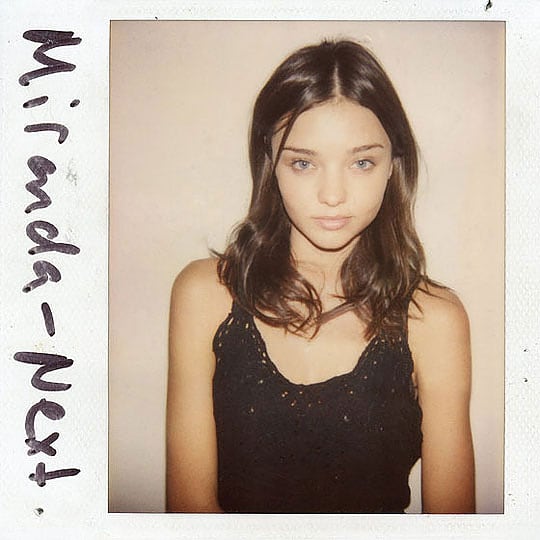
Kerr entered modelling unusually early, signing with Chaay’s Modelling Agency at 13 and winning a national competition in 1997. That path placed her inside the Australian fashion industry while still in her teens, giving her experience in print work, runway casting and brand promotion before the international market noticed her.
Her global profile rose sharply in 2007 when she joined Victoria’s Secret as an Angel. The role mattered because Victoria’s Secret functioned as a worldwide image machine: its models were not only runway figures but also advertising symbols, appearing in campaigns, televised shows and product launches that reached far beyond fashion insiders.
What does her modelling work look like?
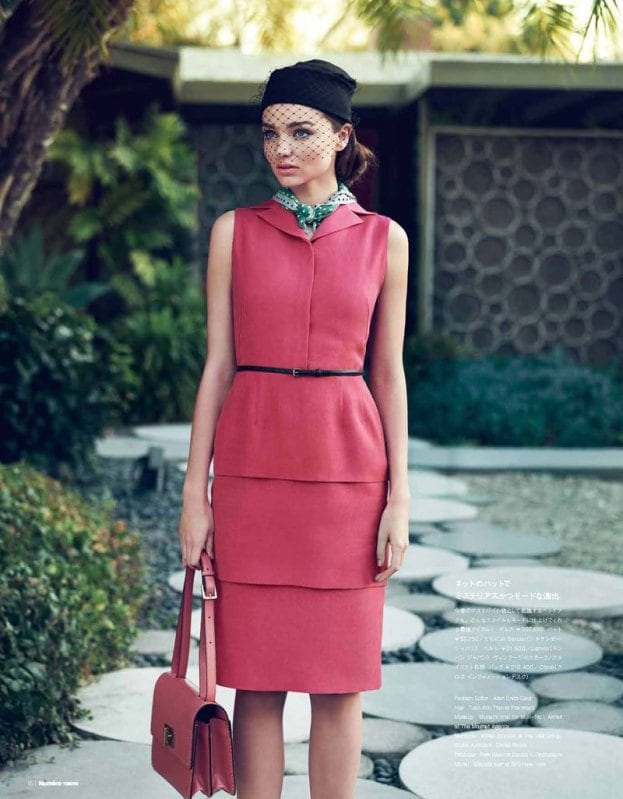
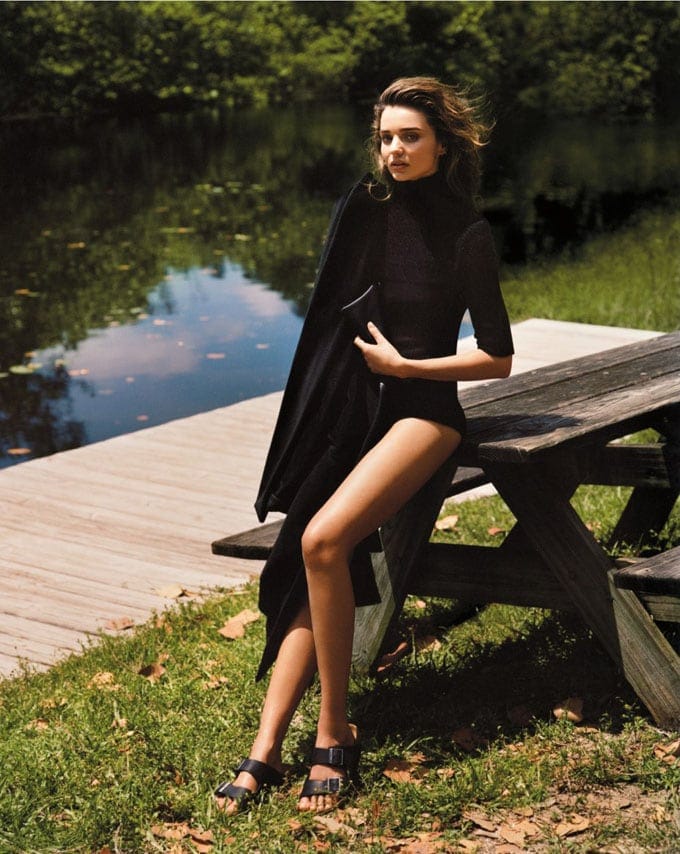
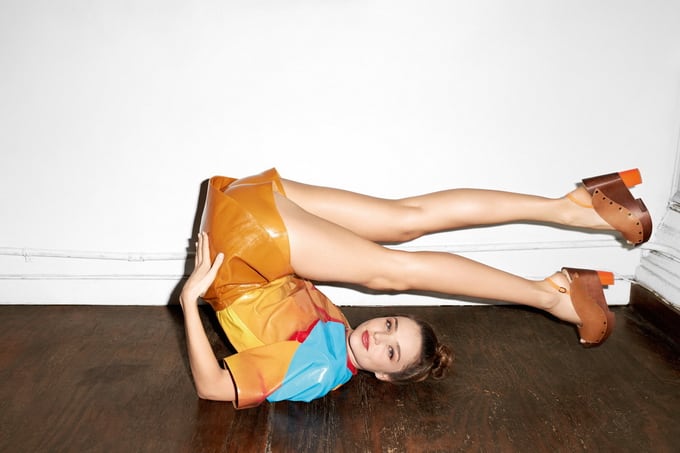
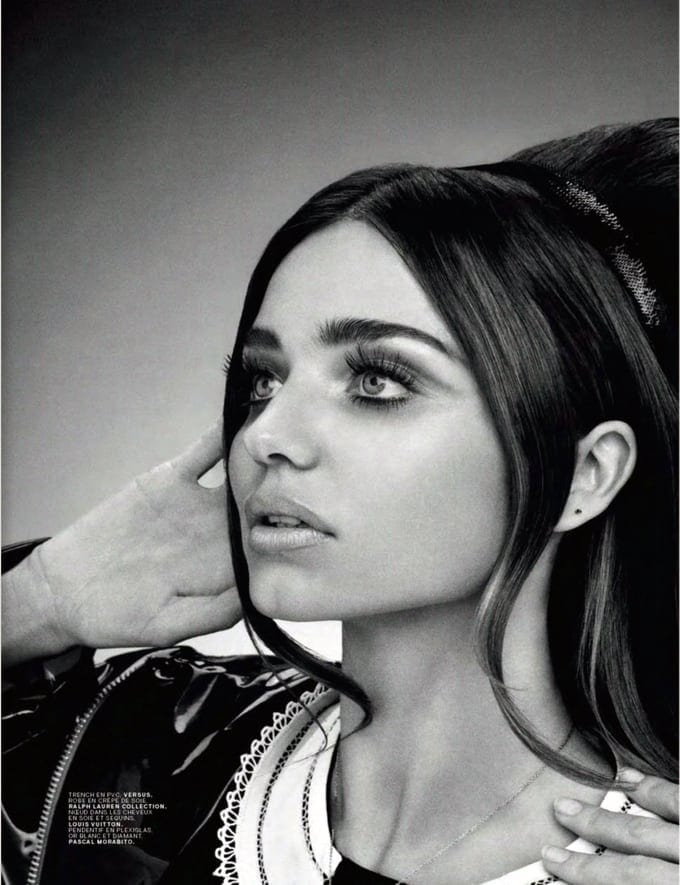
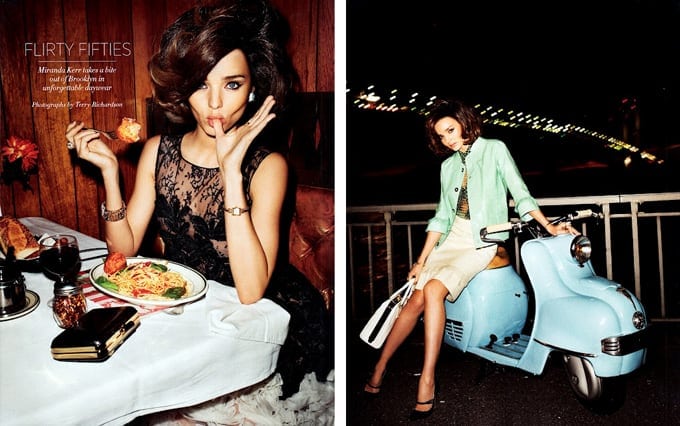
Kerr’s modelling is usually built around clean beauty styling, glossy commercial production and a controlled, approachable glamour. In editorial photography she is often posed to emphasise symmetry, shine and lightness: hair softly arranged, skin finished carefully, clothing either minimal or highly polished. This makes her useful to magazines and brands that want luxury without severity.
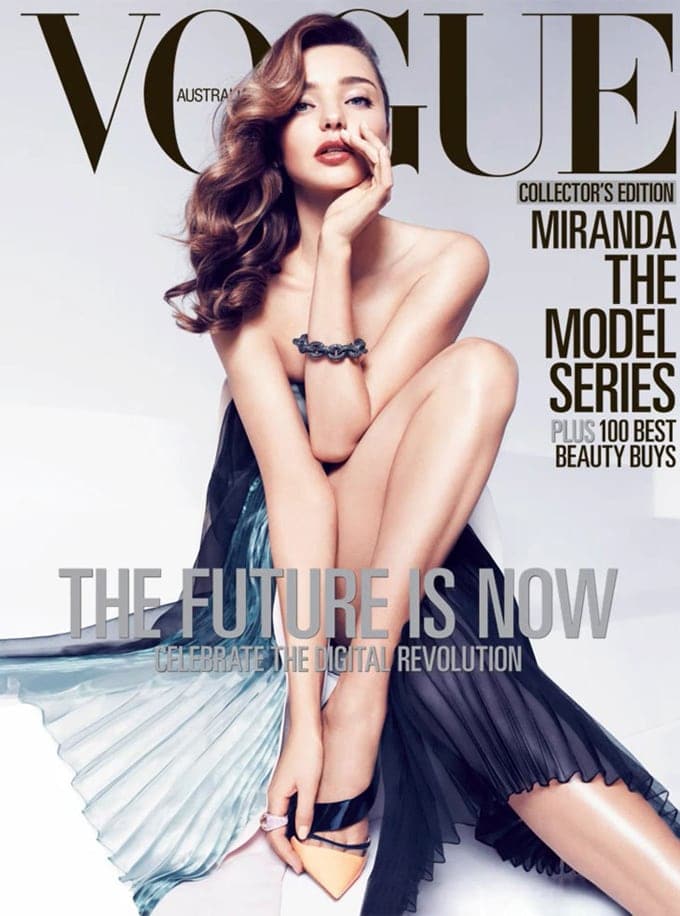
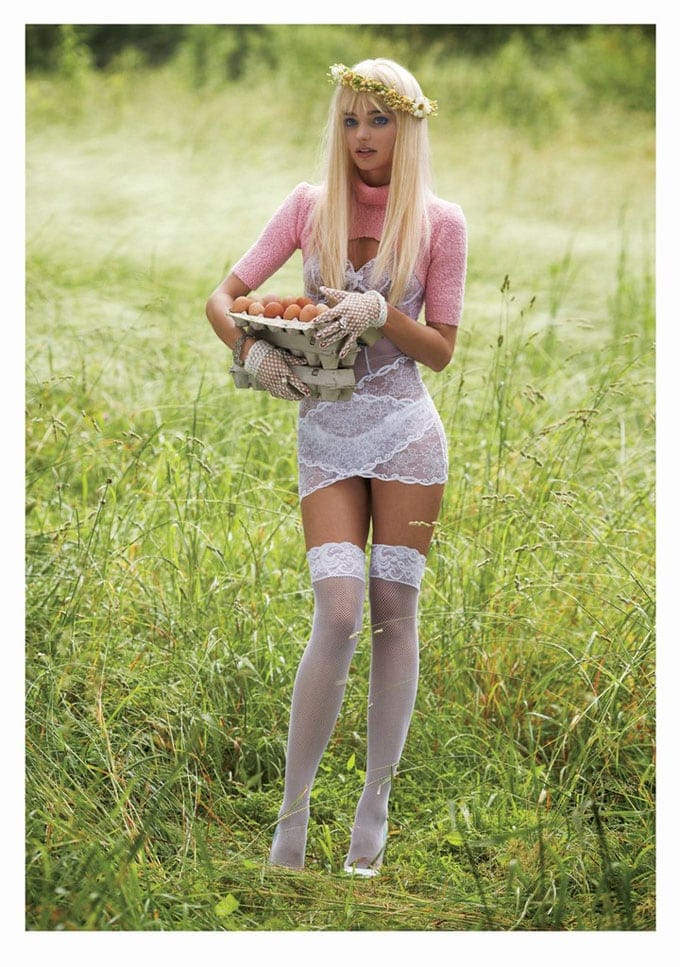
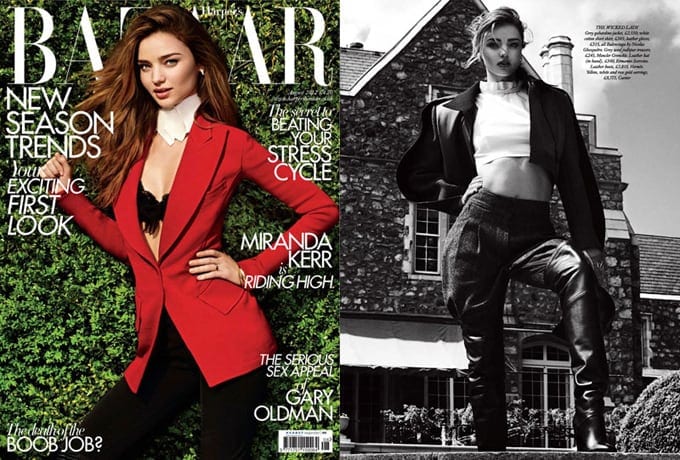
She has appeared in fashion features for titles including Harper’s Bazaar Australia, Vogue Australia, Vogue UK, Purple and Jalouse. These spreads show the range of the model image: from beauty-driven portraiture to character-led styling, such as costume or role-play sessions that use modelling to suggest narrative rather than simply display clothing.
Why does Miranda Kerr matter in fashion media?
Kerr matters because she became a recognisable bridge between Australian fashion and the global luxury image industry. Her career helped normalise the idea that a model from outside the traditional European and American centres could become a consistent presence in major campaigns and magazines.
She also represents a specific kind of 2000s fashion celebrity: highly marketable, widely circulated, and closely tied to beauty advertising as much as editorial work. Her face carried not only clothes but a full commercial identity, especially in campaigns for lingerie, department stores and beauty products. That made her valuable to brands seeking an image of aspirational everyday glamour rather than avant-garde distance.
Where does she sit in the history of Australian modelling?
Kerr is part of a longer Australian tradition of models who move between local retail campaigns and international publication work. Her association with David Jones is important here: Australian department-store campaigns often function as national fashion markers, placing a model at the centre of seasonal style culture at home while overseas work builds prestige.
Her career also shows how modelling changed in the early digital and magazine-heavy era. A model could build status through repeated appearances across covers, campaigns and special editorial projects, each one reinforcing a recognisable public image. Kerr’s career followed that pattern closely, with the fashion press using her as a dependable shorthand for polished, mainstream luxury.
Frequently Asked Questions
What made Miranda Kerr different from other fashion models?
Her difference lay less in a single radical look than in how effectively she fit the commercial fashion system. She combined runway credibility, lingerie visibility and strong magazine appeal, which gave her a broad reach across different parts of the industry. That versatility helped her stay visible across several seasons and markets.
Was Victoria’s Secret important to her career?
Yes. Becoming an Angel gave her international recognition and placed her inside one of the most watched fashion platforms of the period. Victoria’s Secret models were promoted as celebrities in their own right, so the job expanded her profile well beyond standard modelling assignments.
Has she worked mainly in Australia?
No. Although she began in Australia and has remained closely associated with Australian fashion, much of her best-known work circulated internationally. Her editorial appearances and brand campaigns in Europe and North America helped turn her into a global fashion figure rather than a local one.