
Noah Mills is a Canadian model and actor known for high-fashion runway work, luxury advertising campaigns, and later screen roles. Born in 1983, he became visible first through menswear modeling, where his tall frame and classical features suited Italian and European fashion houses, then expanded into acting without leaving the fashion world behind.
Stories from Noah Mills
2 stories
About Noah Mills
| Field | Details |
|---|---|
| Born | April 26, 1983 |
| Nationality | Canadian |
| Known for | Modeling and acting |
| Fashion associations | Luxury menswear, editorial spreads, advertising campaigns |
| Public image | Polished, masculine, commercially versatile |
Read the full overviewHow he became visible, Why fashion houses cast him, What changed when he moved into acting?, What does Noah Mills represent in visual culture?
How he became visible
Mills came up through fashion modeling, where casting depends on proportion, presence, and the ability to hold a garment without overpowering it. That matters in menswear, especially for brands that use tailoring, knitwear, leather, and formalwear as the main visual language. A model in this lane is not just a body for clothes; he is part of the line, silhouette, and mood the photographer is trying to build.
His career fit the late-2000s and early-2010s market for clean, athletic, international-looking male faces. He appeared in editorial work and campaigns that asked for a controlled, aspirational masculinity rather than overt character acting. That made him useful to brands selling suits, fragrance, and polished ready-to-wear.
Why fashion houses cast him
Luxury labels cast models like Mills when they need consistency across print, runway, and advertising. In a campaign, the model has to hold attention without competing with the garment, the set, or the brand name. For a house such as Dolce & Gabbana, that means bringing a specific kind of Italianate glamour: sharp tailoring, strong posture, and a face that reads clearly in magazine reproduction.
His look worked well in fashion photography that relied on contrast: dark suiting against pale walls, fitted shirting under heavy outerwear, or glossy campaign lighting that emphasized texture. He could sell clothes that depended on structure and finish, which is often the real task in commercial fashion imagery.
What changed when he moved into acting?
Mills later took acting roles, a move many models make when they want longer, more varied careers. Screen work requires more than still-image presence: timing, dialogue, and the ability to sustain a character over a scene. Even so, fashion experience can help on camera, because models already know how to work with lighting, wardrobe, and direction under pressure.
His acting did not erase his modeling identity. Instead, it extended it, keeping him visible to fashion editors and brand teams who value recognizable faces. For a publication like FreeYork, that crossover matters because it shows how contemporary image-making often moves between editorial, advertising, and performance.
What does Noah Mills represent in visual culture?
Mills represents a specific kind of male fashion professionalism: adaptable, composed, and commercially legible. He is less a celebrity in the tabloid sense than a working image-maker’s subject, someone whose value comes from how reliably he can carry a campaign or editorial story. That is a real category in fashion history, even when it is less discussed than designers or photographers.
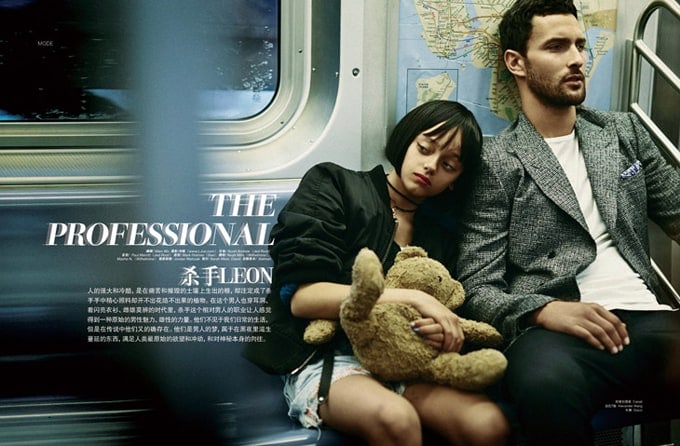
His presence in a 2014 Dolce & Gabbana campaign and in editorial contexts such as L’Officiel Hommes China shows how models travel across markets. A single face can be reused to signal different ideas of luxury, depending on styling, makeup, grooming, and setting. In practice, that means a model’s career is built not only on looks but on repeatable visual usefulness.
Frequently Asked Questions
Is Noah Mills primarily a model or an actor?
He is primarily known as a model, and that is where his public image first formed. Acting became a second professional lane rather than a replacement. His work in both fields shows how fashion models can build a broader career once they have name recognition and camera experience.
Why do fashion brands use models like him?
Brands use models like Mills because they photograph well in tailored clothing and communicate a polished version of masculinity. In menswear advertising, the model must support the product rather than distract from it. A versatile face can adapt to different seasons, markets, and campaign moods.
What makes him relevant to a visual culture publication?
He matters because he sits at the intersection of fashion, advertising, and screen performance. That crossover shows how contemporary image culture recycles faces across magazines, campaigns, and film or television. His career also illustrates the labor behind luxury imagery: posing, styling, grooming, and brand coordination.