
Wyoming is a state in the mountain West of the United States, known for broad high plains, cattle country, and some of the most rugged terrain in the country. It is the 10th largest state by area, but it has the smallest population of any U.S. state and one of the lowest population densities. Much of the west holds the eastern edge of the Rocky Mountains, while the east opens into the High Plains.
Stories from Wyoming
5 stories


About Wyoming
- Wyoming sits in the western interior of the United States, where mountain ranges give way to open prairie.
- The state is large in area but sparsely populated, with long distances between towns and a strong sense of isolation.
- Its landscape includes the Rocky Mountains, rangelands, alpine basins, and high-elevation plains.
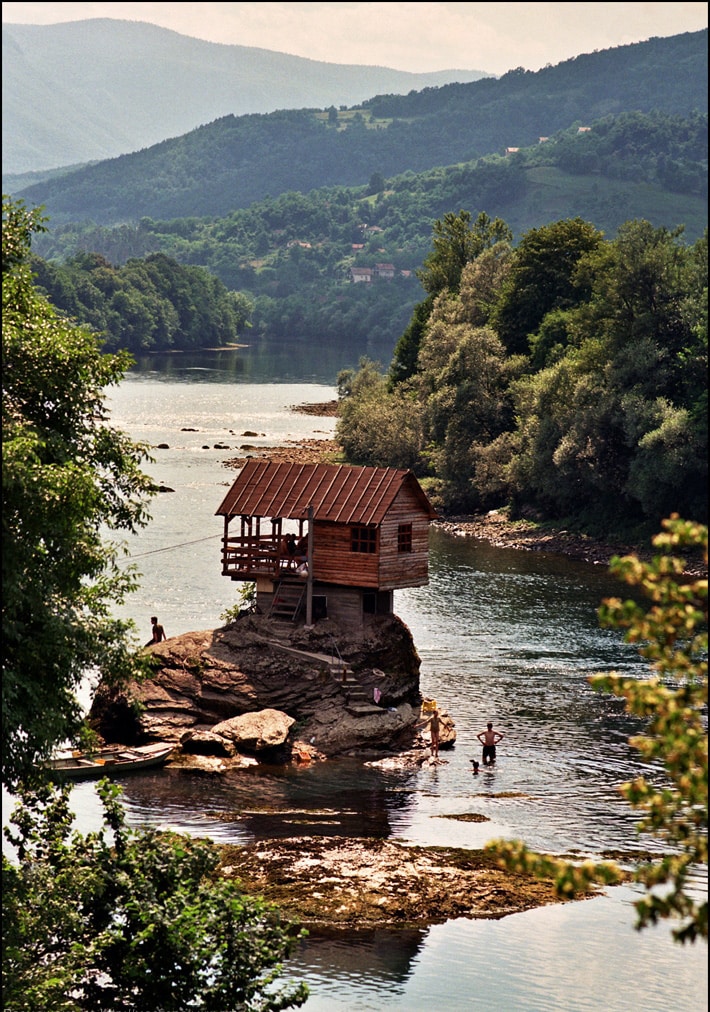
- Wyoming often appears in visual culture as shorthand for frontier space, weathered architecture, and vast scale.
Read the full overviewWhat kind of place is Wyoming?, Where did Wyoming come from?, Why does Wyoming matter in visual culture?, What does Wyoming look like in practice?
What kind of place is Wyoming?
Wyoming is a western U.S. state shaped more by elevation and distance than by cities. Its western half includes mountain chains, forested slopes, and valleys cut by rivers, while the eastern half stretches into dry grassland and prairie. The result is a state of stark transitions: snowbound passes, open range, red rock, and long horizons.
That physical scale matters in how Wyoming looks and feels in photographs, film, and design. Buildings sit low against the land. Roads vanish into emptiness. Light, weather, and season dominate the visual field. For artists and writers, Wyoming often reads as a place where human structures have to answer to the terrain rather than the other way around.
Where did Wyoming come from?
The name Wyoming comes from a Native American place-name adopted in the East before it was attached to the western territory. The word is commonly traced to the Munsee term xwé:wamənk, often translated as “at the big river flat” or a similar description of a riverside plain. The state name therefore carries an older geographic memory, even though the modern place lies far from the original reference.
As a political entity, Wyoming developed through the settlement and administration of the American West in the 19th century. Its legal and economic history is tied to ranching, mining, rail transport, and public land management. Those forces left a strong imprint on the built environment: depots, barns, fences, cabins, small-town main streets, and service structures designed for severe weather and long supply lines.
Why does Wyoming matter in visual culture?
Wyoming matters because it offers a clean visual language for scale, solitude, and endurance. In paintings, photography, and set design, the state often signals remoteness without needing explanation. A cabin set against snowfields, a truck beside a fence line, or a single house in a windblown plain can immediately suggest a specific kind of American West.
That symbolism can flatten the state into cliché, but the material reality is more varied. Wyoming includes working landscapes, tourist destinations, protected wilderness, and communities built around extraction, grazing, and seasonal travel. Its visual identity comes from the interaction of geology and use: timber, corrugated metal, stone, dust, weathering paint, and long exposure to the elements.
What does Wyoming look like in practice?
In practice, Wyoming looks less like one image than like a set of repeated conditions. Architecture is often compact and practical, with steep roofs, heavy siding, and simple forms that shed wind and snow. Roads are long and straight. Signs, fences, and utility lines punctuate open space. Even in more developed areas, the landscape remains a major part of the composition.
For makers and photographers, that means Wyoming rewards attention to material detail. Weathered wood, ranch hardware, old gas stations, roadside cabins, and mountain-town storefronts all carry the marks of use and climate. The state is not just a backdrop; it is an active force that shapes what survives, what gets built, and how things age.
Frequently Asked Questions
Is Wyoming part of the Rocky Mountains?
Yes. The western portion of Wyoming includes the eastern edge of the Rocky Mountain system, along with valleys, basins, and high country associated with it. The state also extends into the High Plains, so its geography changes sharply from west to east.
Why is Wyoming so sparsely populated?
Large areas of the state are high, dry, and exposed, which makes dense settlement difficult. History also shaped that pattern: ranching, mining, and public land use spread people across wide territories rather than into large urban centers. The result is a state defined by distance.
What kinds of places are most associated with Wyoming?
Cabins, ranches, mountain lodges, small towns, and open-road landscapes are among the most common visual associations. Protected natural areas also play a major role in the state’s image. Together, these places give Wyoming its reputation for ruggedness and space.