

The ordinary path to an extraordinary vision
Nashville-based architectural photographer Andrew Keithly discovered his passion through a gift from his grandfather—a Sony A77 camera. Initially dabbling in landscapes and drone photography, he carved his niche in capturing the elegance of buildings with a meticulous and thoughtful approach. His pioneering methods, particularly his drone techniques, have redefined how modern architecture is viewed.

Drone Techniques in Professional Practice
Andrew’s gear is both extensive and refined. He favors the Sony A7 IV and A7S III cameras, supplemented by a mix of Canon tilt-shift lenses and Sony primes. Notably, he treasures his great-grandfather’s Nikkormat for street photography. Drone technology also plays a crucial role in his work, with models like the DJI Mavic 3 Pro enhancing his capabilities, a cornerstone in his methodology.

Optimizing for the right shot
For Andrew, choosing the right equipment is crucial, as his shooting often involves extensive travel. His decision to use the lightweight Peak Design Travel Tripod for personal journeys exemplifies his thoughtful planning. Meanwhile, his primary tools remain central to capturing clean, compelling compositions, essential in his aerial photography. A key accessory? The CamRanger 2 for remote camera control, maximizing creative flexibility. His architectural drone work thrives on the flexibility and precision of these choices.
For those interested in unique architectural designs, discover Craig Steere’s Mezzanine House blending coastal elegance with functionality.

Making architecture the star
Andrew’s transition to architectural photography was completed by 2021, following inspirations from Japan’s Suiden Terrasse hotel and projects in Finland. His approach is preferred by architects who appreciate his careful, deliberate style, offering him creative freedom and expression that’s often associated with his approach to capturing buildings.

Exploring global architectural wonders
While Andrew’s projects span typical southeastern U.S. architecture, his portfolio includes international gems like the Louver Abu Dhabi. His travel experiences in Japan, Finland, and beyond have broadened his perspective and unique interpretation of varied architectural aesthetics. The global exposure has enriched his expertise in aerial photography.

Cultivating patience into mastery
Andrew emphasizes the value of slowing down. He believes that truly seeing a building involves studying its light and angles from multiple perspectives, unearthing unique insights. This careful observation often leads to distinctive images that stand apart from conventional shots, reflecting the core principles of his photographic philosophy.
Explore more global architectural designs with Casa Cieno in Oaxaca, where concrete elegance is intertwined with lush courtyards.

Investment in experiences over equipment
Andrew advises fellow photographers to prioritize experiences over gear. He believes meaningful growth in photography comes from new environments and learning opportunities, rather than just acquiring the latest equipment—although his transition to the Sony A7 III marked a significant improvement in his work and his overall approach.

Source: dpreview.com
Frequently asked questions
What is Andrew Keithly’s preferred camera for drone photography?
Andrew Keithly favors the Sony A7 IV and A7S III cameras for his photography, supplemented by a mix of Canon tilt-shift lenses and Sony primes. Drone technology, like the DJI Mavic 3 Pro, plays a crucial role in his work.
How does Andrew Keithly approach architectural photography?
Andrew Keithly approaches architectural photography with a careful and deliberate style, focusing on capturing the elegance of buildings. His method involves studying light and angles from multiple perspectives to create distinctive and unique images.
Why does Andrew Keithly prioritize experiences over equipment?
Andrew advises photographers to prioritize experiences over equipment because meaningful growth comes from new environments and learning opportunities. He believes that despite the significance of having the right gear, it is the experiences that improve one’s overall approach in photography.
More in
Photography
All Photography


More like this

Austin Bell Captures Over 2,500 Hong Kong Basketball Courts in Stunning Aerial Project

The Fervor for Global Shutters: Why They’re Rare and Not for Everyone

Controversy Surrounds Nikon Z5IIC Launch over Missing Electronic Viewfinder

The World Architecture Festival’s Shortlist for the 2022 Photography Awards
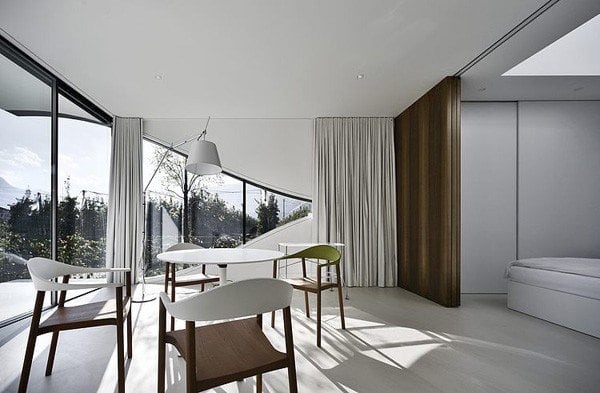
The Mirror Houses by Peter Pichler
