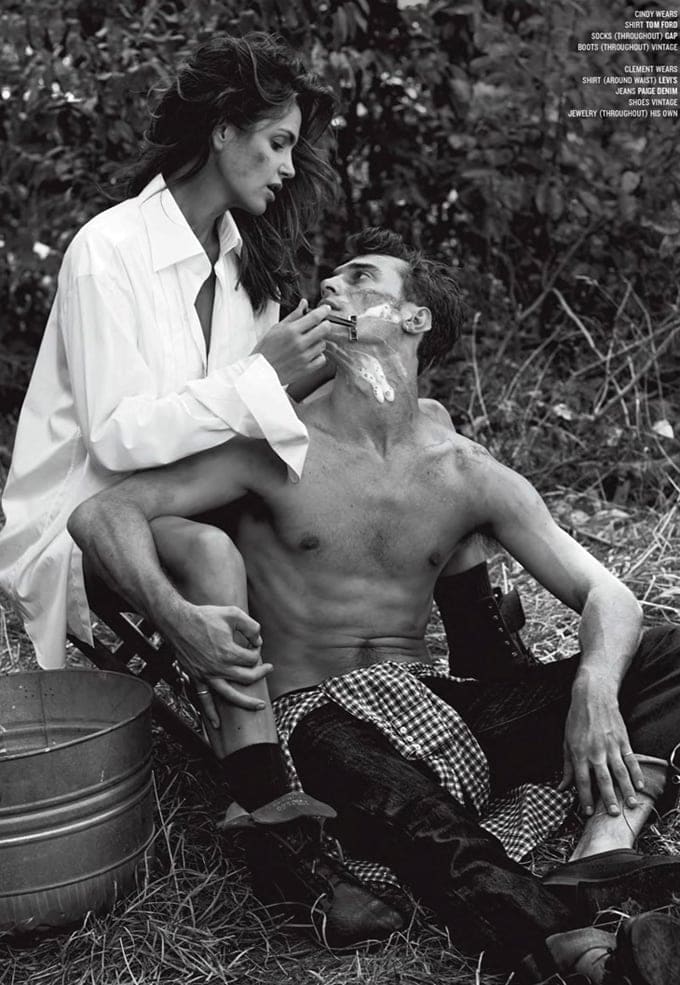
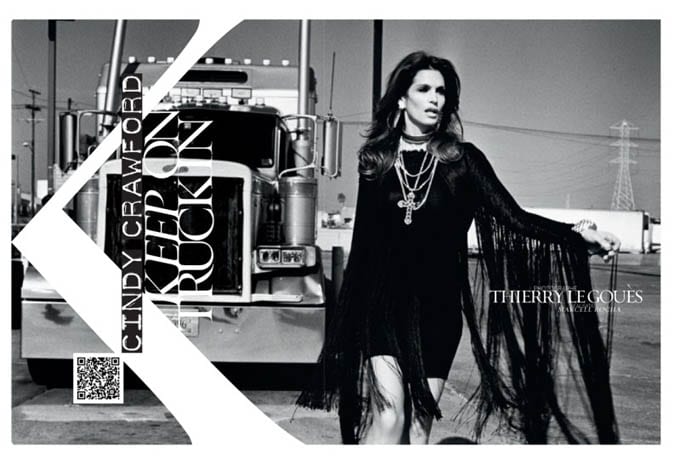
Cindy Crawford is an American model and television personality whose face became one of the most recognizable in fashion during the 1980s and 1990s. Born Cynthia Ann Crawford in 1966, she built a career around high-gloss editorial work, runway visibility, and advertising campaigns that turned her into a mainstream celebrity as well as a model. Her signature feature, the mole above her lip, became part of her visual identity and helped make her instantly identifiable across magazines, billboards, and broadcast media.
- She rose to prominence during the supermodel era, when a small group of models achieved global fame beyond fashion circles.
- Her work spans runway, magazine covers, advertising, television, film, and brand endorsements.
- The mole above her lip became one of the most famous facial features in modern fashion imagery.
- Forbes named her the highest-paid model in 1995, reflecting the commercial power of top models in that period.
- Her image helped define the polished, athletic, American beauty ideal of late 20th-century fashion photography.
Why did Cindy Crawford matter in fashion?
Crawford mattered because she was not only a model but also a mass-media figure. Her career coincided with a period when models were becoming household names, appearing in fashion magazines, beauty campaigns, music videos, and television specials with the same recognizability once reserved for actors and pop stars. She represented a shift in modeling from anonymous garment display toward celebrity-driven image-making.
Her presence also mattered visually. Crawford’s look combined symmetry, strong features, and a muscular, healthy build that photographers and editors used to signal a more athletic and confident form of glamour. That made her useful to fashion magazines and advertisers seeking a polished but approachable image, especially in the era when supermodels became part of the product itself.
What does Cindy Crawford look like in photographs?
In photographs, Crawford is often styled to emphasize clarity rather than eccentricity. She appears with strong makeup, glossy hair, and clean lighting that highlights the structure of her face. The mole above her lip is usually visible and often centered by the camera, becoming a visual anchor in portraits and beauty campaigns.
Photographers have often framed her in ways that balance power and familiarity: direct gaze, upright posture, and minimal visual clutter. In fashion editorials, that can read as controlled glamour; in commercial images, it reads as trustworthiness and broad appeal. The result is an image that is easy to remember and easy to reuse across print, advertising, and later digital circulation.
How did she move from modeling to celebrity?
Crawford’s modeling career expanded through repeated appearances on magazine covers, runway shows, and campaigns for major brands. That repetition mattered. The more often her face appeared, the more she moved from being one model among many to a recognizable public figure with a distinct persona.
She also crossed into television, film, and spokesperson work, which extended her visibility beyond fashion’s own audience. That kind of crossover was crucial to the supermodel era: it turned fashion images into a larger media economy built on personality, not only clothes. Crawford’s career shows how a model could become both a visual brand and a celebrity brand at the same time.
What is her place in the supermodel era?
Crawford is one of the central figures of the 1990s supermodel moment, alongside names such as Naomi Campbell, Linda Evangelista, Christy Turlington, and Claudia Schiffer. That period produced models who were treated as stars in their own right, photographed by major fashion and portrait photographers, and marketed across global campaigns. The look was elevated, expensive, and highly public.
Her role in that era was especially associated with American mainstream fashion. Crawford’s image carried a commercial polish that fit department-store catalogs, magazine fashion pages, beauty ads, and prestige editorials alike. She helped define what a model could be when the industry began selling not just clothes, but a complete, recognizable visual identity.
Frequently Asked Questions
What made Cindy Crawford different from other models?
Her combination of recognizability, commercial appeal, and editorial presence set her apart. The mole above her lip gave her an instantly identifiable feature, while her face and body fit a broad range of fashion and beauty campaigns. That versatility made her useful to both luxury brands and mass-market advertisers.
Was Cindy Crawford only a fashion model?
No. She worked as a model first, but her career expanded into television, film, and spokesperson roles. That broader visibility helped make her a celebrity outside the fashion industry and strengthened her status as one of the era’s most famous models.
Why do photographers still reference her?
Photographers reference Crawford because her image stands for a particular period of fashion: polished, aspirational, and highly reproducible. A reference to her can signal classic 1990s glamour, strong commercial styling, or the supermodel era itself. Her face remains shorthand for a specific kind of fashion authority.
Articles mentioning Cindy Crawford