
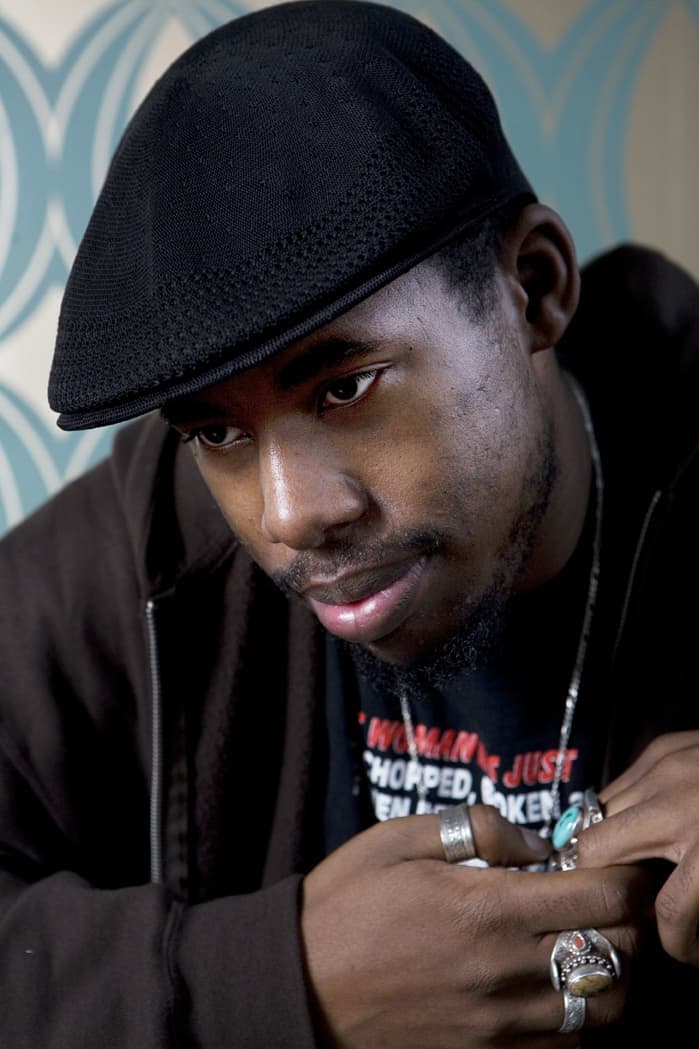
Flying Lotus is the stage name of Steven Ellison, a Los Angeles producer, rapper, and filmmaker known for experimental electronic music that folds jazz harmony, hip-hop rhythm, ambient texture, and digital distortion into a single style. He emerged from the city’s beat scene in the 2000s and became one of the best-known artists to treat the laptop as a compositional instrument rather than just a recording tool.
- He works across production, rapping, composing, and filmmaking.
- His music often blends synthetic sound design with jazz lineage and club music structure.
- He is part of a notable musical family connected to Alice Coltrane, John Coltrane, Ravi Coltrane, and Marilyn McLeod.
- His albums and visuals often share a sci-fi, surreal, and futurist sensibility.
Where did Flying Lotus come from?
Flying Lotus emerged from Los Angeles, a city with a dense history of hip-hop, independent beatmaking, and electronic experimentation. Ellison came up in the environment around internet-era sample culture, hardware sequencers, and DAW-based production, where artists could build dense tracks from short loops, fractured drums, and layered effects without needing a traditional band setup.
His family background also matters. He is related to important jazz figures, including Alice Coltrane and John Coltrane, and that lineage helps explain why his work often feels musically wide open rather than boxed into one genre. The family connection does not determine his sound, but it places him in a broader lineage of Black experimental music, spiritual jazz, and improvisational risk-taking.
What does his music sound like?
Flying Lotus is best known for music that sounds assembled rather than simply performed. Tracks may move from heavy, syncopated drum programming to floating chords, then break apart into static, glitch, or sudden silence. He often uses sampling, but not in a purely nostalgic way; samples become raw material for new harmonic structures, rhythmic collisions, and textural detail.
His albums commonly sit between club music and headphone music. On one side are the pulse and low-end weight associated with hip-hop and bass music. On the other are atmospheric passages, jazz voicings, and melodic fragments that feel closer to composition than beat-making. That combination made him a reference point for producers who wanted electronic music to feel intimate, abstract, and technically complex at once.
Why does Flying Lotus matter?
He matters because he helped expand the idea of what a producer could be. Rather than staying in one lane as a beatmaker, he moved between records, collaborations, live performance, scoring, and film direction. That range made him a visible example of how contemporary music production can connect sound design, visual identity, and narrative world-building.
His influence also extends beyond music into visual culture. Flying Lotus often presents his work with sci-fi imagery, unsettling digital forms, and dreamlike editing. In practice, that means album art, videos, stage visuals, and film projects tend to feel like parts of the same universe. For artists working between sound and image, he is a model of how a consistent aesthetic can hold across media.
What is he known for beyond albums?
Flying Lotus has built a substantial body of work outside the studio record. He has scored films and made his own films, including the horror-comedy feature Kuso. This move into cinema fits his broader method: he treats mood, texture, and interruption as central tools, whether the medium is a track, a soundtrack, or a sequence of images.
He is also known for collaborating with a wide range of musicians and for curating releases that sit between genres. Those collaborations show how his production style works in practice: sharp drum programming, highly edited arrangements, and an interest in sound as a physical material. The result is music that often feels engineered as much as written.
Frequently Asked Questions
Is Flying Lotus primarily a rapper or a producer?
He is primarily known as a producer and composer, though he also raps on some projects. His reputation was built on production first, especially on albums that foreground beat construction, sound design, and arrangement. The rap material sits alongside that broader practice rather than replacing it.
How is Flying Lotus connected to jazz?
His connection to jazz is both familial and musical. He is related to Alice Coltrane and John Coltrane, and his work often borrows from jazz harmony, improvisational logic, and spiritual atmosphere. Even when the tracks are built from electronic tools, the phrasing and harmonic movement can feel rooted in jazz thinking.
What makes his work visually distinctive?
His visual world leans toward sci-fi, abstraction, and uneasy digital surrealism. That look matches his music, which often combines sleek production with instability and surprise. As a result, his albums and films usually feel like parts of one carefully designed environment rather than separate projects.