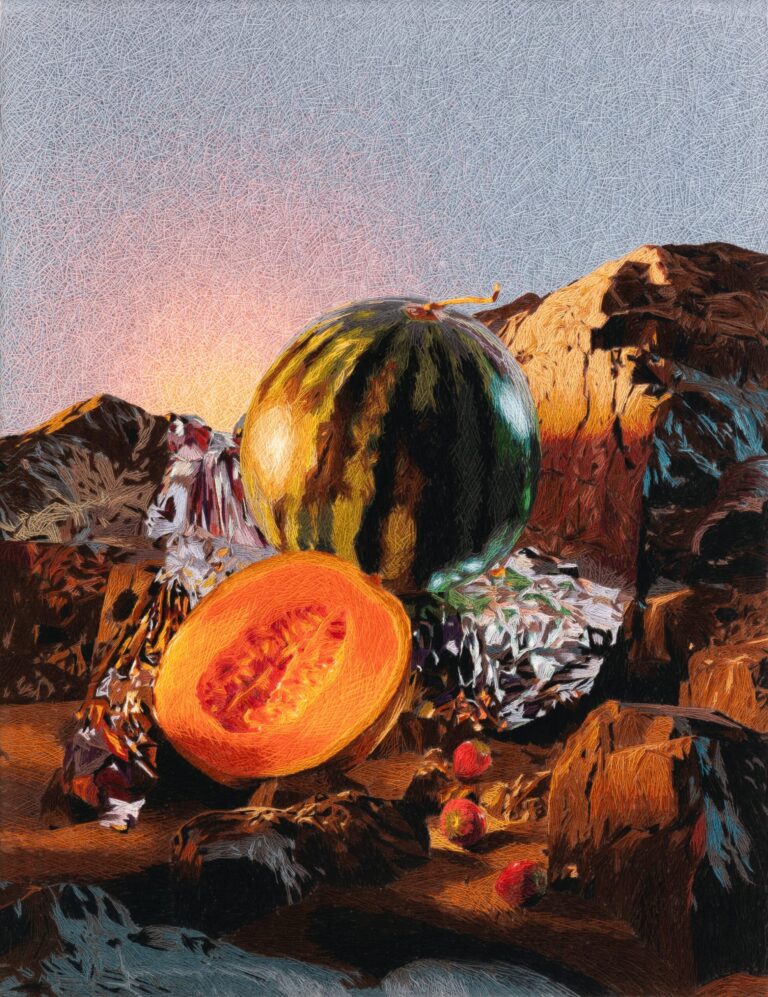
Still life is a genre of painting, drawing, photography, and printmaking that arranges inanimate objects—fruit, flowers, glassware, books, food, tools, shells, and other made things—into a composed image. It emerged as a distinct pictorial subject in Europe in the early modern period, when artists began treating ordinary objects as worthy of close attention rather than only as accessories to religious or historical scenes.
- Still life focuses on objects rather than people, often arranged to show form, texture, light, and symbolism.
- It grew into a major genre in 16th- and 17th-century Europe, especially in the Netherlands, Spain, and Italy.
- Artists use it to study surface, color, balance, and the behavior of materials such as glass, metal, cloth, and fruit skin.
- Still life can be lavish and decorative, but it can also carry moral or symbolic meanings about time, wealth, mortality, and transience.
- The genre remains important in contemporary art and photography because it gives artists control over composition and lighting.

How still life developed
Still life became recognisable as a separate genre in the Renaissance and Baroque periods, when painters started to isolate objects from larger narrative scenes. Early examples often appeared inside altarpieces, portraits, or domestic interiors, but by the 17th century artists in the Dutch Republic and elsewhere were painting bouquets, banquet tables, kitchen goods, and cupboard shelves as subjects in their own right. These works appealed to collectors because they displayed technical skill and the visual richness of everyday things.

The genre developed alongside trade, science, and household display. Global commerce brought porcelain, citrus fruits, spices, and imported textiles into European homes, and artists recorded these objects with precision. At the same time, still life painting became a way to show how light behaves on pewter, how a cut lemon curls, or how a glass reflects a window. That attention to matter made the genre both practical and symbolic.
Why did still life matter so much?
Still life mattered because it gave artists a field for experiment. Without the demands of likeness to a living sitter or the drama of an event, painters could concentrate on composition, perspective, colour harmony, and texture. The genre became a proving ground for techniques such as glazing, scumbling, and sharp edge control, all of which help create the illusion of weight and surface. A successful still life makes hard objects seem touchable and fragile ones seem temporary.
It also carried meaning. Flowers could stand for beauty and decay, candles for time passing, fruit for abundance, and skulls, clocks, or extinguished lamps for mortality. In Spanish vanitas paintings, for example, objects were arranged to remind viewers that wealth and pleasure do not last. Even when the symbolism was subtle, still life often asked viewers to notice how quickly things change: a peeled apple browns, petals collapse, ice melts, wax softens.
What does still life look like in practice?
In practice, still life depends on arrangement. The artist chooses objects for shape, surface, and contrast, then places them under controlled light. A ceramic bowl may sit beside a transparent bottle to compare opacity with clarity; a rough bread crust may be set against polished silver; a draped cloth may create folds that guide the eye across the composition. Many still lifes are built around a single directional light source so shadows sharpen the form and give the objects a stage-like presence.
The genre appears across media. Oil paint can render the sheen of grapes, the bloom on plums, or the reflections in a wine glass. Photography uses still life to stage products, fashion accessories, food, and editorial images, where set design and lighting matter as much as the objects themselves. Contemporary artists also use found packaging, industrial materials, plastics, and studio debris, which expands still life beyond the traditional bowl of fruit.
What still life tells about material culture
Still life is a record of what people own, consume, collect, and value. A painting of oysters, imported citrus, and Venetian glass says as much about trade and status as it does about taste. A table scattered with books, maps, instruments, and shells suggests learning, travel, or curiosity. Because the genre depends on selection, it reveals which materials a culture finds precious, ordinary, exotic, or disposable.
For designers and makers, still life remains useful because it treats objects as carriers of meaning and form. It shows how packaging, crockery, textiles, food styling, and display systems work together to produce an image. That is why still life never stayed confined to the history of painting. It persists in advertising, editorial photography, product design, and contemporary art whenever objects are arranged to be examined closely.
Frequently Asked Questions
Is still life only about painting?
No. Painting is the most famous form, but still life also appears in drawing, printmaking, photography, sculpture, and digital image-making. The defining feature is not the medium but the subject: arranged inanimate objects presented as the main focus.
What is the difference between still life and vanitas?
Still life is the broader category. Vanitas is a type of still life that uses objects such as skulls, clocks, wilting flowers, and extinguished candles to stress mortality and the passing nature of worldly pleasures. Many still lifes are decorative or observational rather than moralizing.

Why do artists keep returning to still life?
Still life offers control. The objects stay put, the light can be fixed, and the composition can be adjusted until every relationship between shape, colour, and texture feels right. That stability gives artists room to study materials in detail and to turn ordinary things into a structured visual argument.
Articles mentioning Still Life