
A beard is the hair that grows on the lower face, usually across the chin, jawline, cheeks, and neck. It can appear as a short stubble, a close-trimmed shape, or a long, full growth, and it excludes the moustache, which sits above the upper lip. Beards are a bodily feature, but they are also a style choice, a marker of age or identity, and a surface for grooming, decoration, and performance.
Stories from Beard
20 stories






About Beard
- Beards grow from facial hair follicles under the influence of hormones, especially after puberty.
- They vary widely in density, colour, length, and pattern of growth.
- Across history, beards have signalled status, religion, masculinity, age, profession, and fashion.
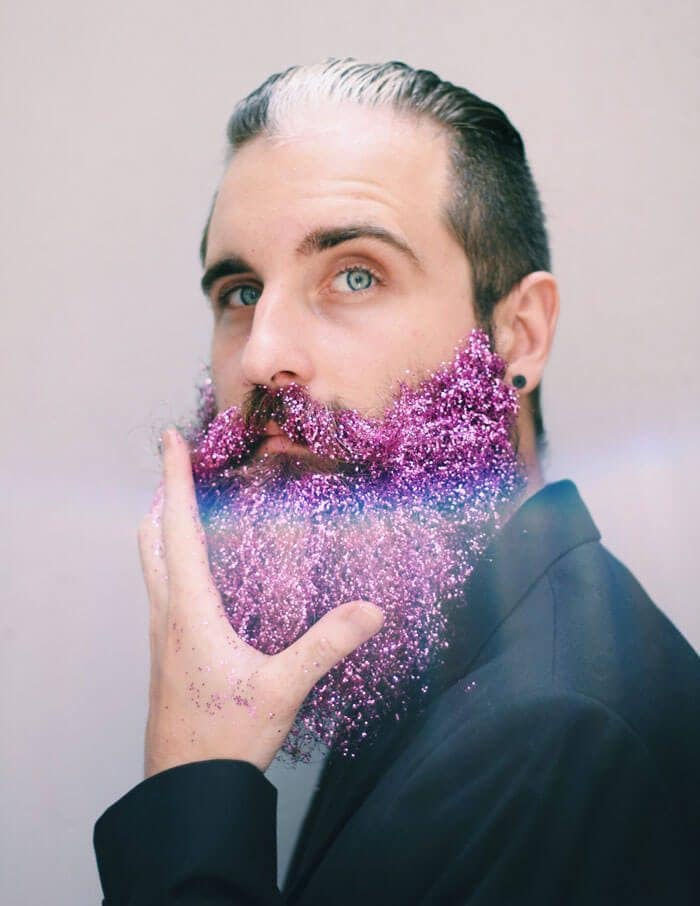
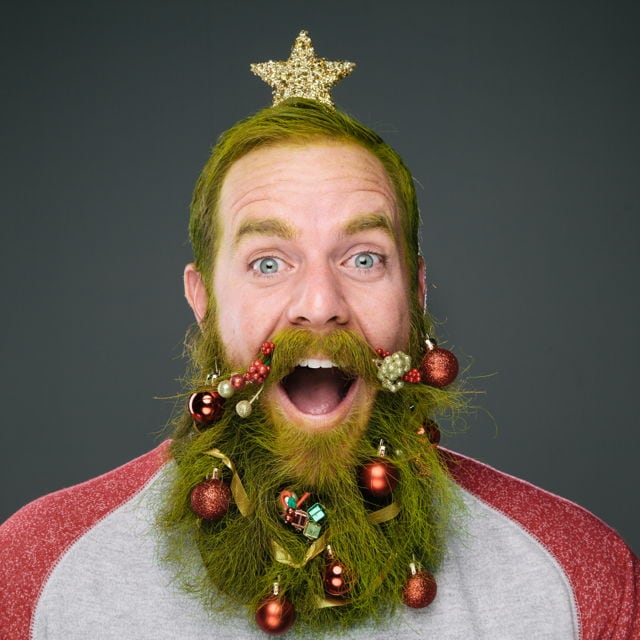
- In contemporary visual culture, beards are often shaped with clippers, scissors, oils, balms, dyes, glitter, ornaments, or props.
- Because they sit on the face, beards carry strong social meaning and are read quickly in portraiture, advertising, and costume.
Read the full overviewWhat is a beard made of?, How do people shape and style beards?, Why have beards mattered so much?, How are beards used in art and fashion?
What is a beard made of?
A beard is made of keratin, the same protein found in hair and nails. The hairs grow from follicles in the skin, mainly on the cheeks, jaw, chin, and neck, and their thickness and growth pattern depend on genetics, age, and hormone levels. Many people develop visible facial hair during puberty, and growth often continues to change into adulthood.
Beards are not uniform. One beard may be dense and dark, another sparse and patchy, another wiry or pale. Facial hair also changes with grooming: it can be shaved clean, left as stubble, edged into a line, or allowed to spread naturally across the face.
How do people shape and style beards?
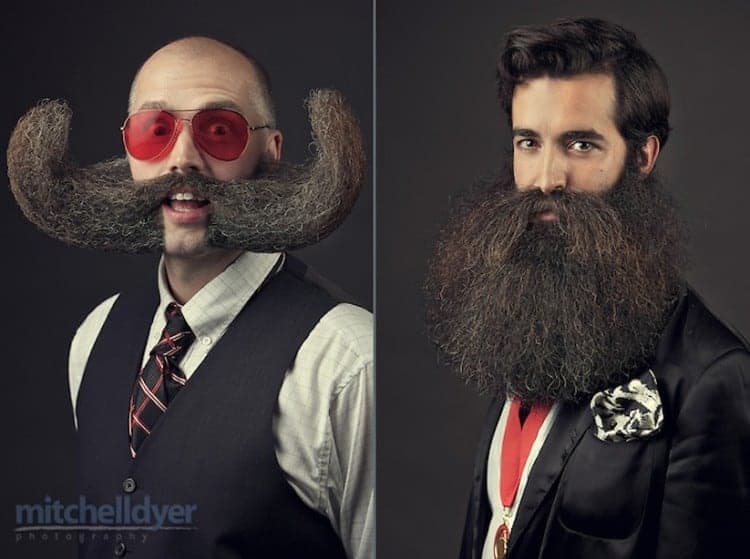
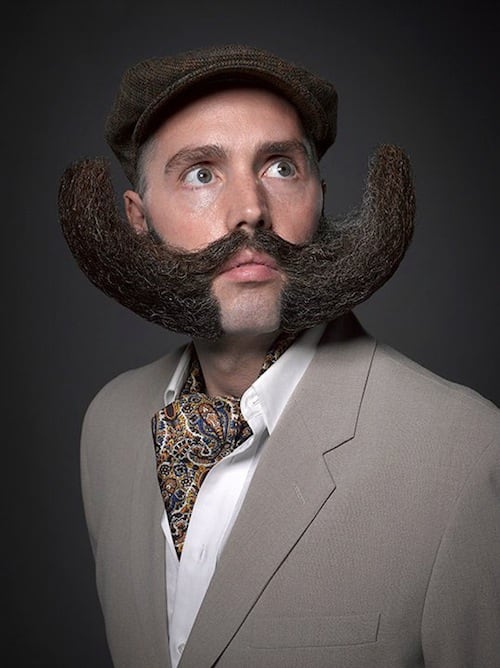
Beard grooming uses tools from both personal care and barbering: razors, trimmers, scissors, combs, brushes, oils, and balms. A simple beard may be kept neat with regular trimming and shaving around the edges. More elaborate styling can create sharp cheek lines, pointed chins, sculpted moustache-beard combinations, or symmetrical shapes that read clearly in profile and front-facing portrait.
Beards also invite decoration. Contemporary fashion and social media have turned facial hair into a site for glitter, holiday ornaments, dyed colour, braiding, and even temporary attachments. In these cases, the beard acts like a small wearable structure: part hair, part canvas, part costume. That is why beards appear so often in photo projects, competitions, and seasonal image-making.
Why have beards mattered so much?
Beards have carried meaning in many cultures for centuries. They have been associated with wisdom, virility, piety, authority, rebellion, and naturalness, depending on time and place. At other moments they have been seen as unfashionable, unclean, or politically charged. The same beard can signal very different things in different contexts, which makes it a powerful visual shorthand.
In portraiture and performance, the beard is especially useful because it is immediately legible. It can age a face, soften or harden an expression, and change the balance of the head in an image. Designers, photographers, and costume makers often use beards to build character fast, whether the aim is comic excess, festive novelty, or a more serious reference to tradition.
How are beards used in art and fashion?
Beards appear in art and fashion as both subject and material. Artists and photographers use them to explore identity, masculinity, transformation, and stereotype. A beard can be the central feature of a portrait, but it can also be altered to create surreal or playful effects, such as being covered in objects, dyed for emphasis, or exaggerated into a seasonal symbol.
In fashion and editorial work, the beard often functions like styling on the body. Its length, contour, and finish contribute to the overall look in the same way that fabric, hair, or makeup do. A well-kept beard may suggest precision and grooming; a rough one may suggest informality or defiance. In every case, it remains a highly visible form of facial design.
Frequently Asked Questions
Is a beard the same as facial hair?
No. Facial hair is the broad category for hair that grows on the face, including the moustache, beard, sideburns, and smaller patches of growth. A beard refers more specifically to the hair on the lower face and jaw. In everyday speech, people sometimes use the terms loosely, but the distinction matters in grooming and style.
Can women have beards?
Yes. Some women develop beard growth because of conditions such as hirsutism, which can increase facial hair growth. In those cases, the beard is a medical and bodily fact rather than a chosen style, though it may still be shaped or managed cosmetically.
Why do beards show up so often in fashion and photography?
Beards are highly visible and instantly readable, which makes them useful in images that need quick visual impact. They also carry strong cultural associations, so a small change in facial hair can alter the meaning of a portrait. That makes the beard a practical and expressive tool for stylists, photographers, and artists.
}{