Cate Blanchett is an Australian actor known for stage work, film roles, and a highly controlled visual presence that has made her a frequent subject of fashion and portrait photography. She moves easily between historical drama, fantasy, art-house cinema, and commercial filmmaking, and that range has made her one of the most recognisable screen performers of her generation.
| Born | 30 May 1969, Melbourne, Australia |
|---|---|
| Nationality | Australian |
| Known for | Film, theatre, portrait photography, fashion editorials |
| Major awards | Academy Award, BAFTAs, Golden Globes, Screen Actors Guild Awards |
| Notable screen image | Sharp tailoring, sculptural silhouettes, formal restraint, and strong facial expression |
Why does Cate Blanchett matter in visual culture?
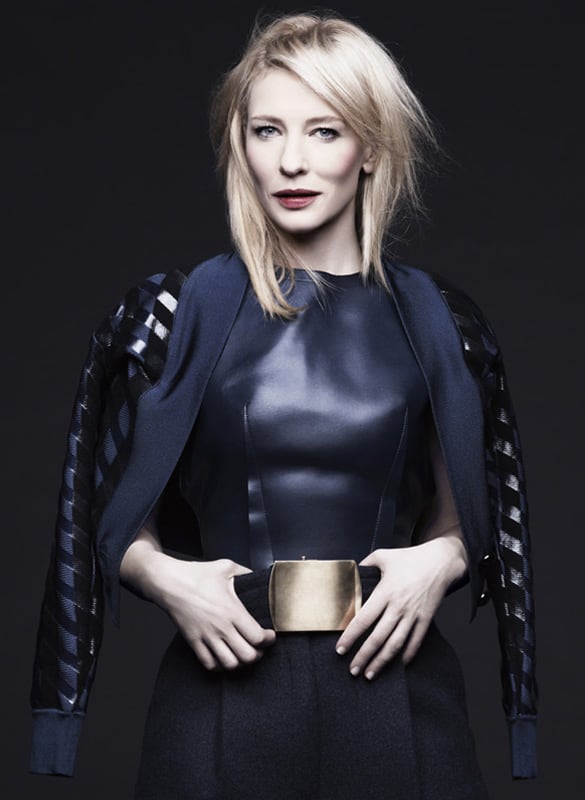
Blanchett matters because she is not only a widely awarded performer; she is also a distinct visual subject. Photographers often use her ability to hold an expression, shift posture, and wear severe or unusual clothing without losing authority. That makes her portraits feel constructed rather than casual, with costume, lighting, and pose working together to create an image of distance, control, or elegance.
Her career has also placed her in films and publicity campaigns that rely on style as much as performance. A Blanchett image often reads as editorial rather than purely promotional: crisp tailoring, strong shoulders, metallic fabrics, and precise grooming. This consistency has made her useful to magazines and photographers who want a subject that can support high-fashion styling without being overshadowed by it.
What kind of roles has she played?
Blanchett has played queens, journalists, artists, adventurers, villains, and women under pressure from institutions or history. She became internationally known through roles in period films such as Elizabeth, then expanded into mainstream fantasy, prestige drama, and more experimental work. That breadth matters because it keeps her image from settling into one fixed type.
Her performances often depend on precision rather than display. She tends to use stillness, voice, and timing to shape a character, which translates well to still photography. In a portrait, that same discipline can read as intelligence, reserve, or menace, depending on the styling and context.
How is she presented in fashion and portrait photography?
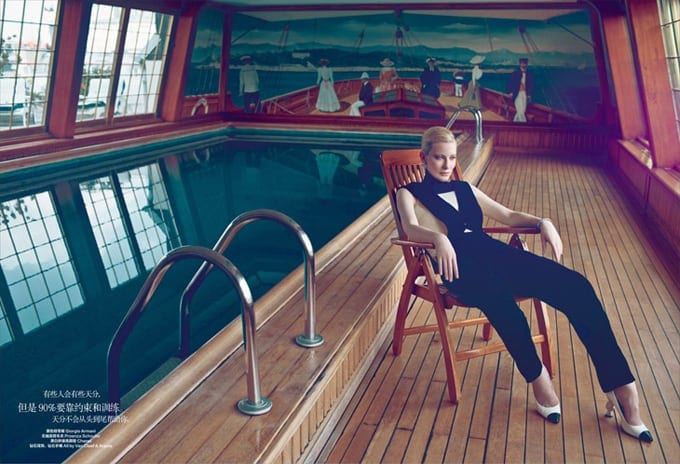
Editors and photographers frequently place Blanchett in clothing that emphasizes structure: sharp suiting, long coats, clean lines, high contrast black and white, or dramatic evening wear. The point is often to build an image of authority rather than softness. Her face, with its strong bone structure and expressive gaze, can carry minimal styling or elaborate couture with equal ease.
In practice, this means her portraits often feel built from simple but exacting parts: fabric, light, stance, and angle. A broad shoulder, a turned head, or a gloved hand can change the tone of the whole image. For publications, she offers a reliable way to make fashion look formal, intelligent, and cinematic at once.
What has made her a lasting public figure?
Longevity comes from range, but also from consistency. Blanchett has maintained a public image that is polished without seeming static. She can appear classical in one campaign and severe or experimental in another, yet the underlying sense of discipline remains.
That stability has made her useful across different media cultures: red-carpet coverage, magazine covers, film promotion, and still portraiture. In each setting, she reads as a subject with presence rather than decoration. For image-makers, that is a rare and valuable quality.
Frequently Asked Questions
Is Cate Blanchett mainly a film actor or a fashion figure?
She is primarily a film and theatre actor, but fashion publications have made extensive use of her image. Her reputation in style media comes from how well she carries structured garments and editorial poses. She is not a fashion figure in the sense of designing clothing, but she is a major visual reference in portrait and magazine photography.
Why do photographers often choose her for covers and portraits?
Blanchett can project control, wit, and distance without looking stiff. That gives photographers a subject who can anchor a complex visual concept. She also adapts well to strong styling, so the image can feel elaborate without losing clarity.
What is the simplest way to recognise a Cate Blanchett image?
Look for formal posture, precise styling, and an expression that feels measured rather than open. Her portraits often use tailoring, dark tones, or carefully controlled lighting to build authority. Even when the clothing is extravagant, the overall effect tends to stay disciplined and composed.
Articles mentioning Cate Blanchett